The journal
Notes on the form.
Long reads on the hakama silhouette — where it comes from, how it is built, how to judge a fit and how to keep a pleated garment for years. Written by the Hakama Pant studio, and opening alongside the collection.
Reference first
Start with the guides.
Three standing references that cover most of what people ask us — kept here permanently, above the dated writing below.
Iaido Gi Guide: The Iaido Uniform Explained
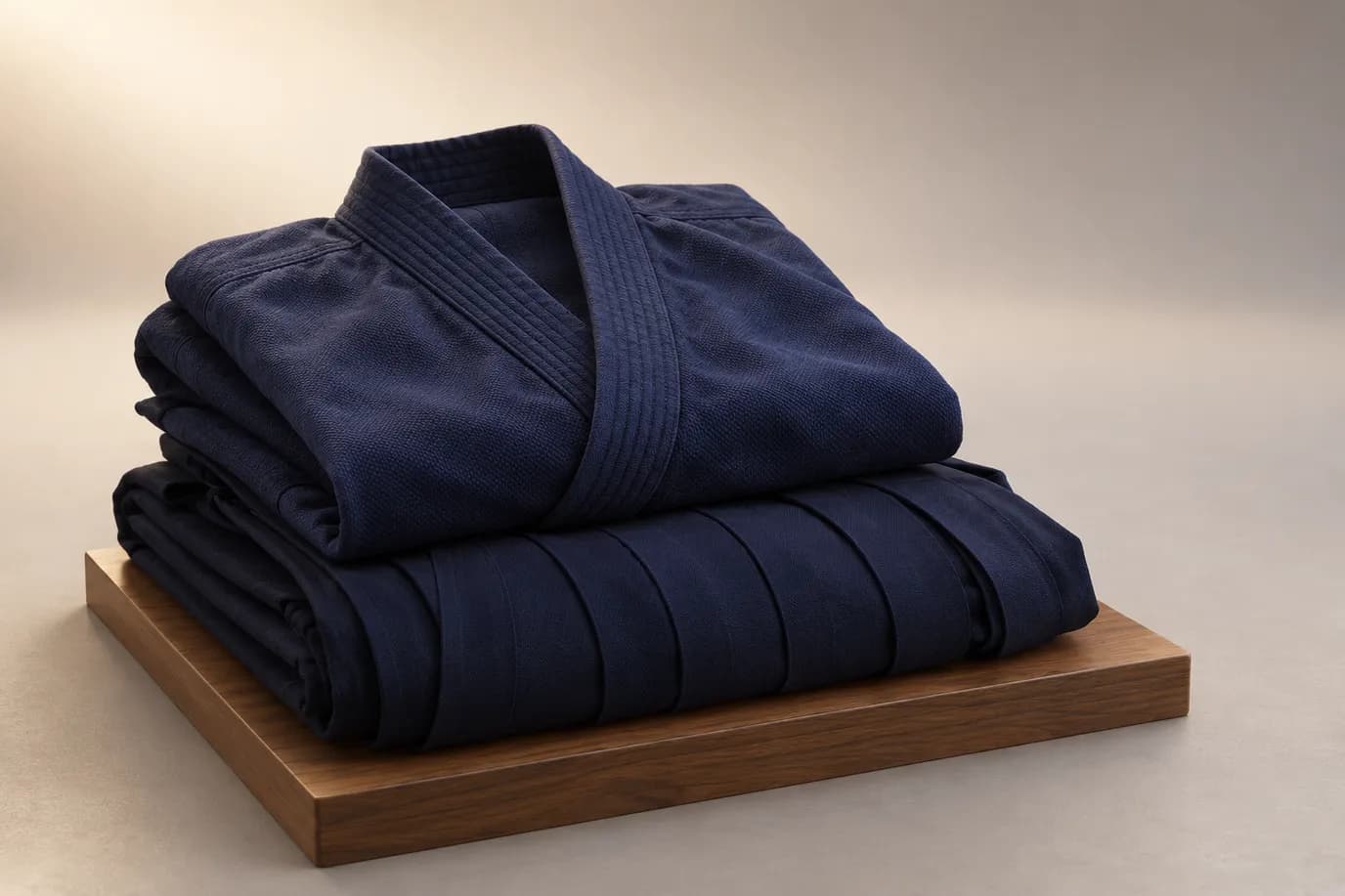
An iaido gi, or iaidogi, is the jacket worn for iaido, the art of drawing the Japanese sword. It is worn with a pleated hakama and a firm obi that holds the saya at the left hip. Many dojos wear black, navy or white, but colour rules vary by school.
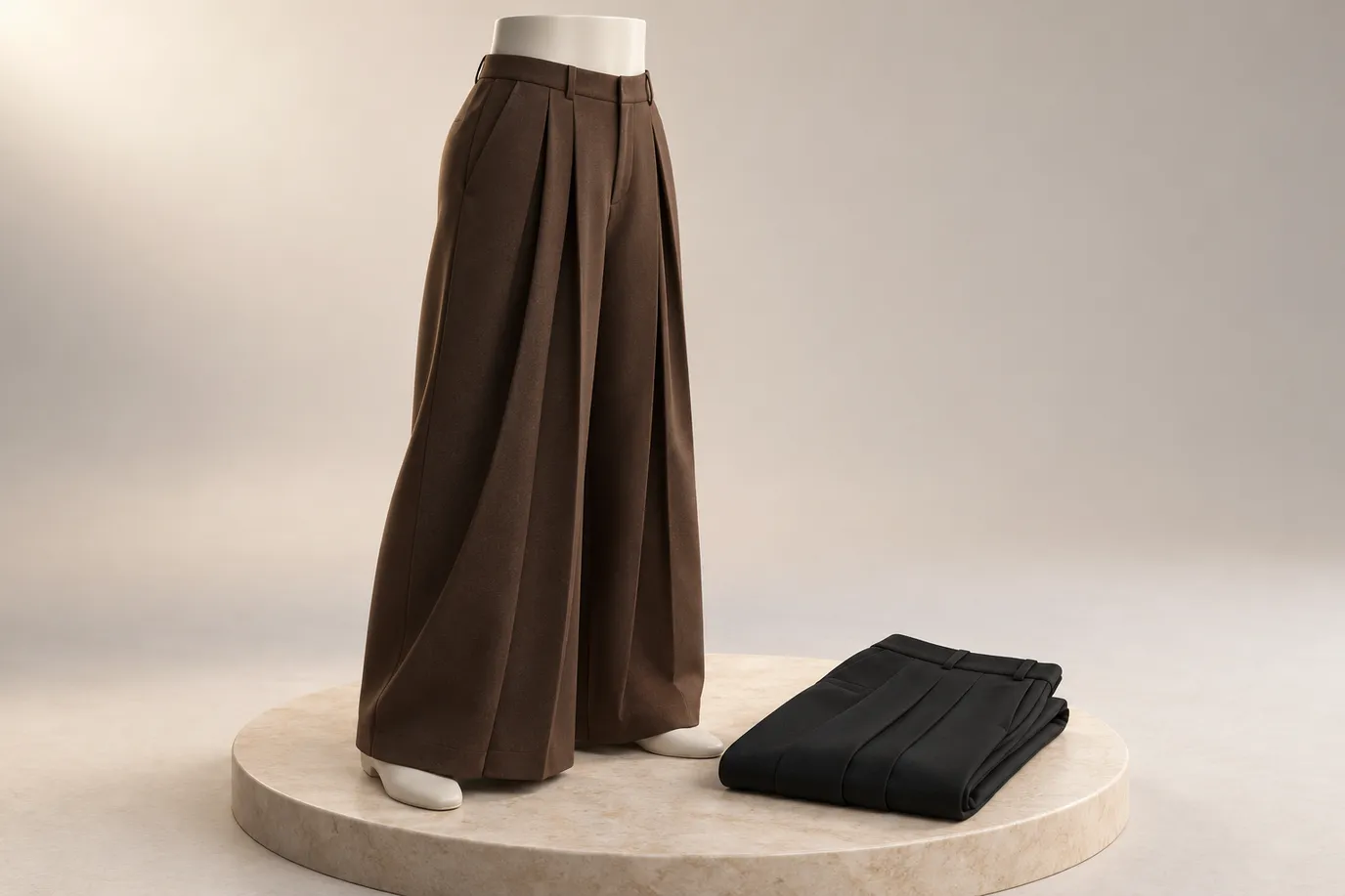
Japanese Harem Pants vs Hakama Pants Explained
Japanese harem pants is a Western shop label for baggy, low-crotch trousers with a Japanese look. In Japan the related styles have their own names: hakama pants have deep pleats and wide divided legs, monpe gather at the waist and ankle, and tobi trousers balloon below the knee.
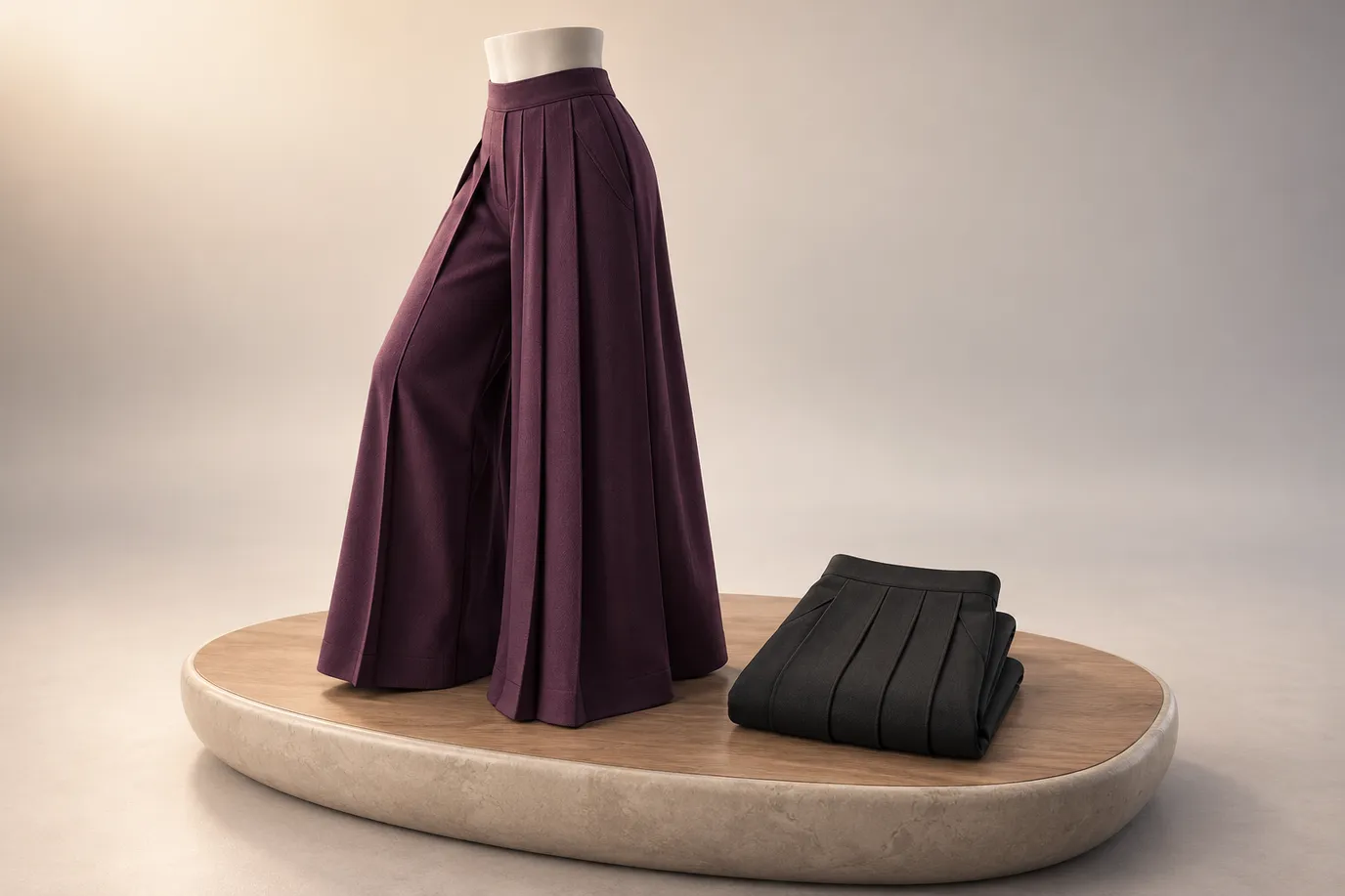
Hakama Pants for Women: How to Choose and Style
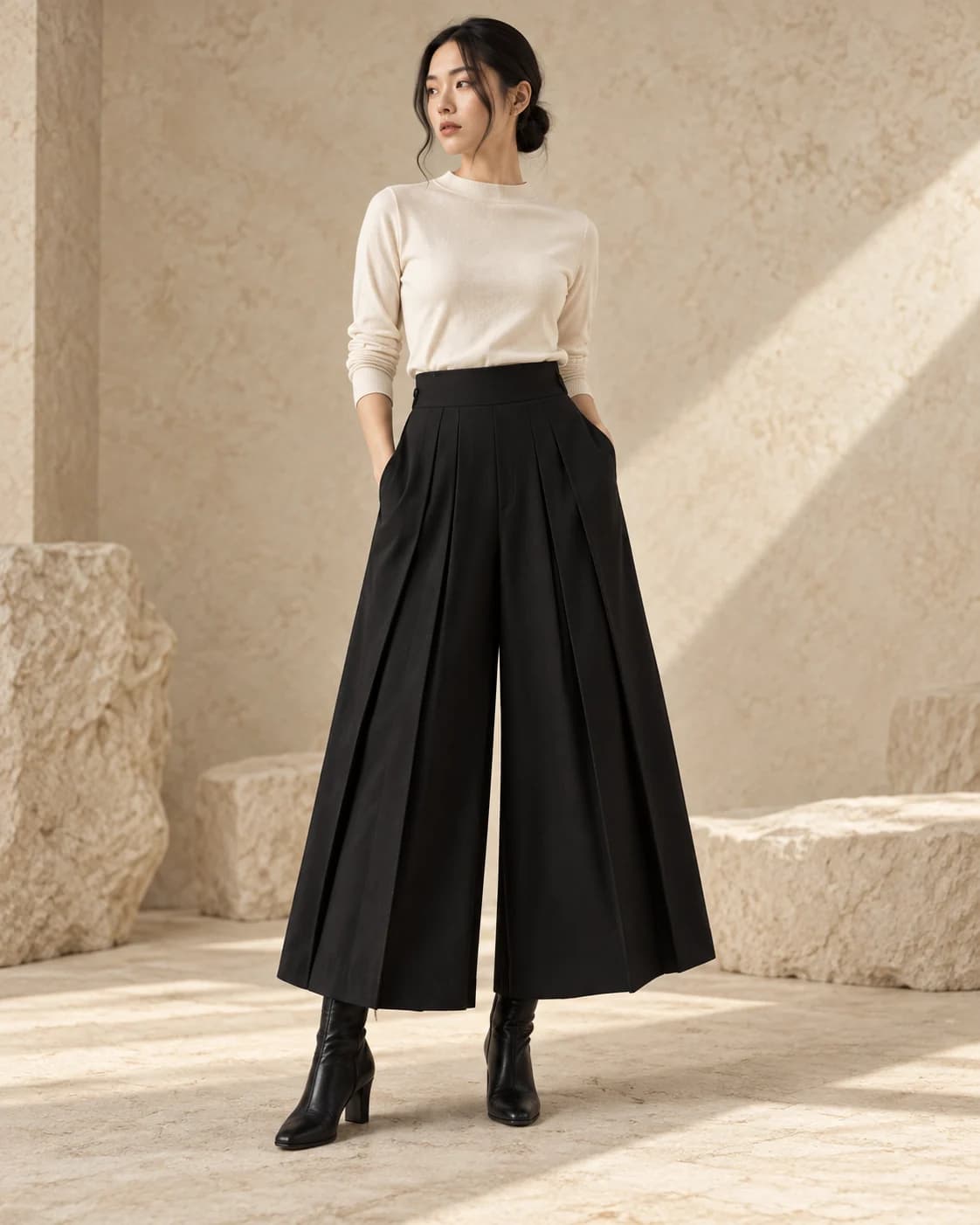
Hakama pants for women are wide, pleated trousers based on the Japanese hakama. The main styles are divided-leg umanori cuts, skirt-like andon shapes, cropped high-waist pairs and long flowing pleats. Choose by waist height and length, then balance the volume with a fitted or tucked top.
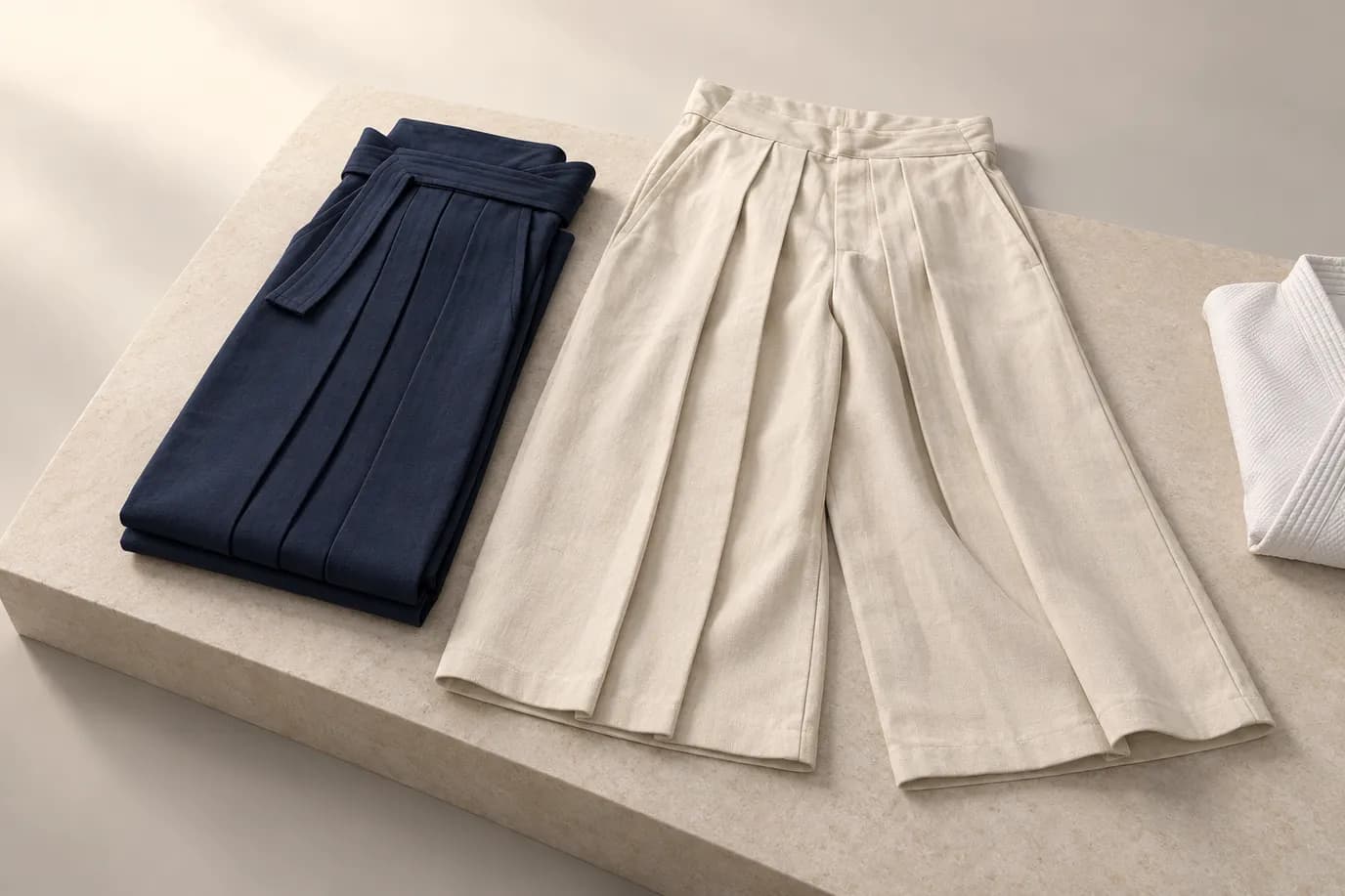
Cotton Hakama vs Tetron: Which Fabric to Choose
A cotton hakama is generally heavier, softer and more traditional than a tetron one, but it needs more care: pleats must be folded after each wear and indigo cotton fades and can rub off. Tetron, a polyester blend, is usually lighter, dries faster and holds its pleats with less work.
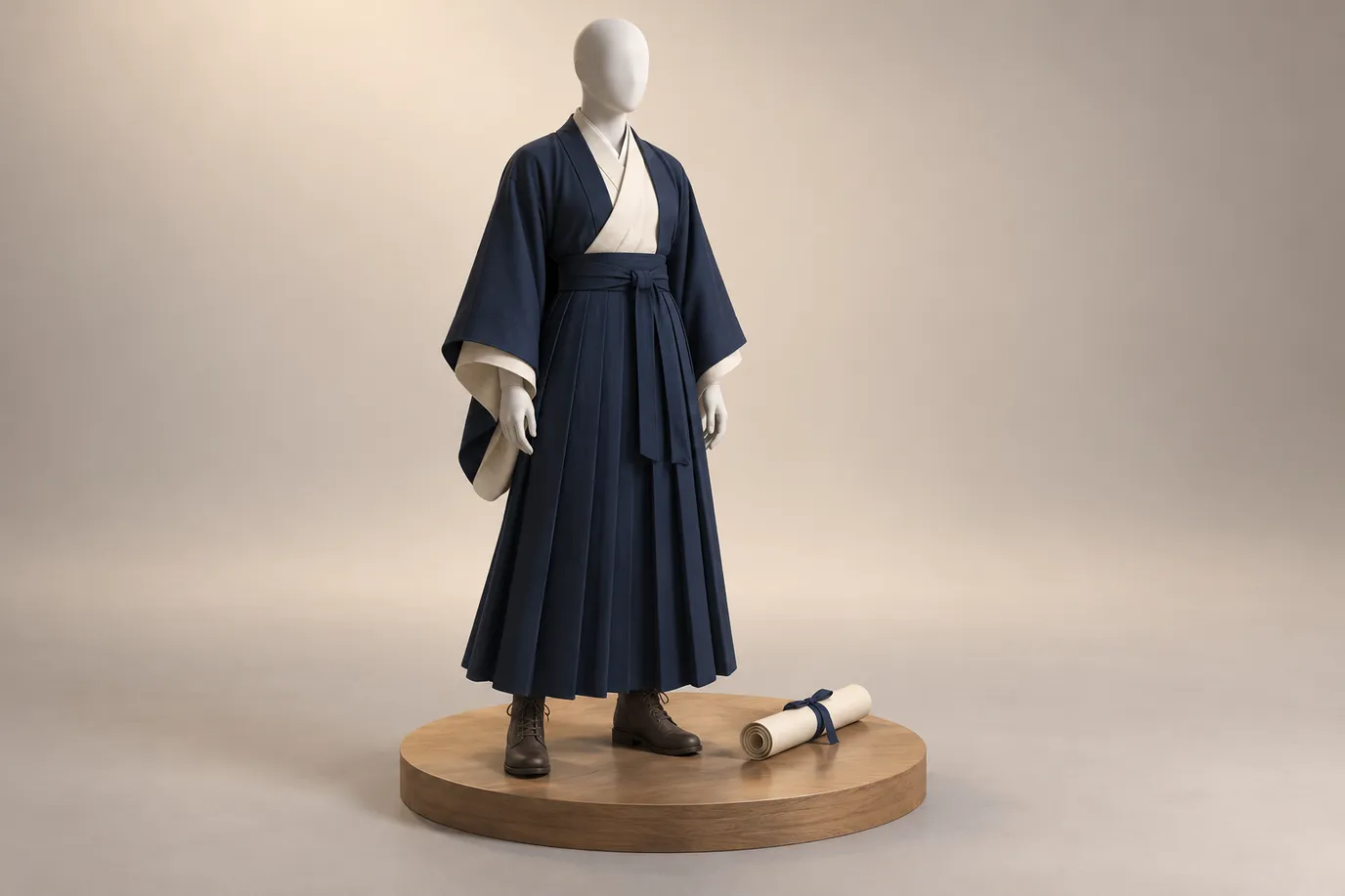
Japanese Graduation Outfit: The Hakama Tradition
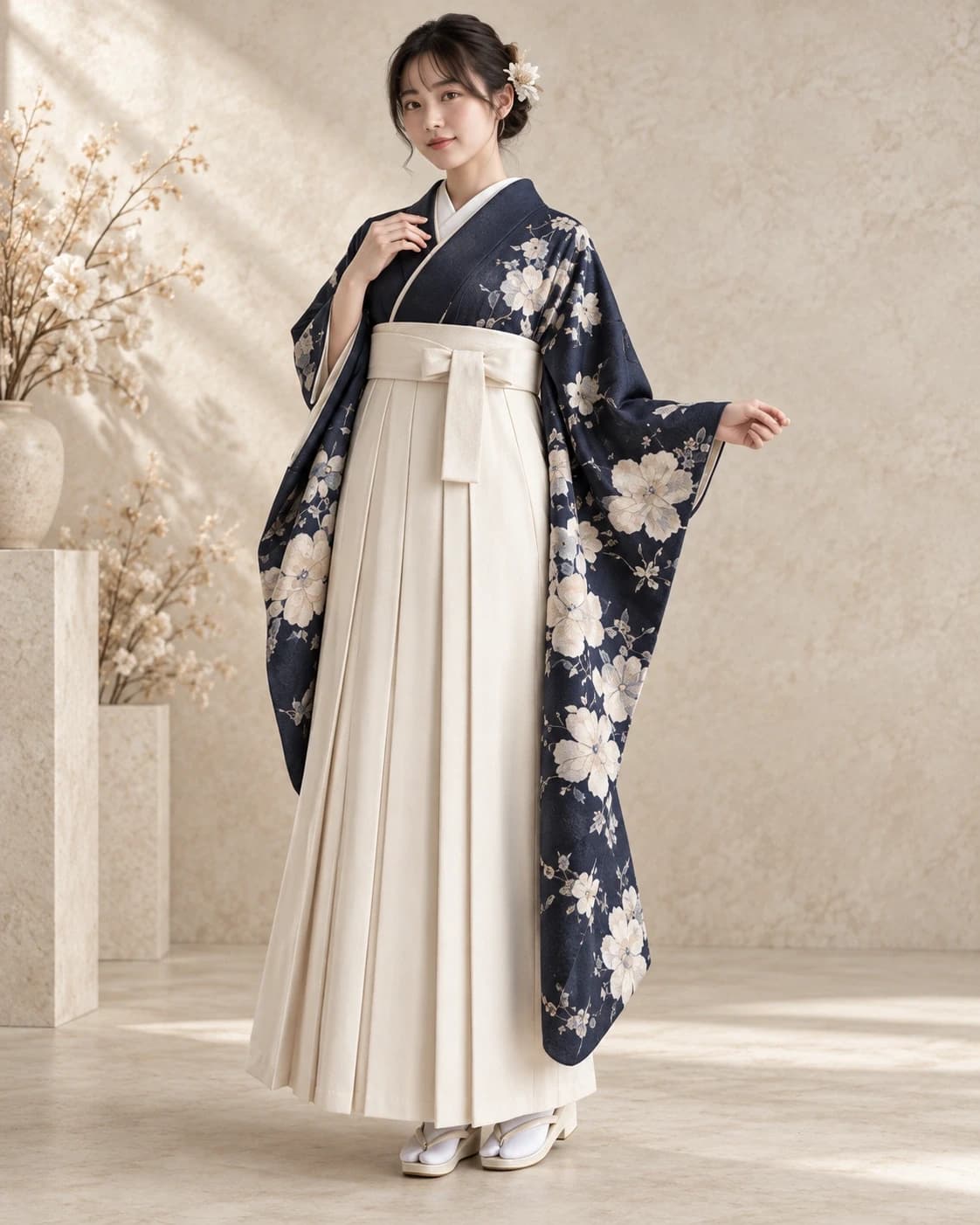
The best-known Japanese graduation outfit is a kimono worn with a hakama, chosen mostly by women at university graduations. The kimono is often a long-sleeved furisode or a shorter-sleeved style, the hakama is tied over it, and boots or zori finish the look. Many men wear suits or a montsuki and hakama.
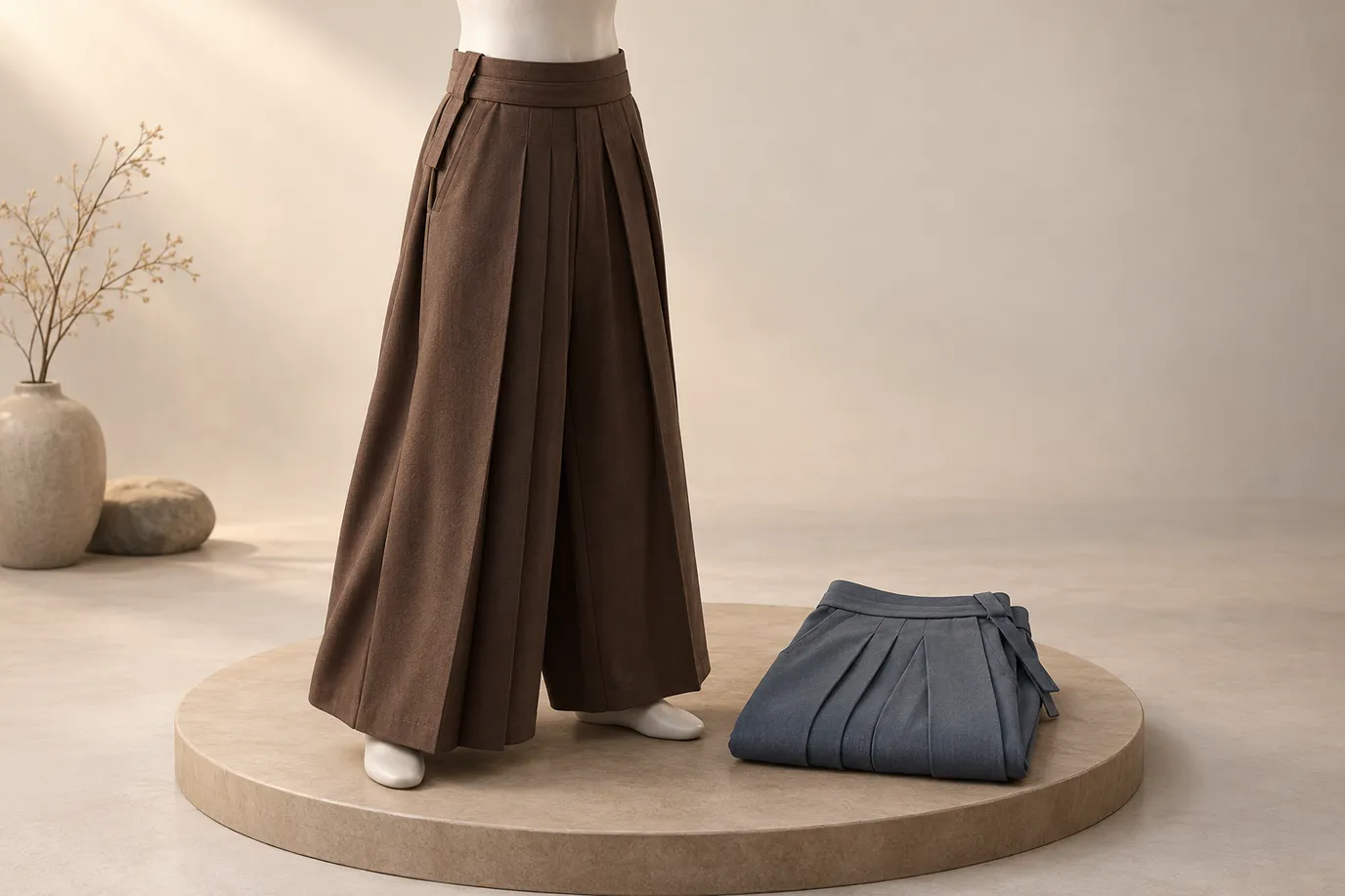
Japanese Pants: Traditional Styles and Their Names
Japanese pants include several traditional styles. Hakama are wide pleated trousers or skirts worn over a kimono or a training top. Tobi are very baggy work trousers, monpe are gathered farm trousers, and samue trousers are loose, tie-waist workwear. Modern hakama pants adapt the hakama shape for everyday wear.
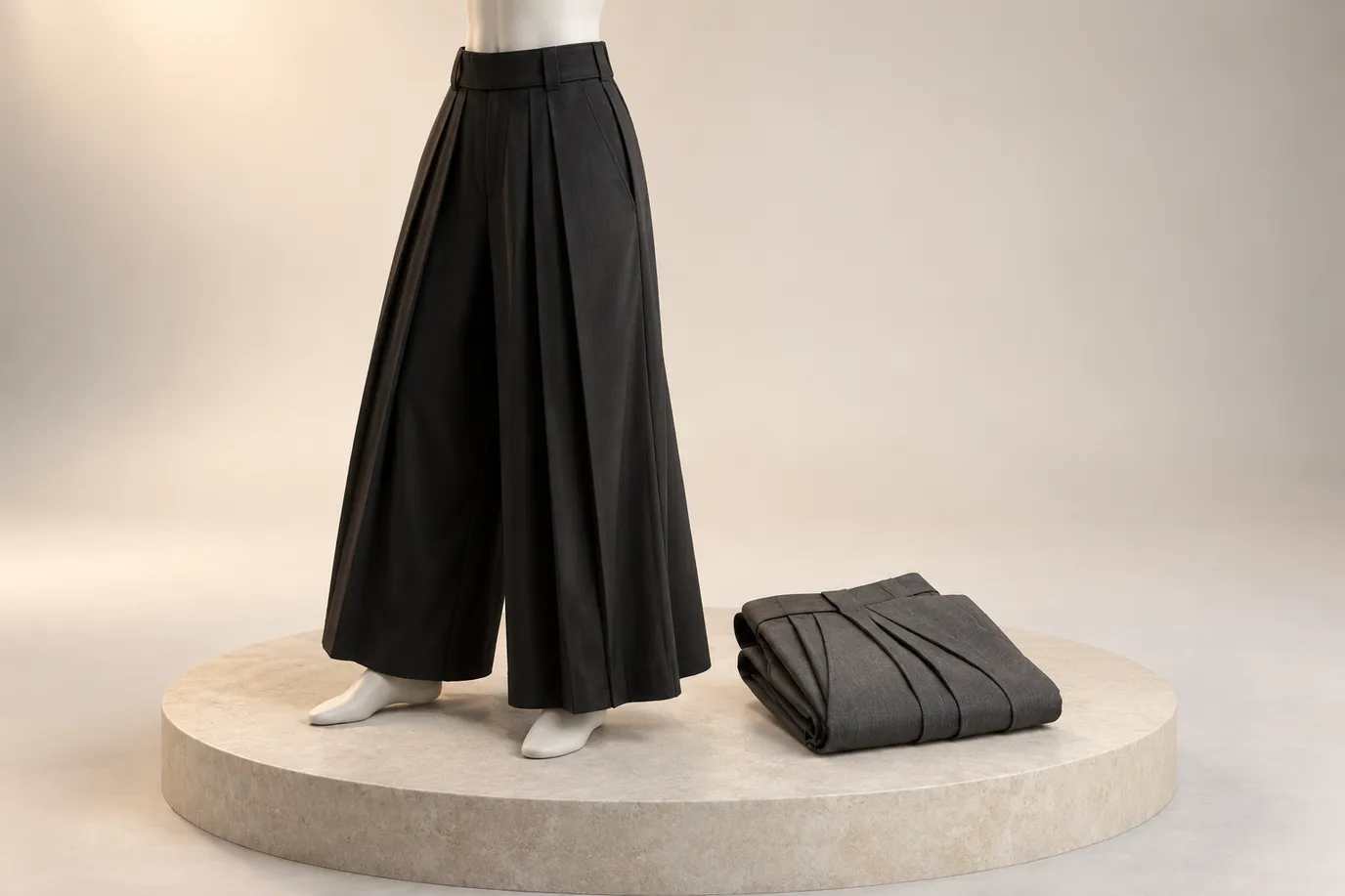
Japanese Streetwear Pants: Styles and How to Wear Them
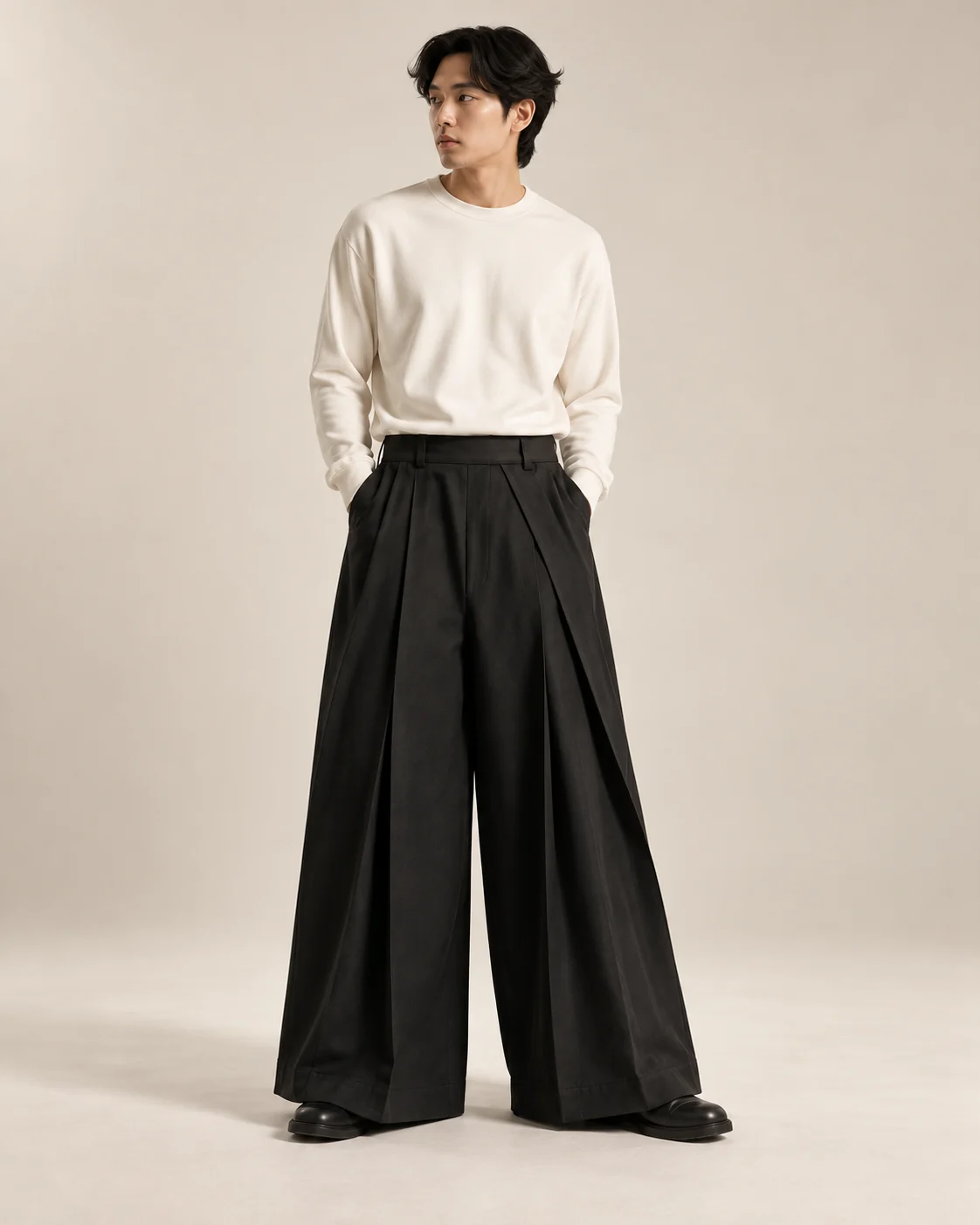
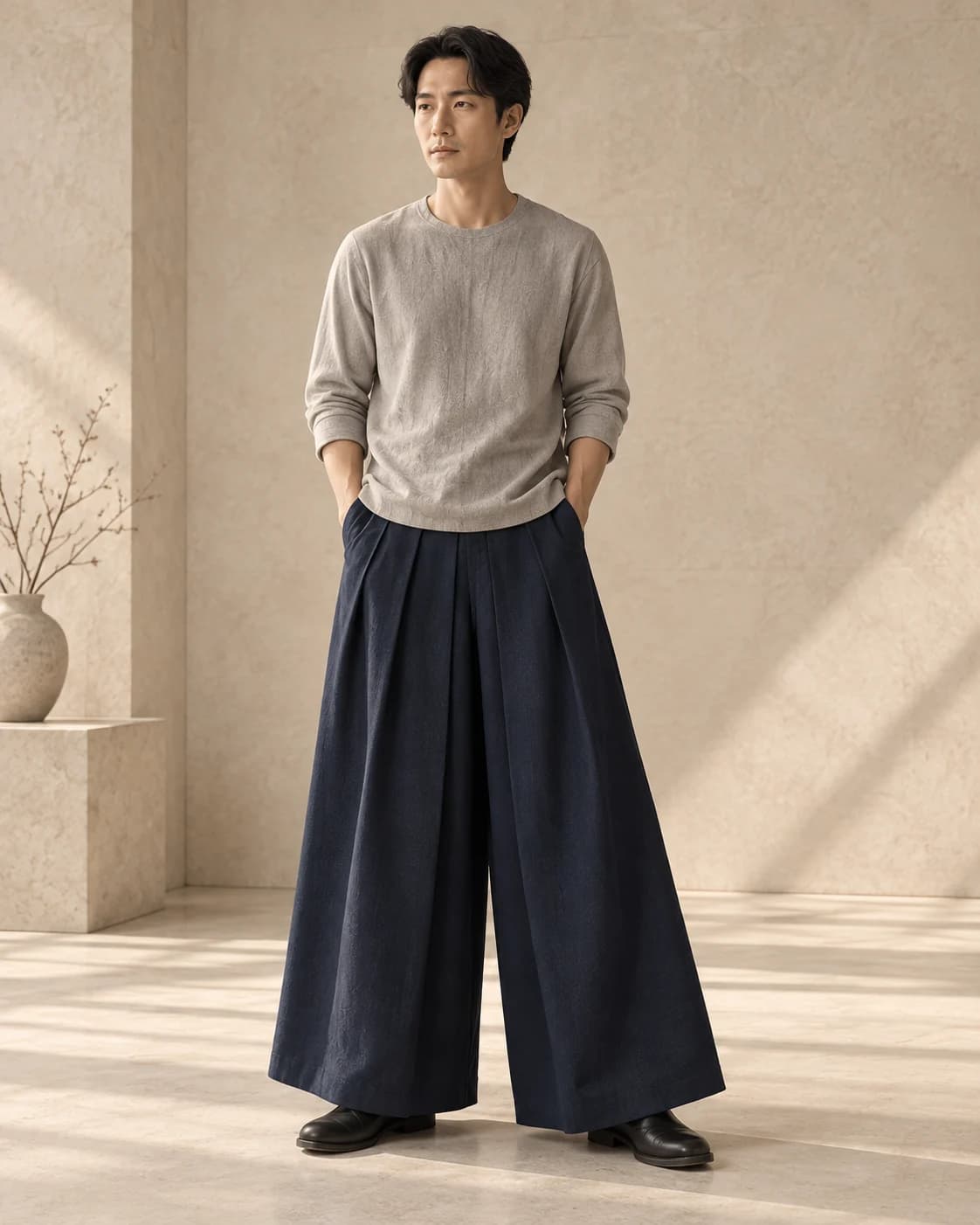
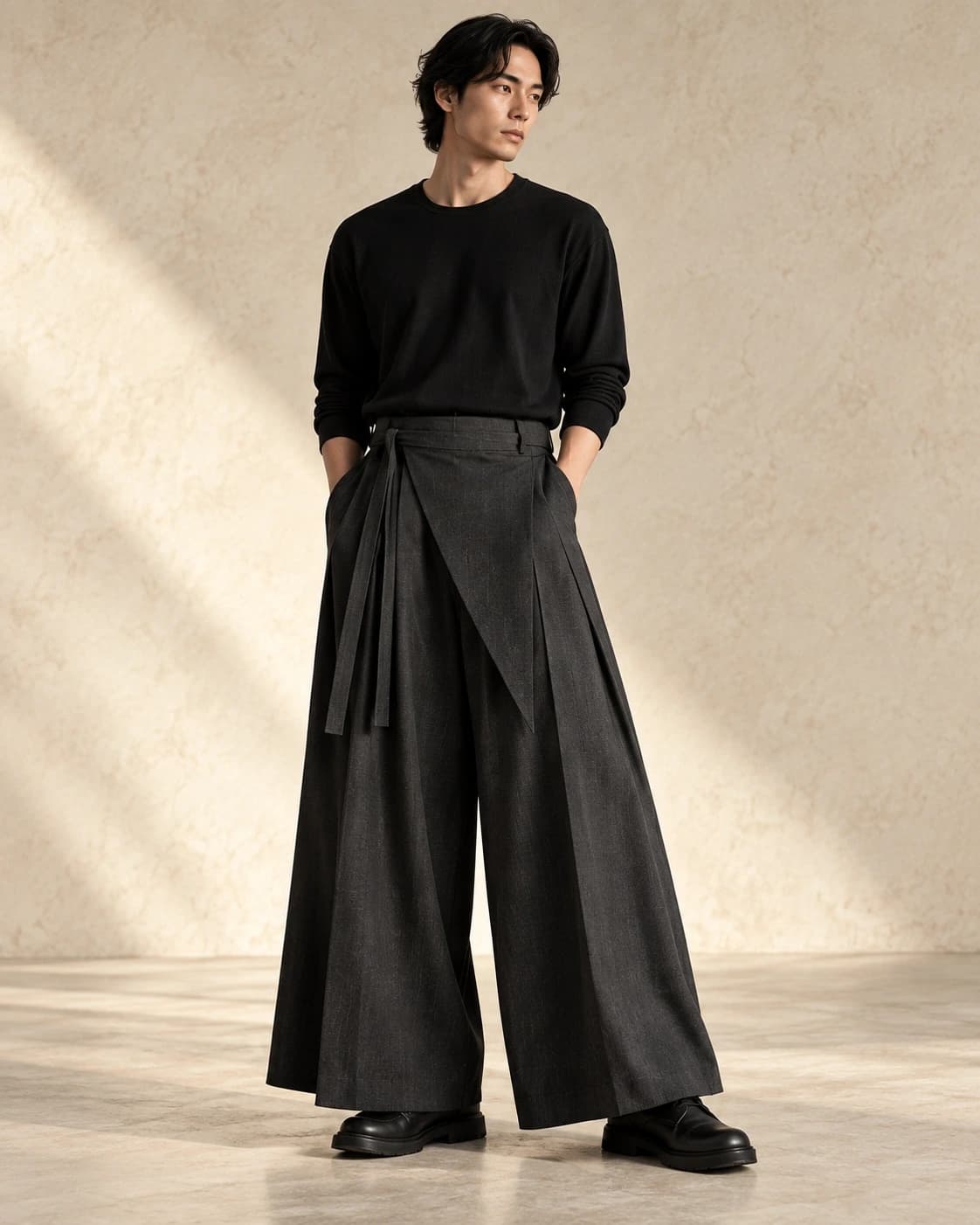
Japanese streetwear pants are wide, often pleated trousers drawn from traditional cuts such as the hakama. The main styles are hakama pants with deep front pleats, extra-wide straight legs, cargo or techwear versions with pockets, and asymmetric avant-garde cuts. Pair them with a shorter or tucked top to keep the proportions.
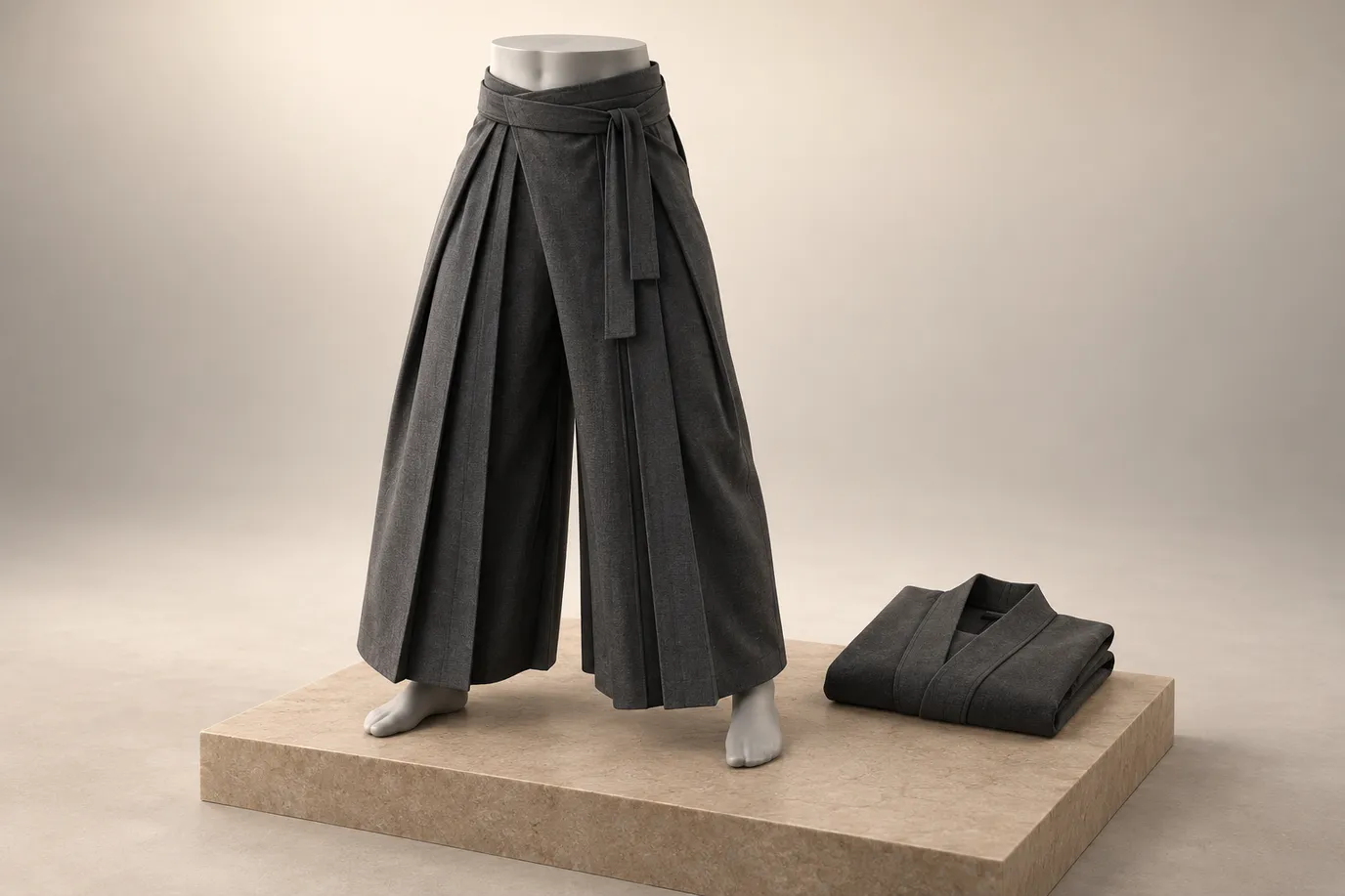
Samurai Clothing: What Samurai Wore and Why
Samurai clothing included far more than armour. Day to day, samurai wore a kimono with hakama, often with a haori jacket. For formal duties in the Edo period they wore kamishimo, a sleeveless shoulder garment over matching hakama. Armour such as the yoroi was worn only for battle.
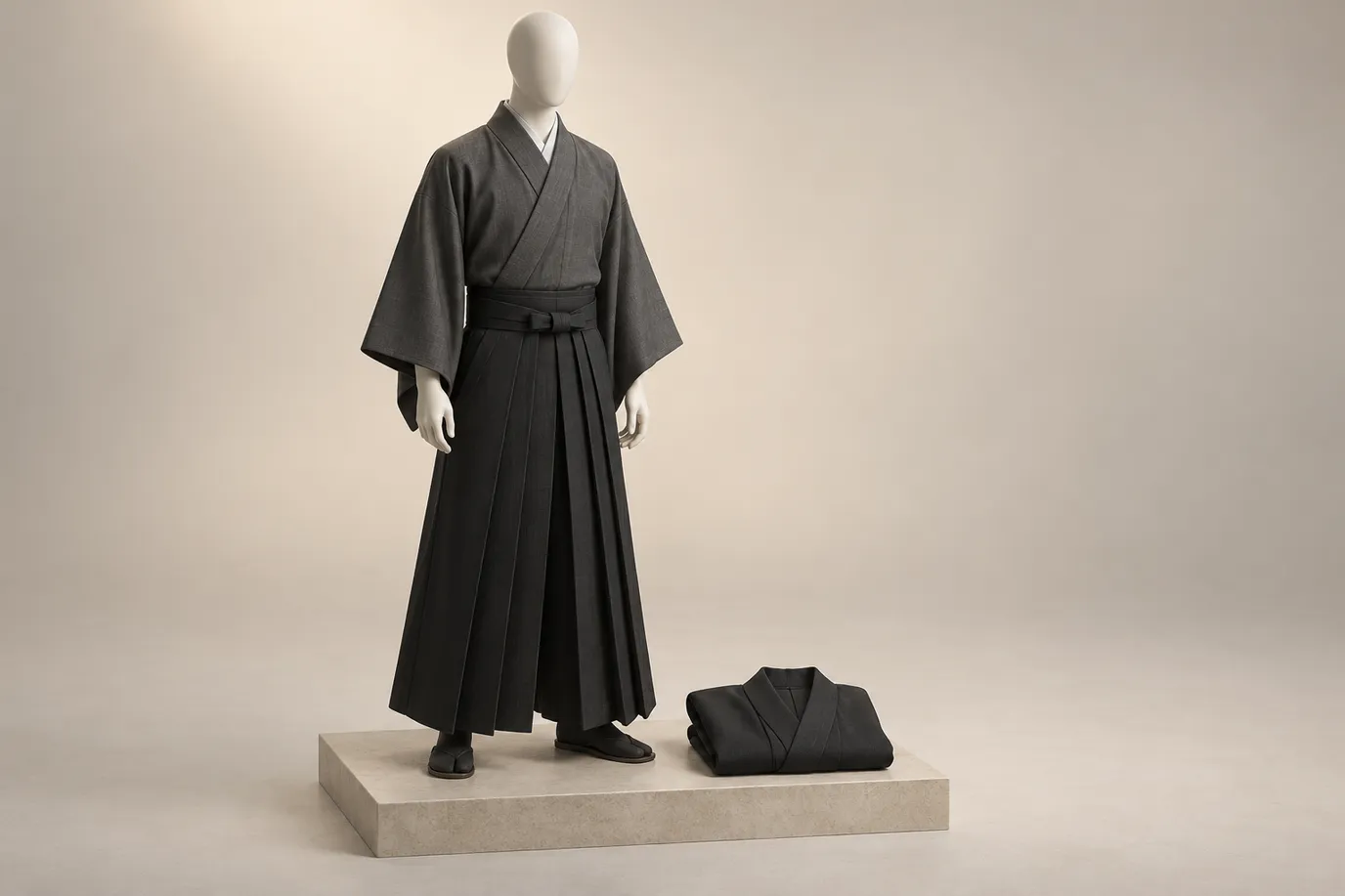
Traditional Japanese Clothing for Men: A Full Guide
Traditional Japanese clothing for men centres on the kimono, worn with an obi and, for formal events, a hakama and haori. Summer and festival wear includes the yukata, jinbei and happi coat, while samue is loose work and home wear. The hakama is the piece most often adapted for modern outfits.
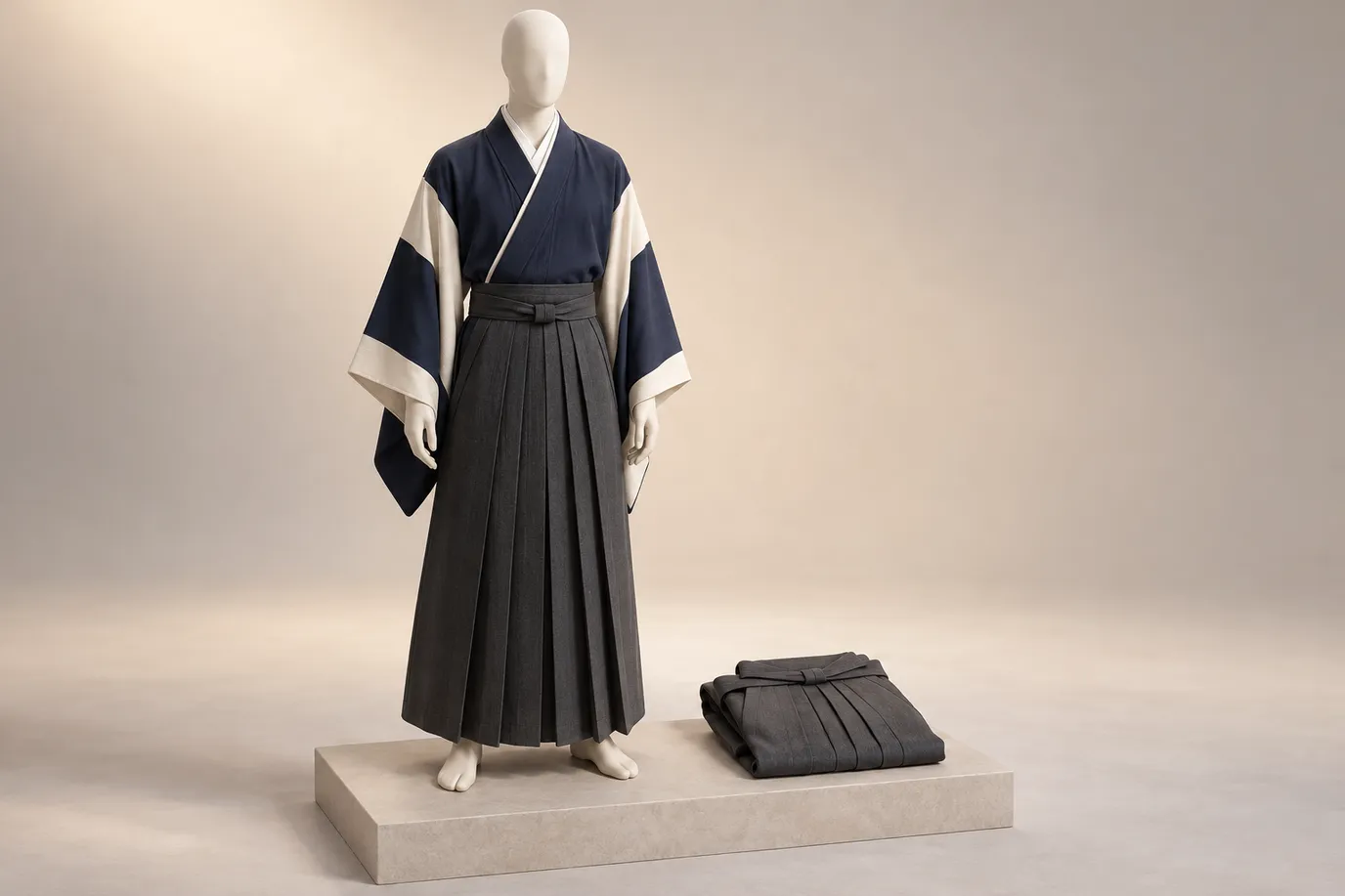
Traditional Japanese Clothing for Women: A Guide
Traditional Japanese clothing for women centres on the kimono, which comes in levels of formality such as the long-sleeved furisode, the homongi and the tomesode. The yukata is a light summer robe. A hakama is worn over a kimono for graduations and ceremonies, and in some martial arts.
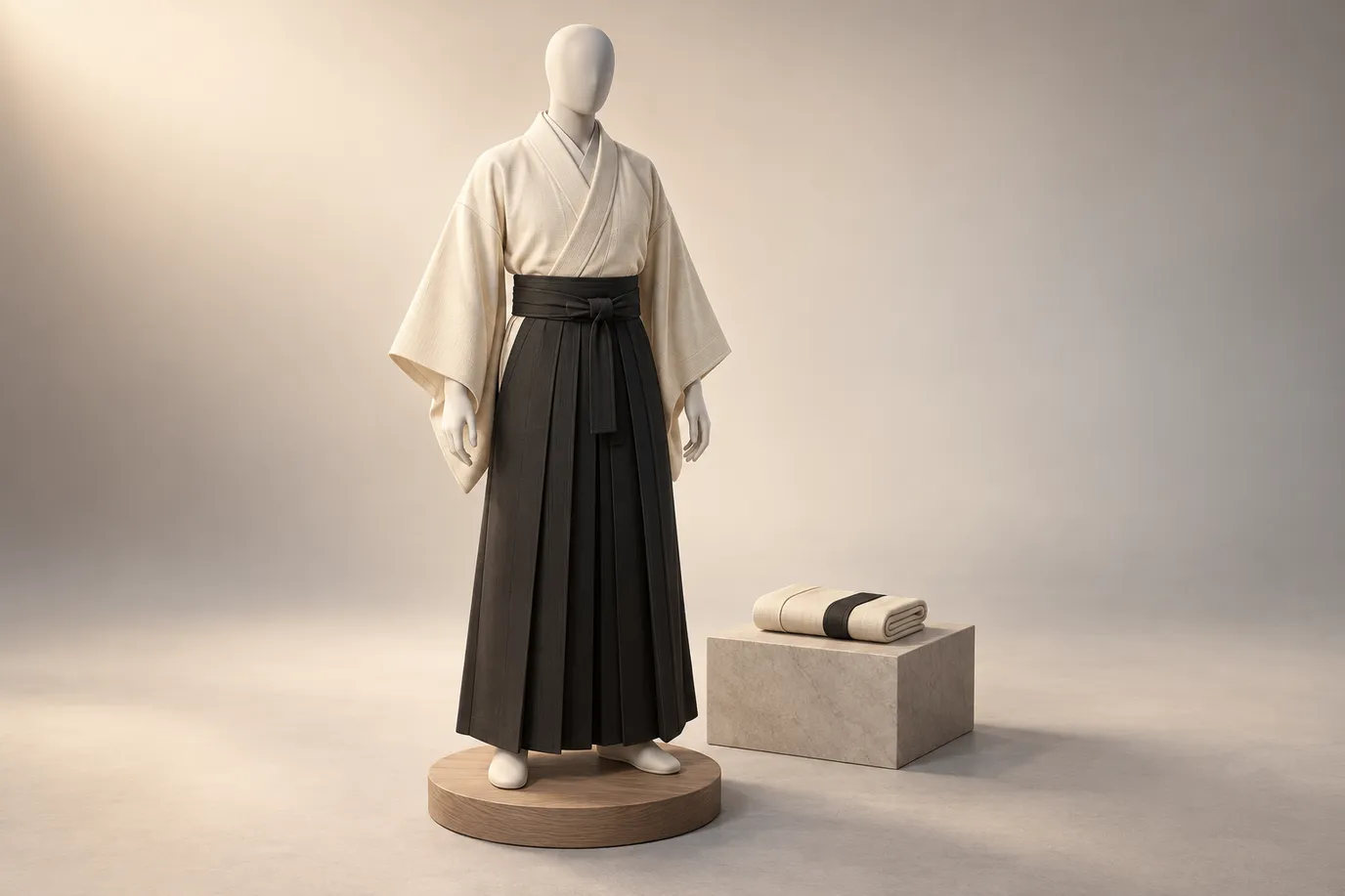
Hakama Kimono: How Hakama and Kimono Are Worn Together
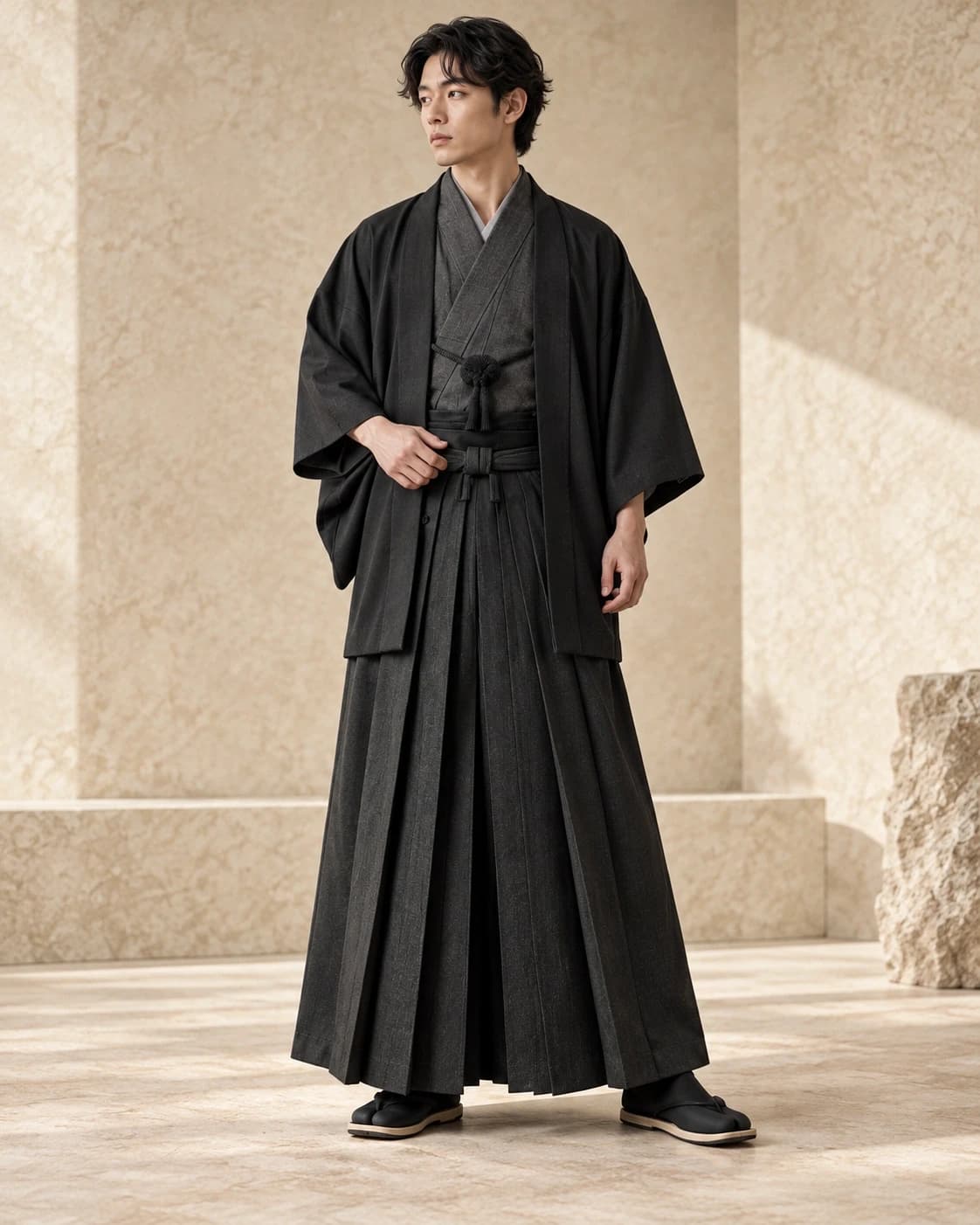
A hakama kimono outfit is a kimono worn with a pleated hakama tied over it. The kimono goes on first and is closed with an obi, then the hakama is tied over the obi so the pleats fall from the waist. Men often add a haori for formal events.
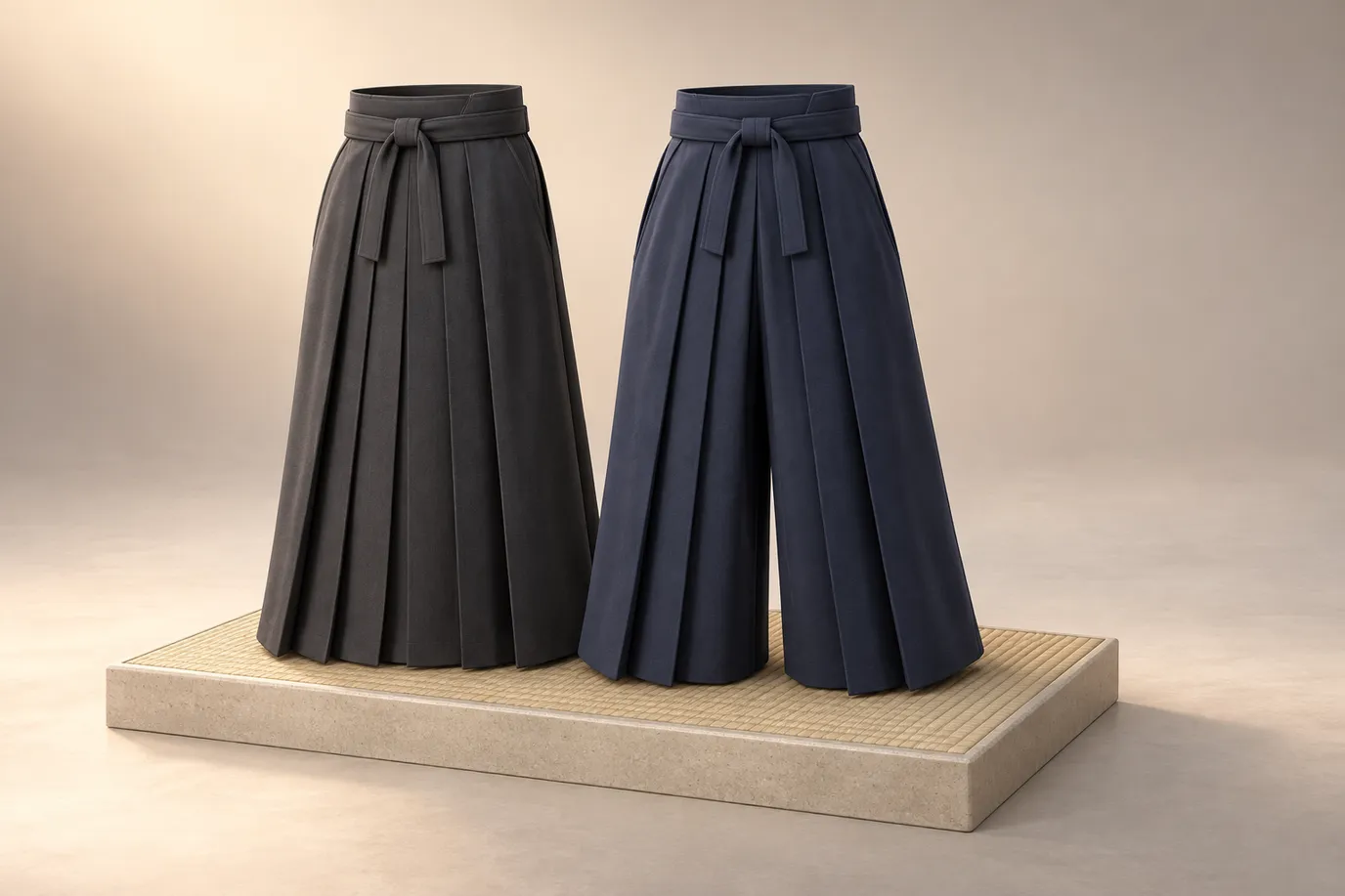
Hakama Skirt: Is a Hakama a Skirt or Pants?
A hakama can be either a skirt or pants. The andon hakama is undivided, so it is worn like a long pleated skirt, and the umanori hakama is divided into two wide legs like trousers. Both have the same pleated front, so they look alike when the wearer is standing still.
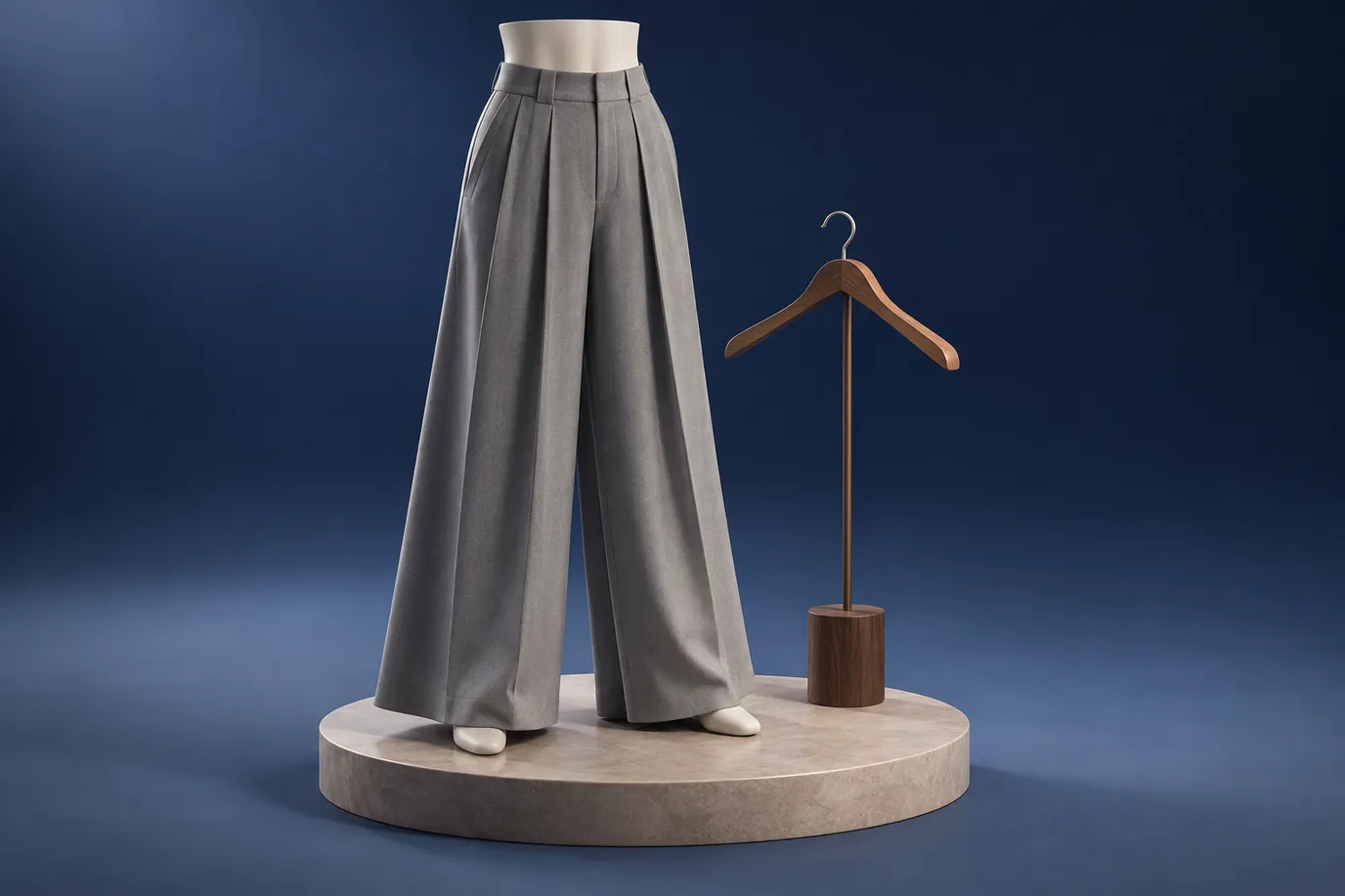
Hakama Trousers: What They Are and How to Choose
Hakama trousers are wide-leg, pleated trousers based on the Japanese hakama. Unlike a traditional hakama, most have a flat or elastic waistband instead of long ties and no rigid back panel. When choosing a pair, compare the waist type, leg width, length with your shoes, pleat depth and colour.
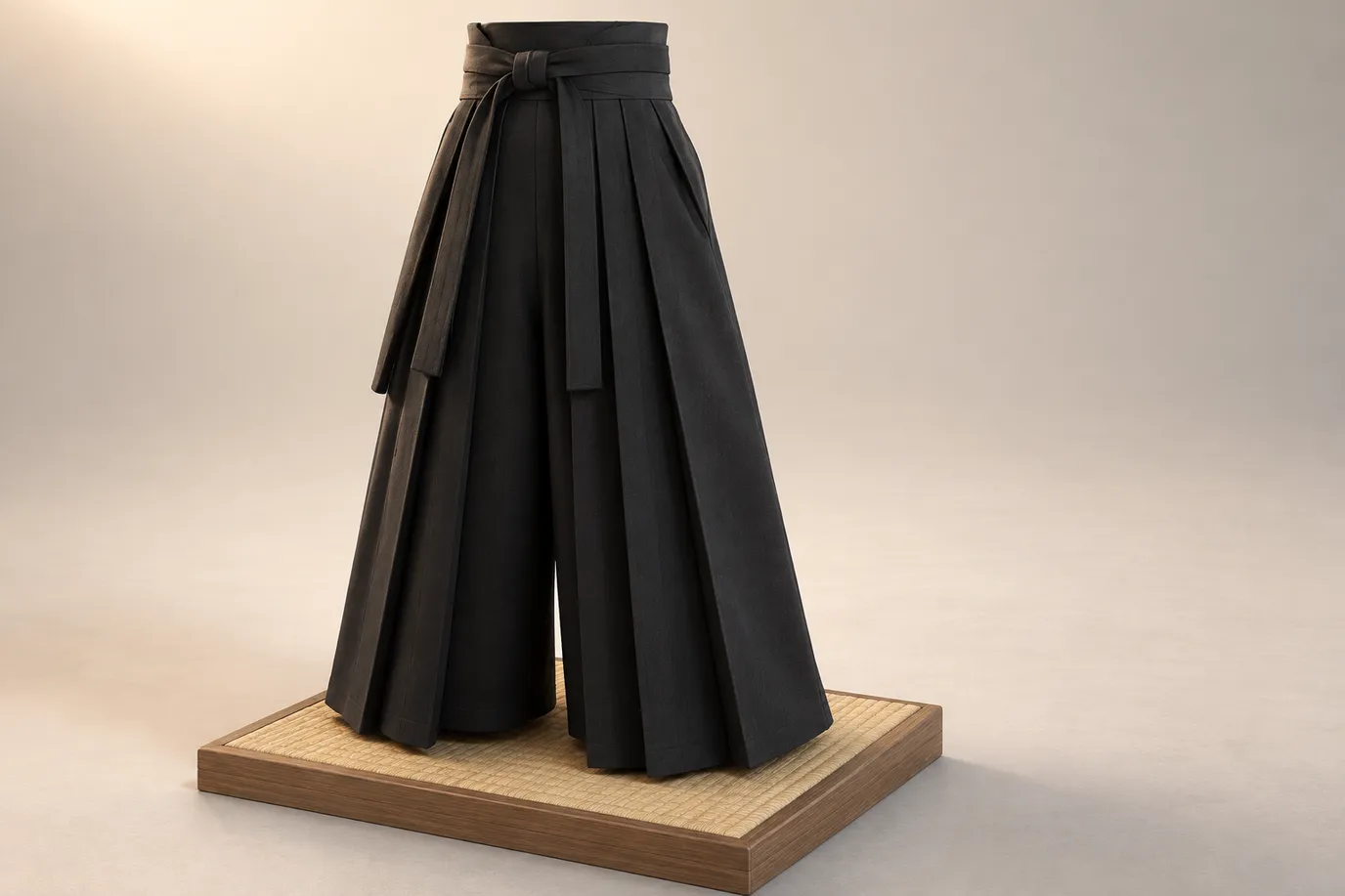
Samurai Pants: What They Are Called and How to Choose
Samurai pants are usually called hakama: wide, pleated Japanese trousers tied at the waist with long straps. The divided-leg form is the umanori hakama and the undivided, skirt-like form is the andon hakama. Modern versions borrow that pleated, wide-leg shape for everyday and streetwear outfits.
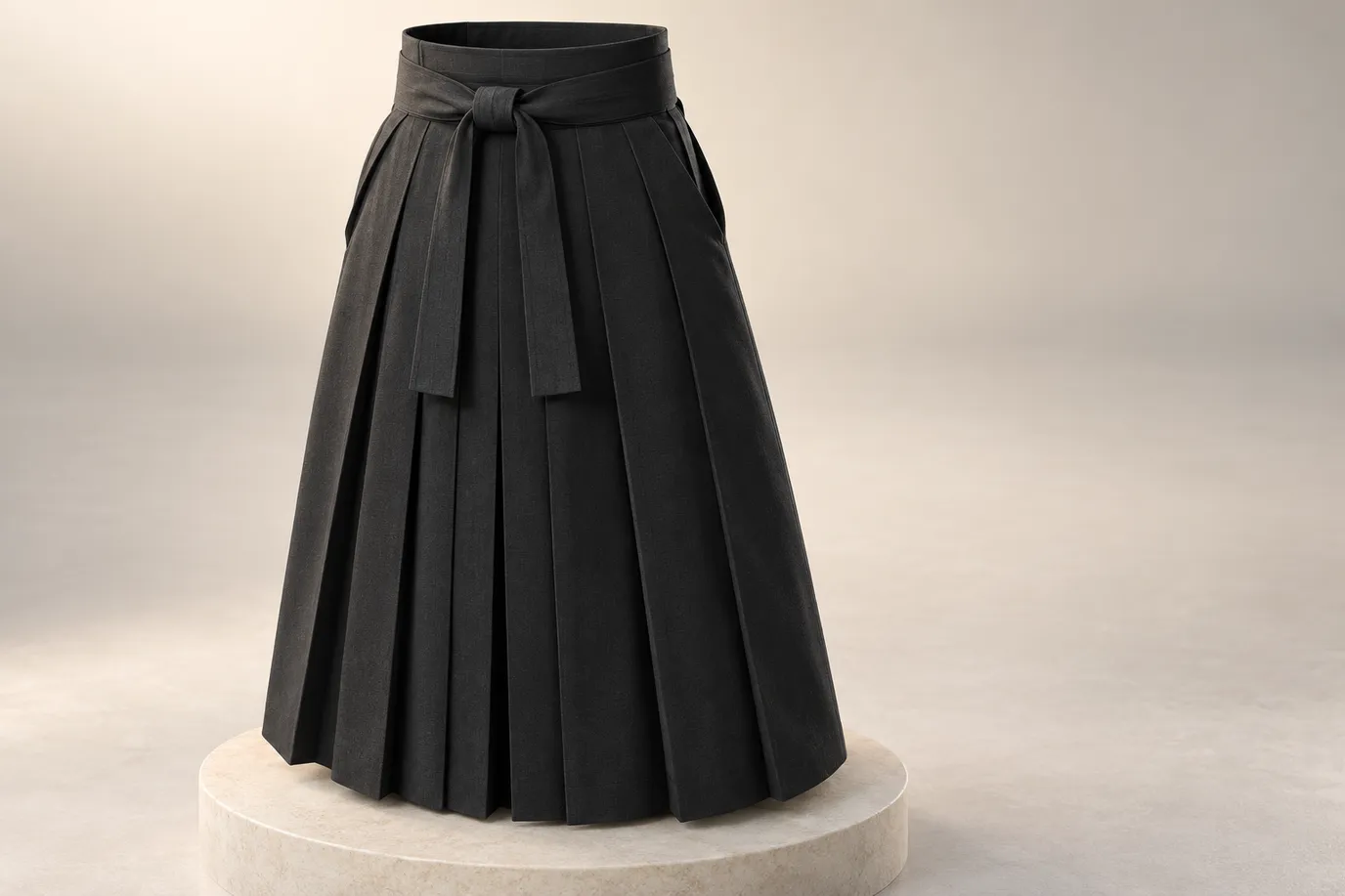
How to Tie a Hakama: Front Ties, Back Ties and Knots
To tie a hakama, wrap the long front ties around your waist, cross them at the back, bring them forward and tie them below the navel. Then set the back board above the belt, bring the shorter back ties to the front and finish with a flat knot or bow, as your school teaches.
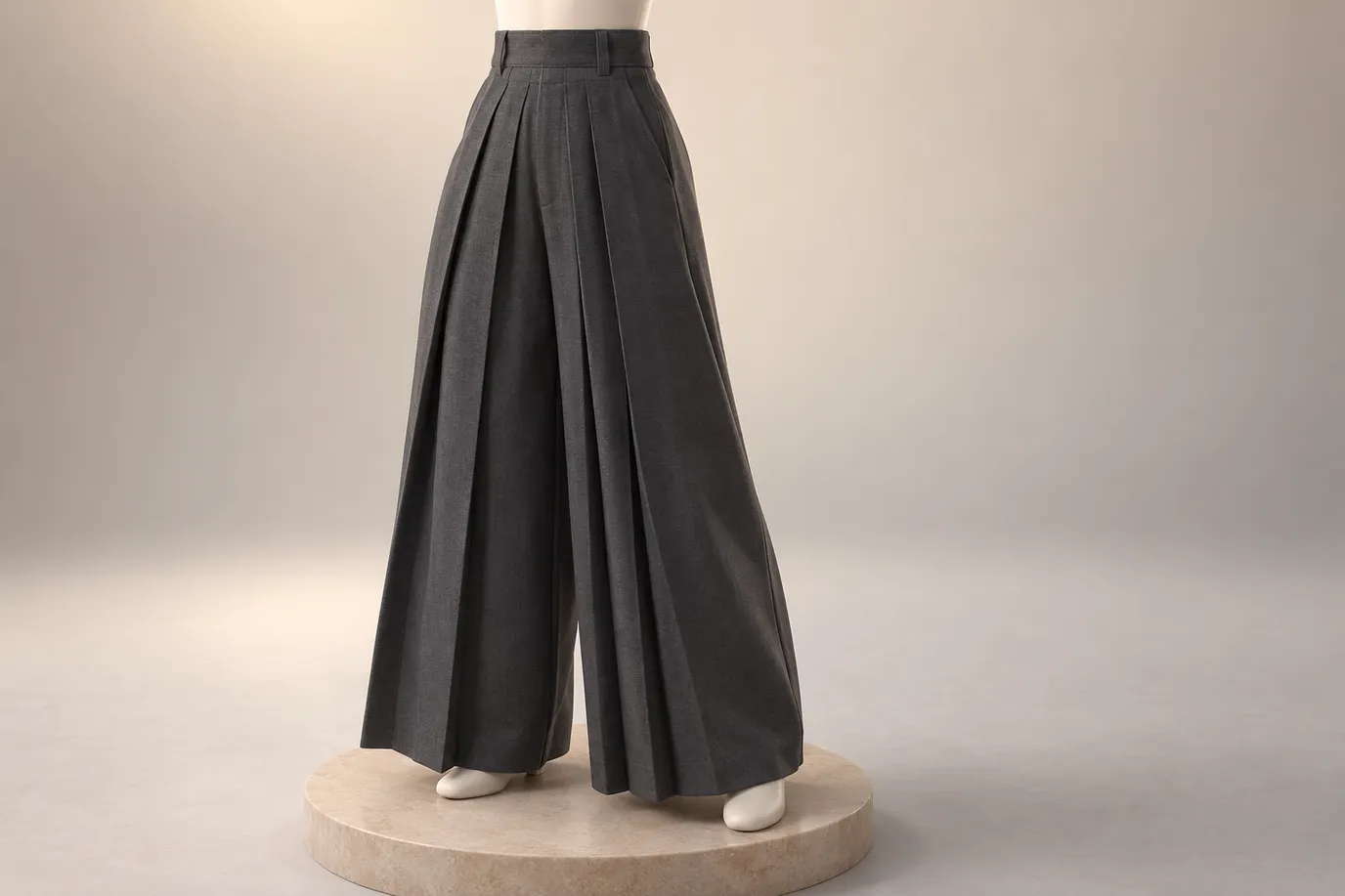
Hakama Pants for Men: How to Choose and Wear Them
Hakama pants for men are wide, pleated trousers based on the Japanese hakama, ranging from traditional tie-waist forms to modern streetwear cuts. Choose by use first (training, formal or everyday), then by waist style and leg width, and check the length against your own outseam before ordering.
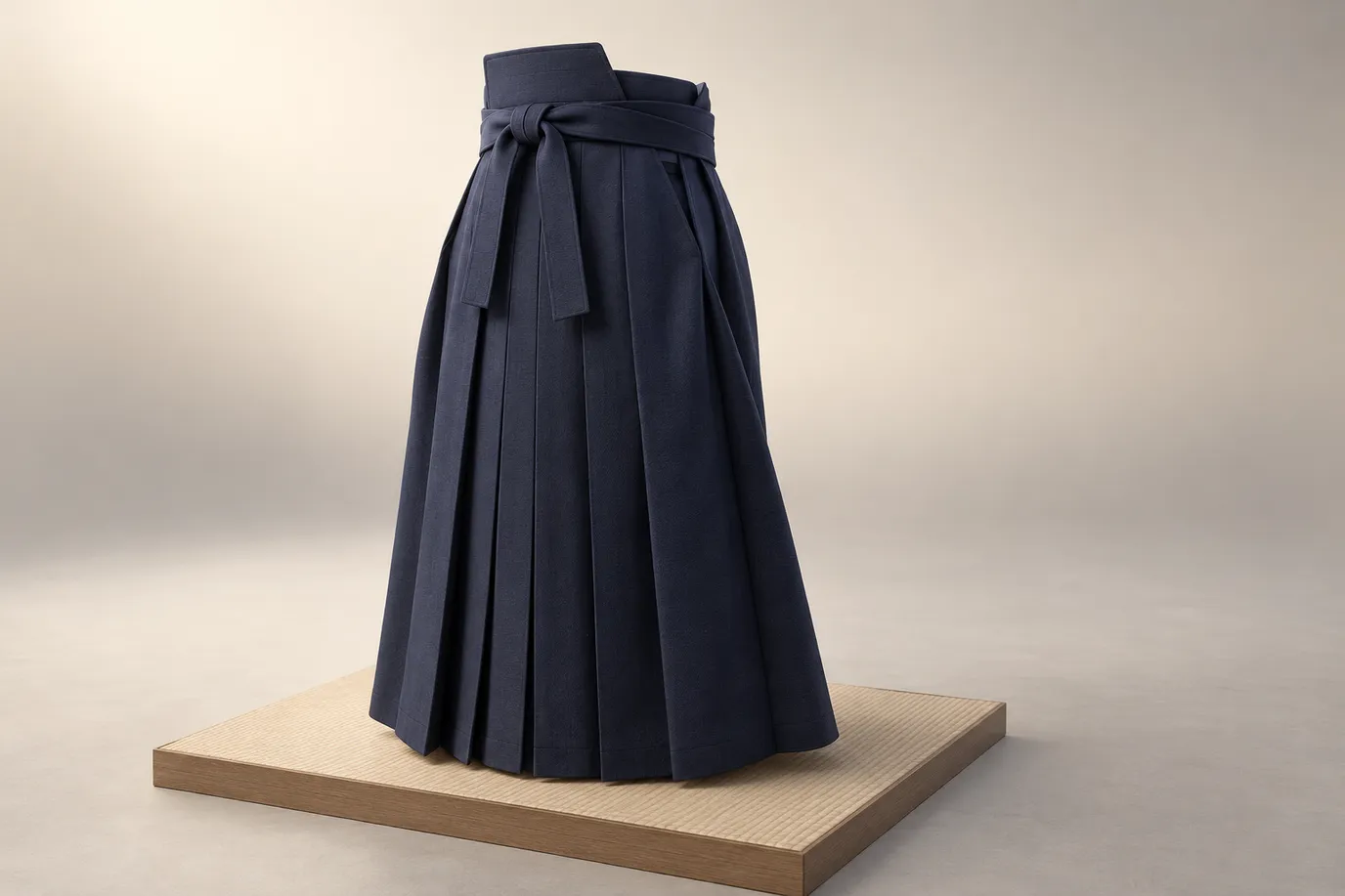
Aikido Hakama Guide: Colour, Rank and How to Choose
An aikido hakama is a pleated, divided-leg hakama worn over the keikogi, usually in black or dark navy. Many schools allow it only from a certain rank, often first dan, while others let all students wear one. Before buying, ask your dojo about rank rules and colour, then measure for length.
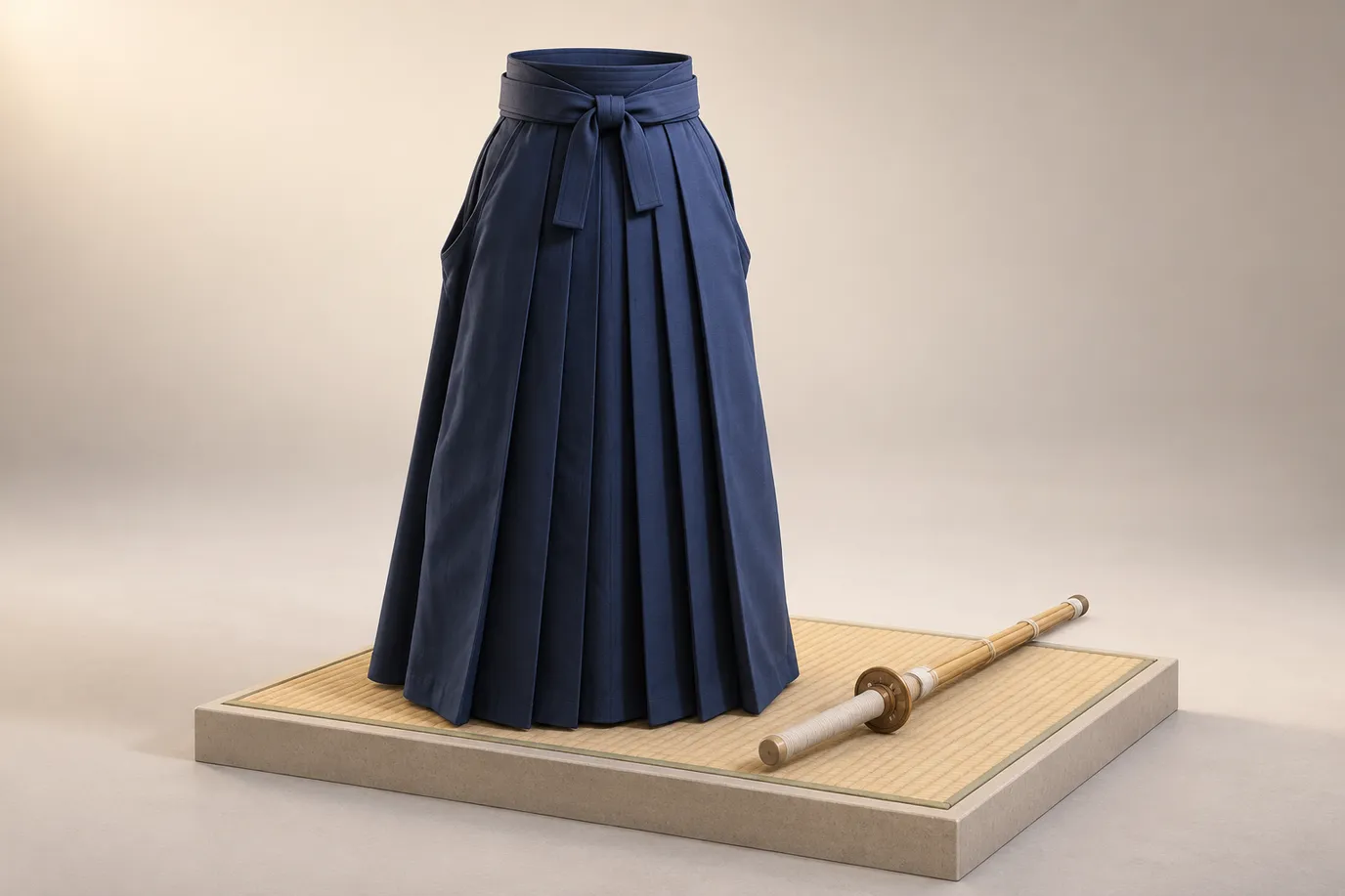
Kendo Hakama Buying Guide: Colour, Fabric and Length
A kendo hakama is a pleated, divided-leg hakama worn with a kendogi, most often in indigo. When choosing one, decide between an easy-care synthetic blend and traditional cotton, check the length your club expects (commonly around the ankle bone), and confirm colour rules for gradings with your instructor before you buy.
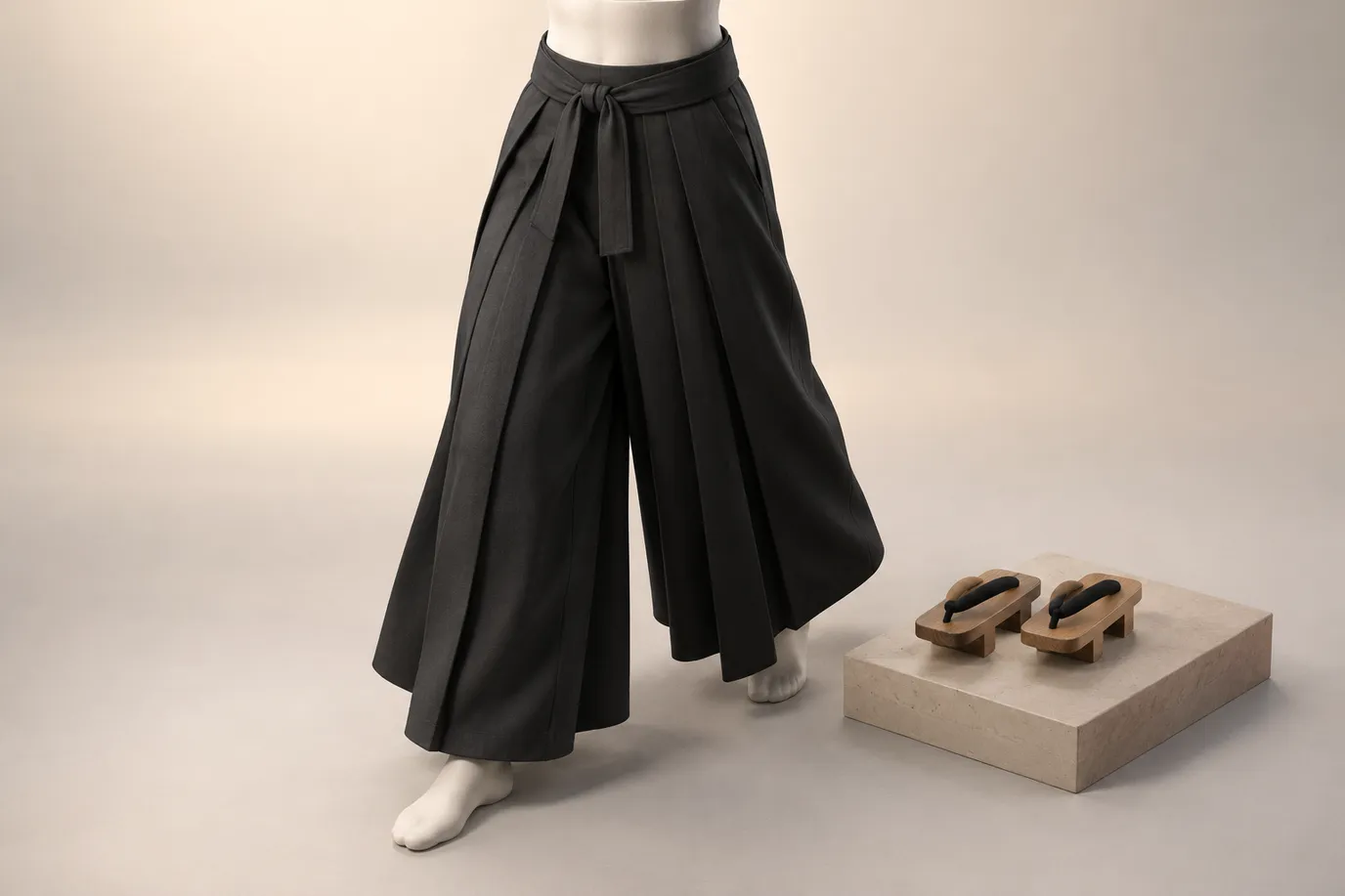
Hakama Outfit Ideas: How to Style Hakama Pants
A hakama outfit works when the top is shorter or closer to the body than the wide pleated legs below. Tuck or crop the top so the waist shows, keep colours to two or three tones, and choose flat, simple shoes. Traditional outfits pair the hakama with a kimono or training jacket instead.
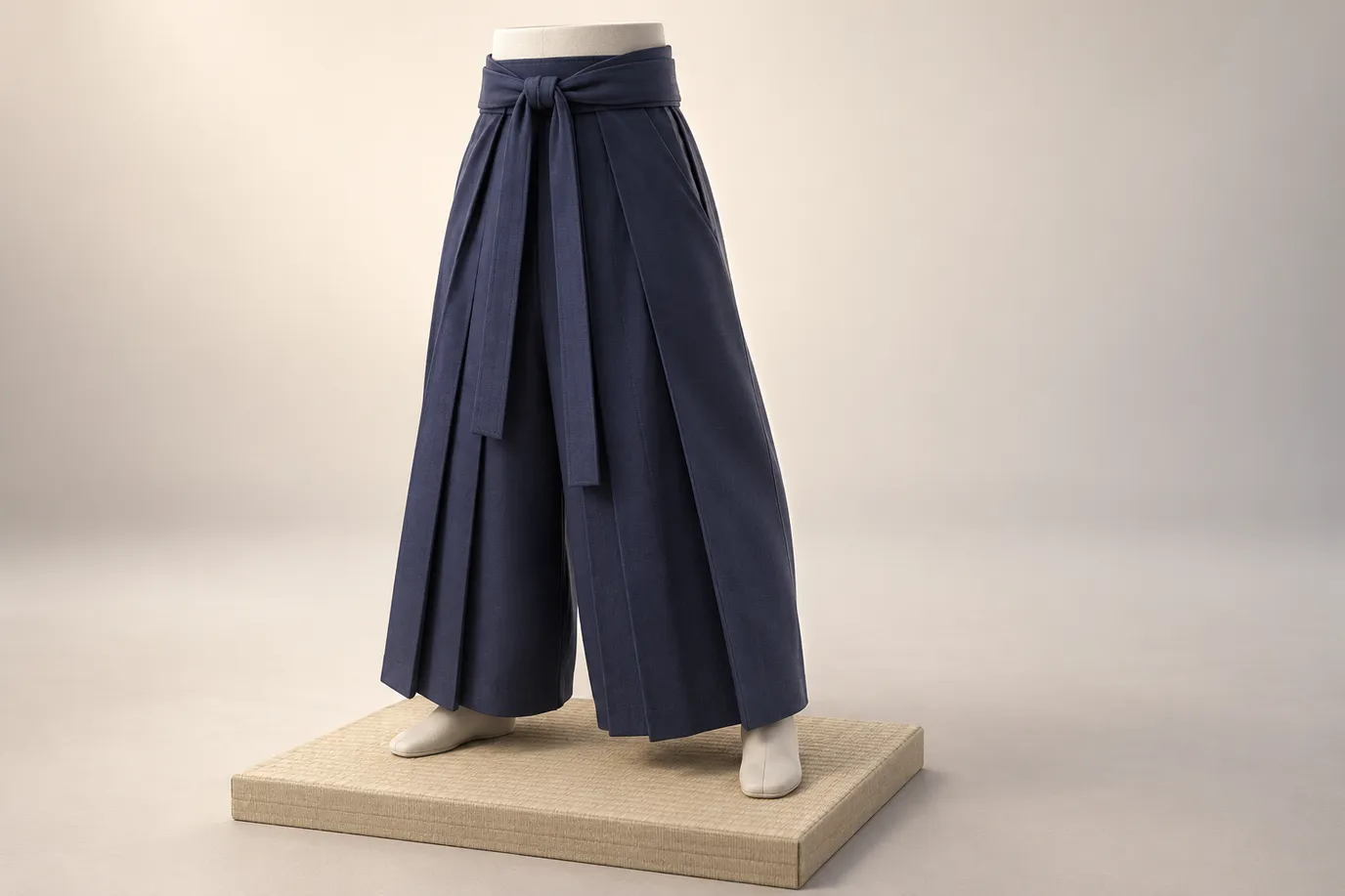
How to Wear a Hakama: Step-by-Step for Beginners
To wear a hakama, put on the jacket and belt first, step into the hakama and hold the front panel at your waist. Wrap the long front ties around the back, cross them and tie them. Then seat the back board above the belt knot and tie the back ties in front.
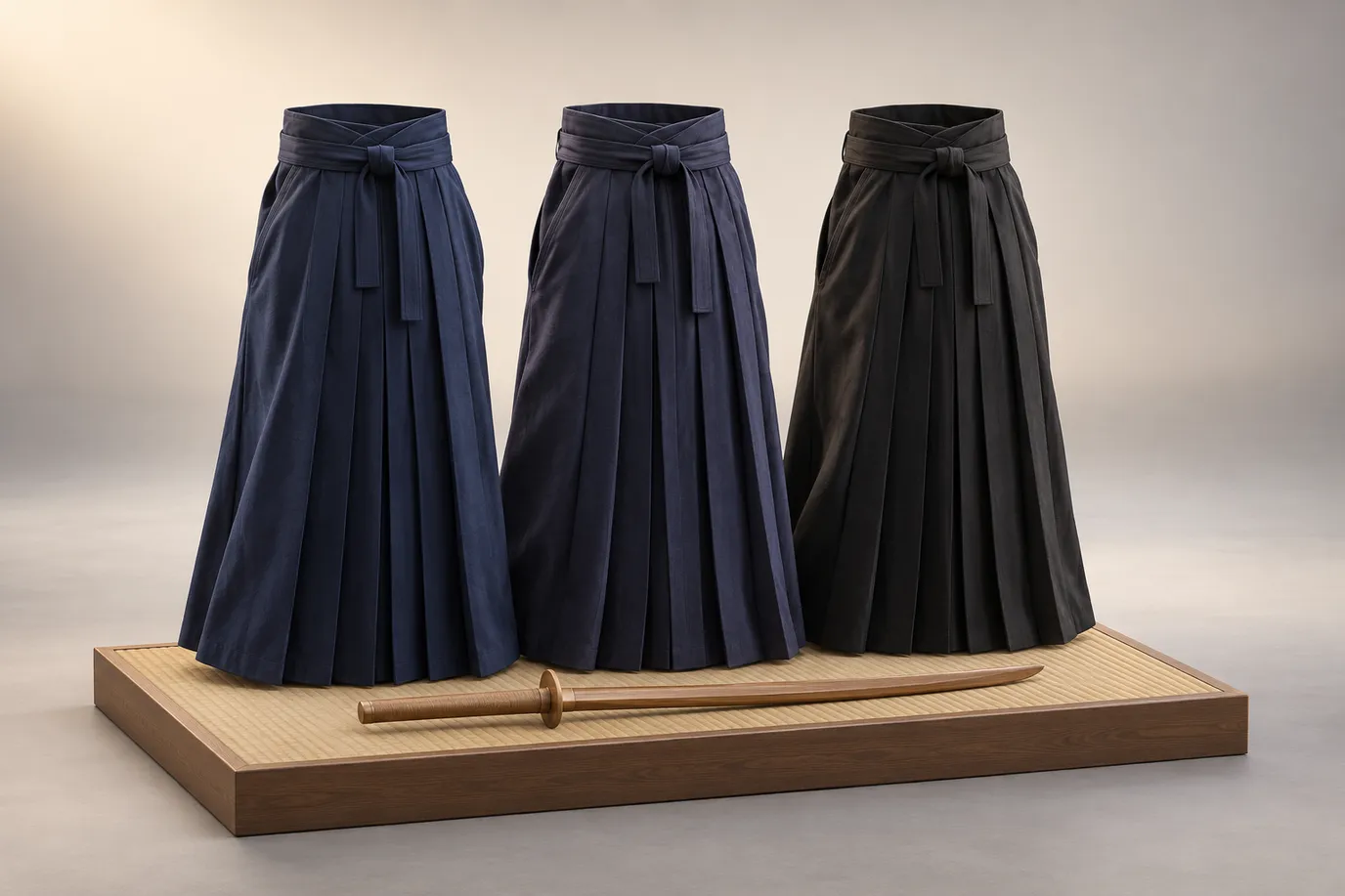
Hakama Uniform Guide: Aikido, Kendo and Iaido Compared
A hakama uniform is a pleated wide-leg hakama worn over a training jacket in arts such as aikido, kendo and iaido. Conventions differ: kendo usually pairs an indigo hakama with a keikogi, many aikido schools reserve the hakama for senior ranks, and iaido commonly uses black or navy. Confirm with your instructor.
Reference
Standing guides
Shop the range