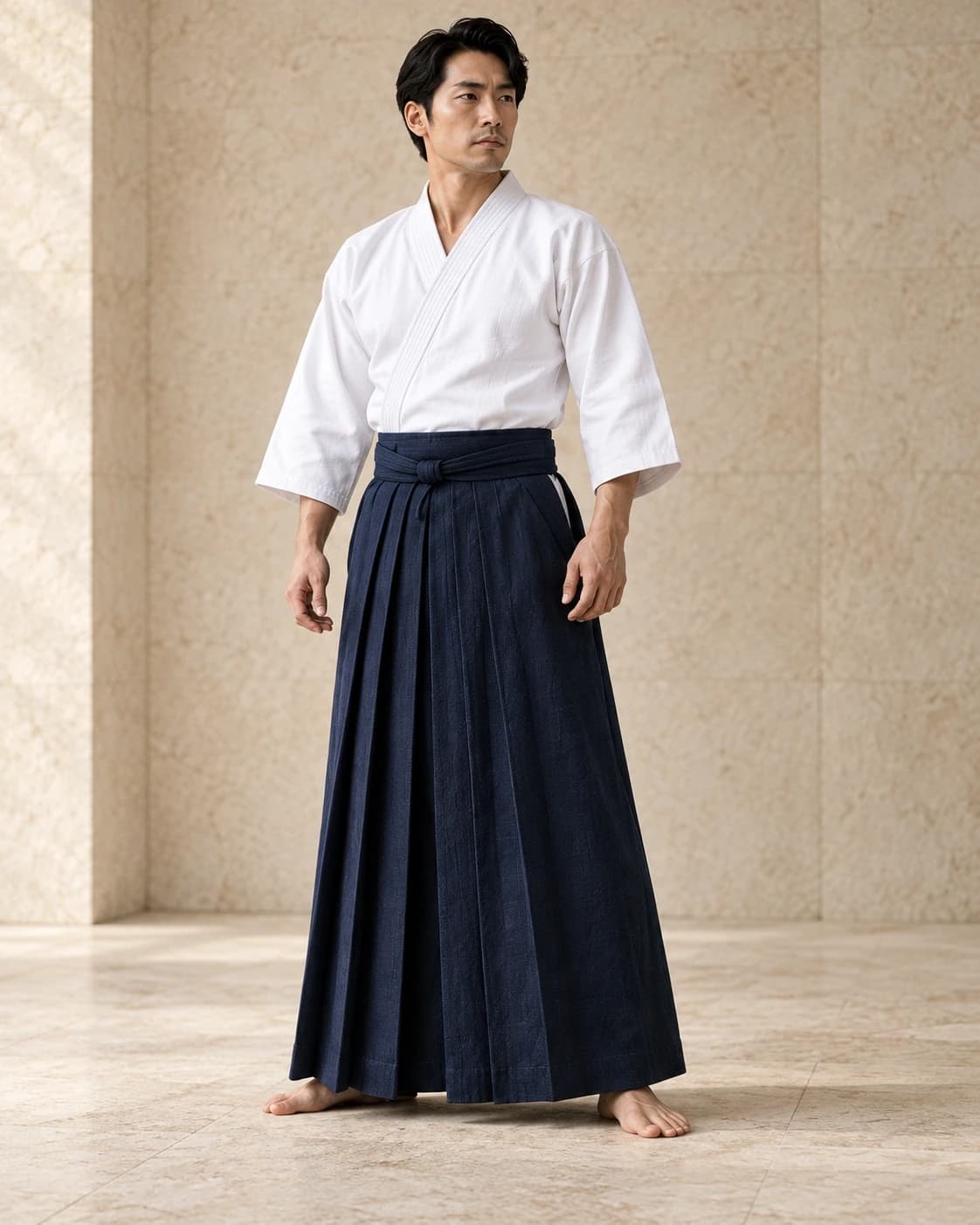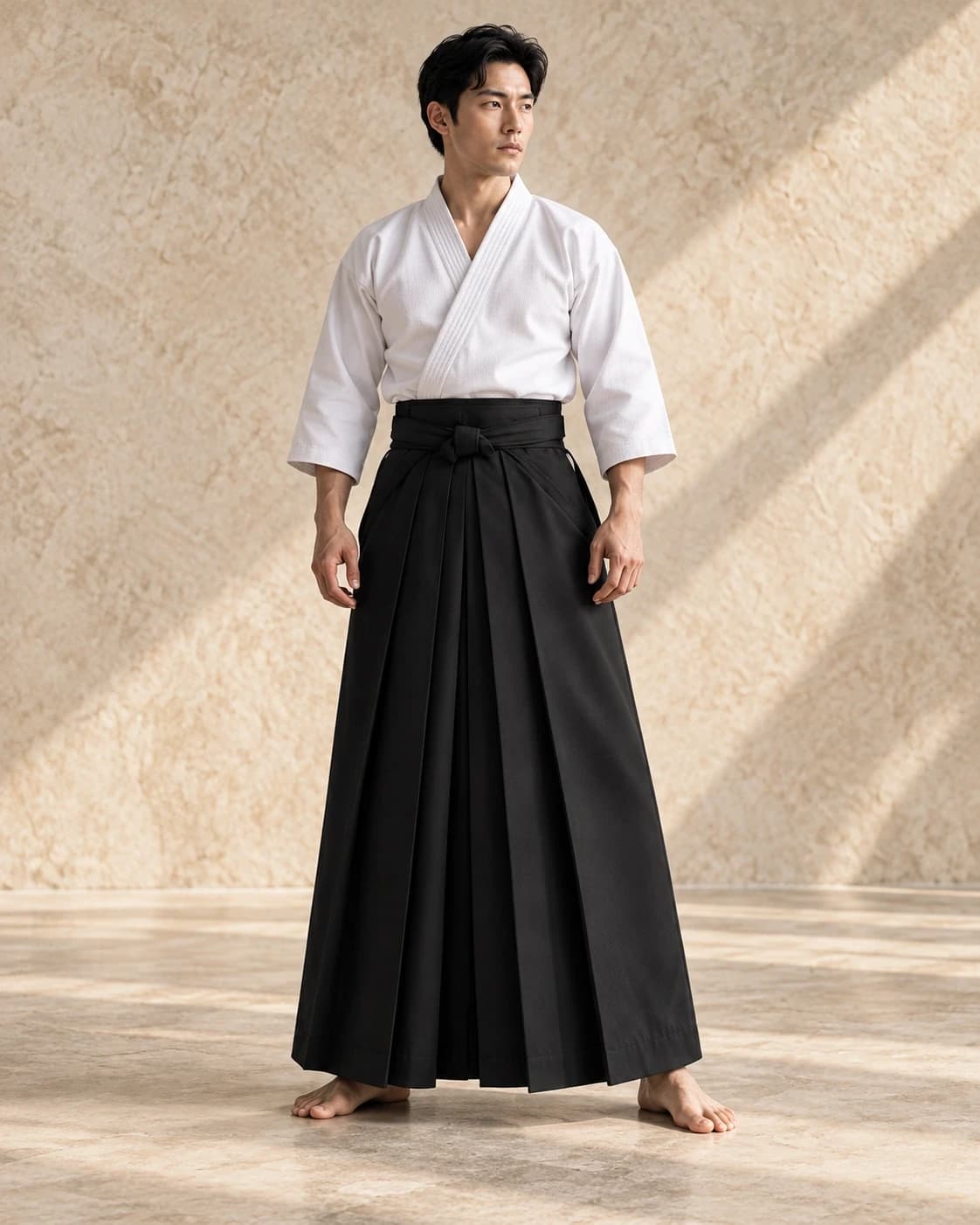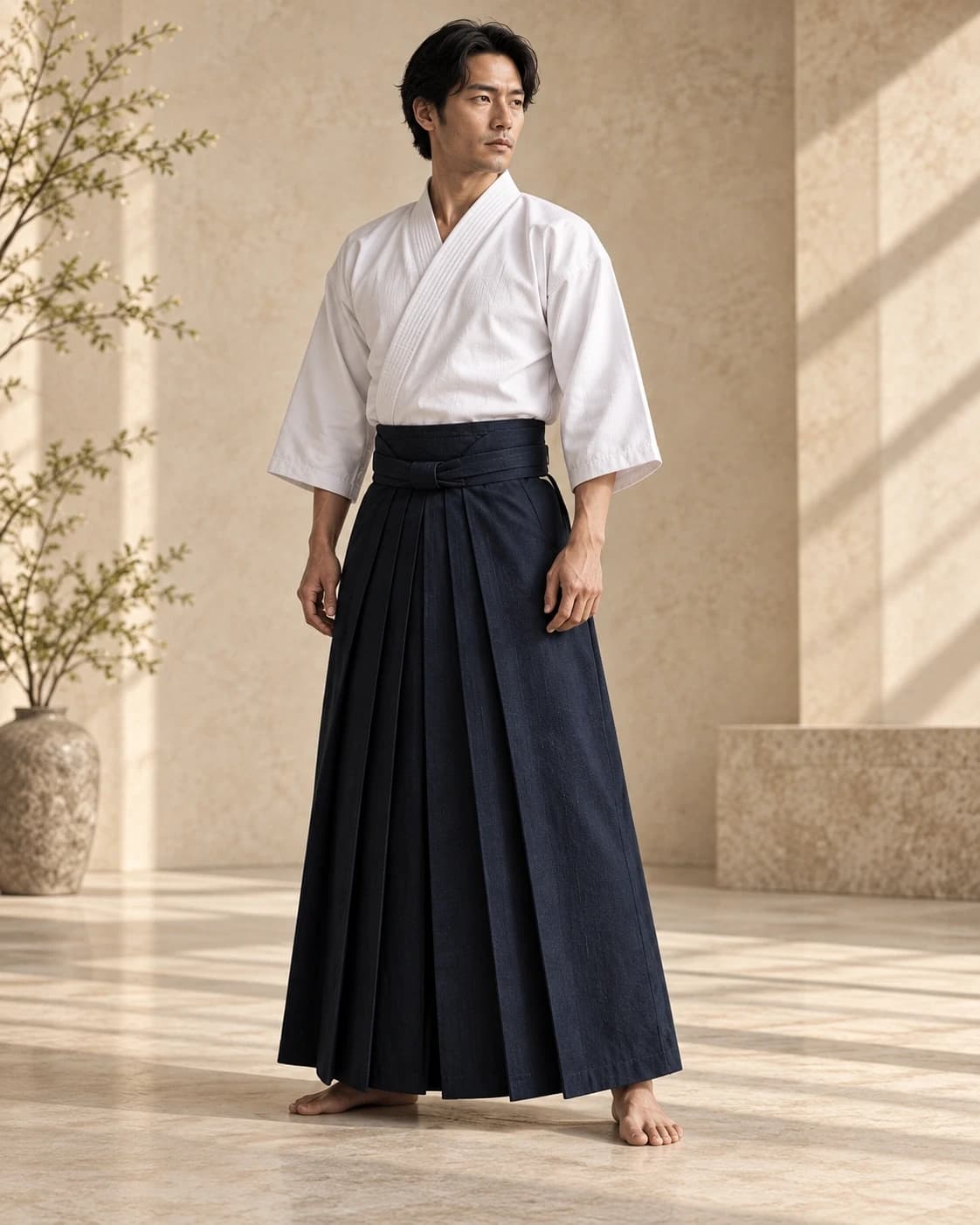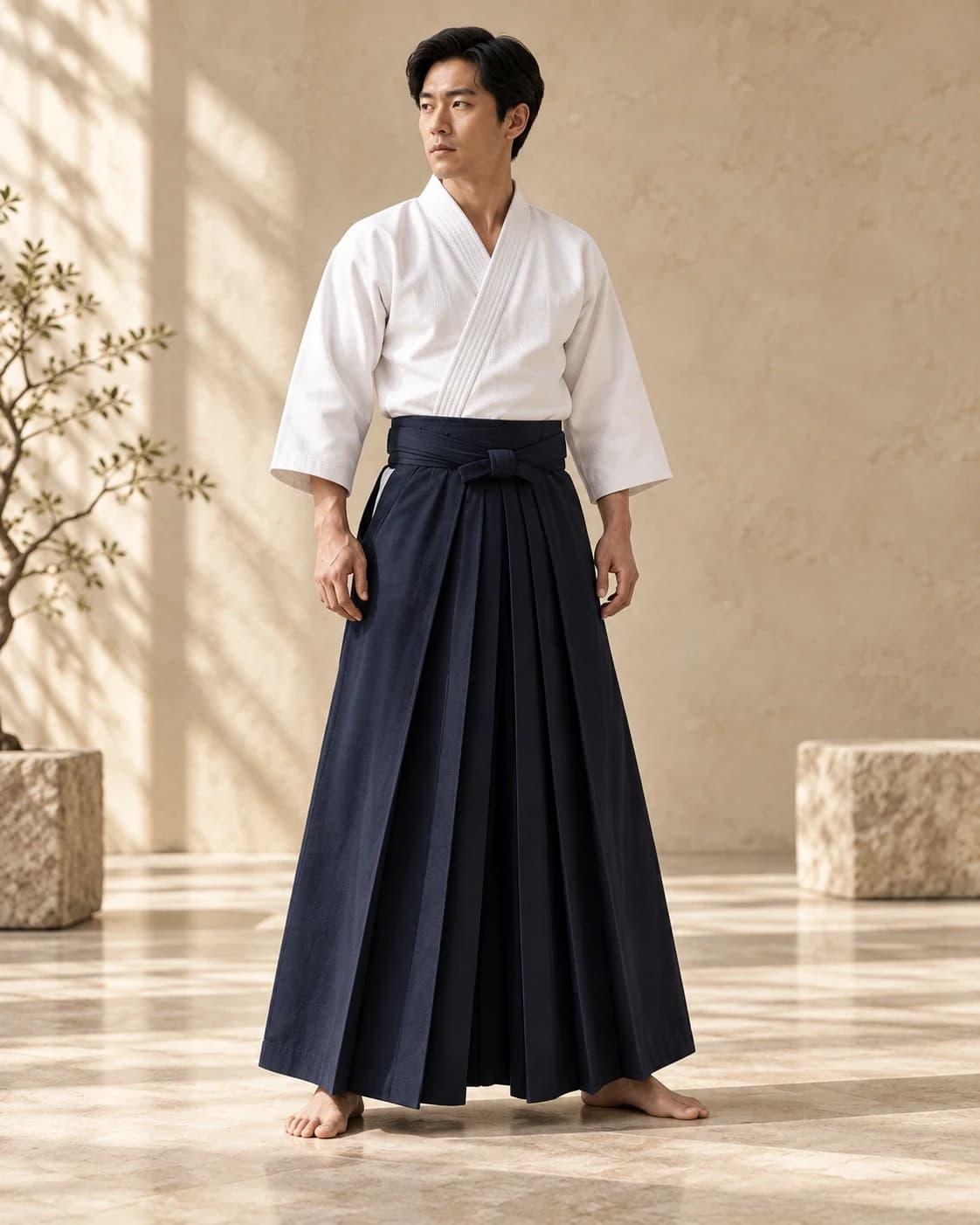
An iaido gi, or iaidogi, is the jacket worn for iaido, the art of drawing the Japanese sword. It is worn with a pleated hakama and a firm obi that holds the saya at the left hip. Many dojos wear black, navy, or white, but colour rules vary by school. Understanding the jacket and its role in the complete uniform helps new students arrive properly dressed and prepared for practice.
Key Takeaways
- The jacket: An iaidogi is a lightweight wrap jacket worn for iaido, often with sleeves slightly shorter or narrower so they do not catch on the sword.
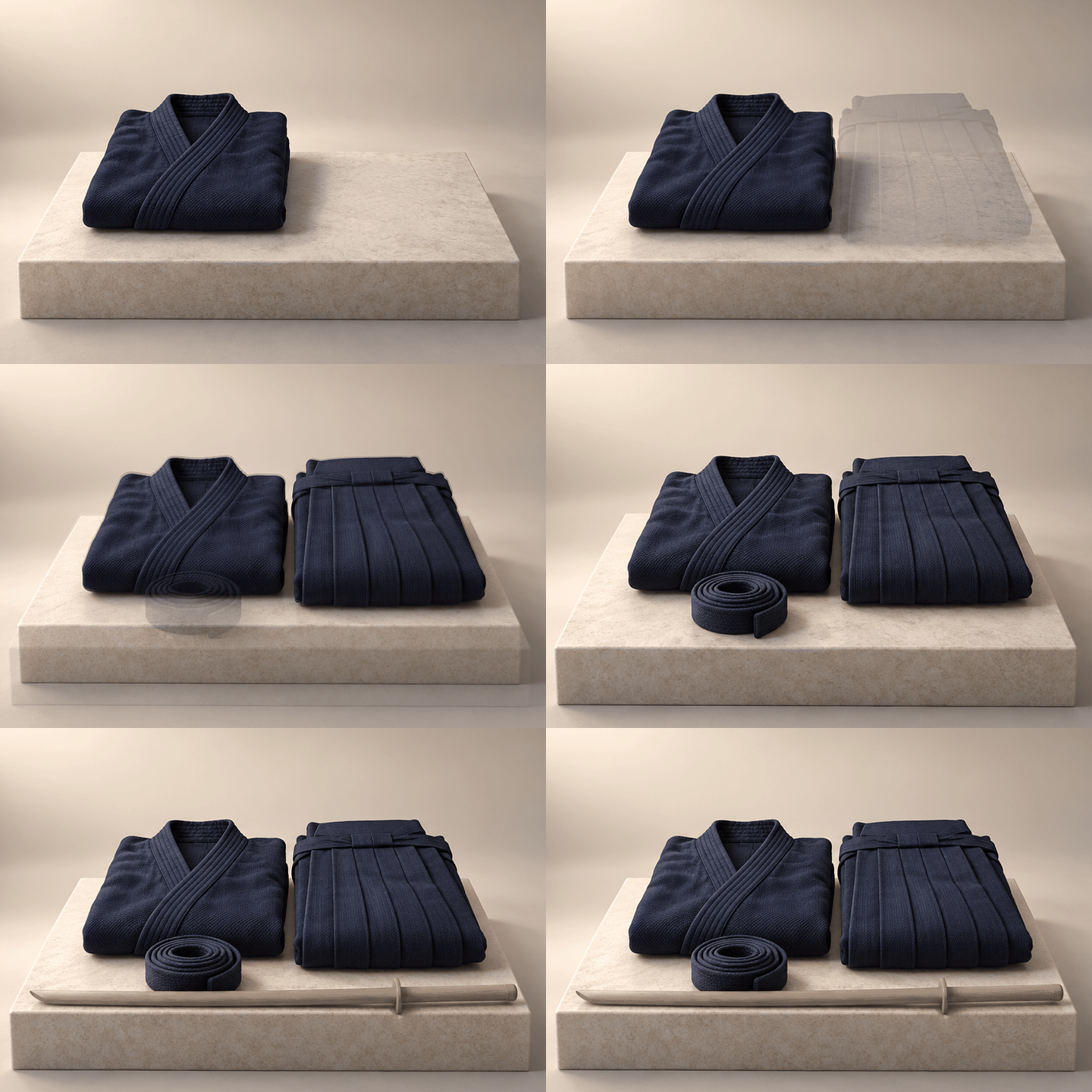
- Full uniform: The iaido uniform consists of an iaidogi, a pleated hakama and a firm obi, with the saya of the iaito placed between the obi layers.
- Obi placement: The obi is typically a firm, narrow belt like a kaku obi, tied first, and the hakama is fastened over it.
- Differences from kendo and aikido: An iaidogi is often lighter than kendo and aikido tops, with differences in weight, sleeve length and fabric.
- Colour conventions: Black, navy and white are common, but dojo rules vary by school and rank.
What an iaido gi is
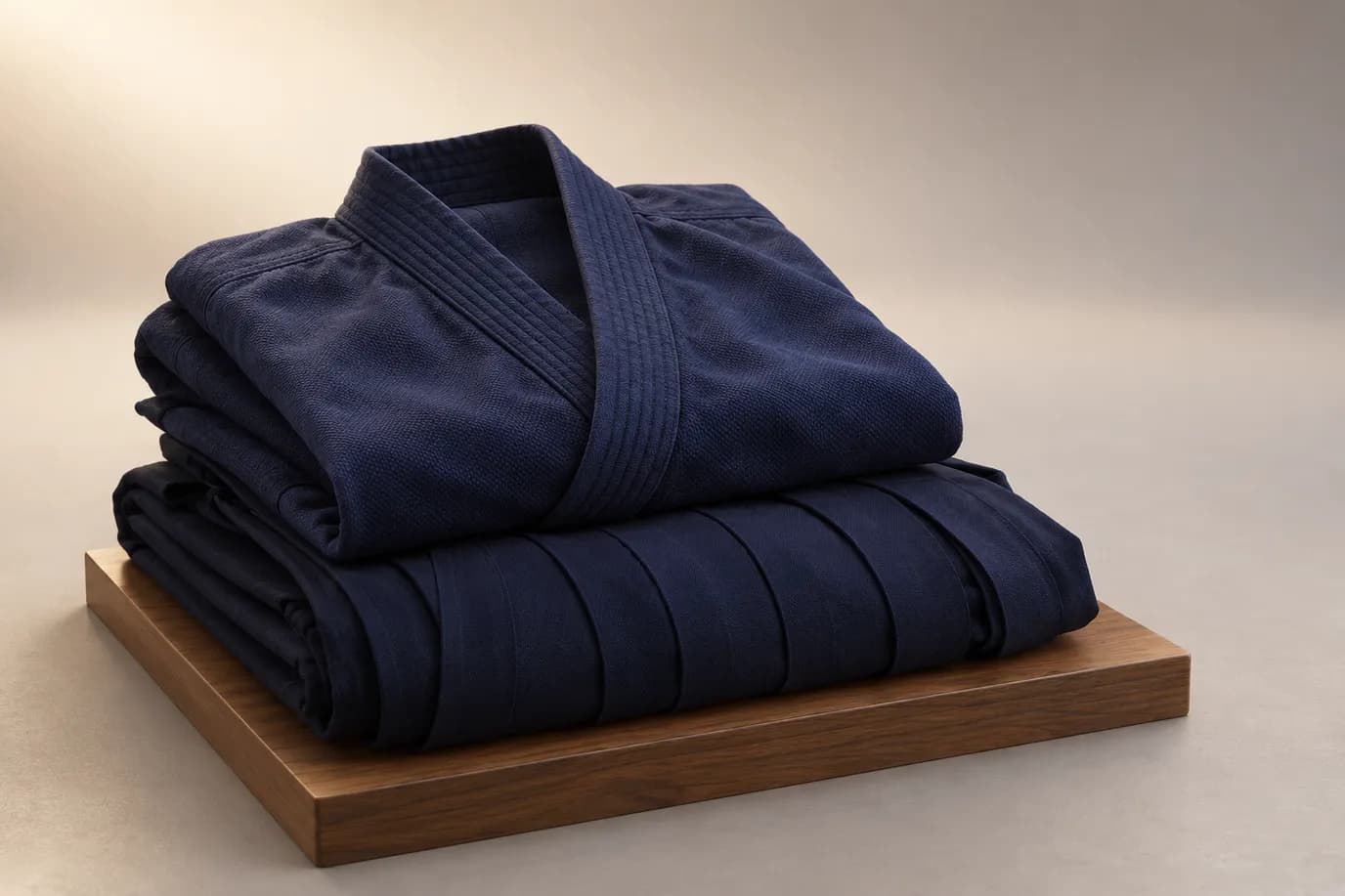
An iaidogi is a specialized jacket for the practice of iaido. Compared with many other martial arts jackets, it is typically lighter and more streamlined. This is commonly explained by the movements of iaido, which call for a garment that does not impede the smooth drawing and sheathing of the sword. The iaidogi is a wrap jacket, meaning it wraps around the body and is held closed by the obi. The sleeves are often slightly shorter and narrower than those of judo or karate jackets, to keep them from catching on the sword during practice.
The fabric of an iaidogi varies, but lighter fabrics such as tetron blends or cotton are common. Both are general garment choices: tetron for easy care and quick drying, cotton for a softer, more breathable feel. The lighter weight helps keep a natural range of motion, which matters for the fluid and precise movements of iaido.
While the design of the jacket is fairly standard, the exact cut and fit vary between makers and between dojos. New students should consult their instructors or senior practitioners before choosing a jacket for their specific dojo and training needs.

The full iaido uniform: gi, hakama and obi
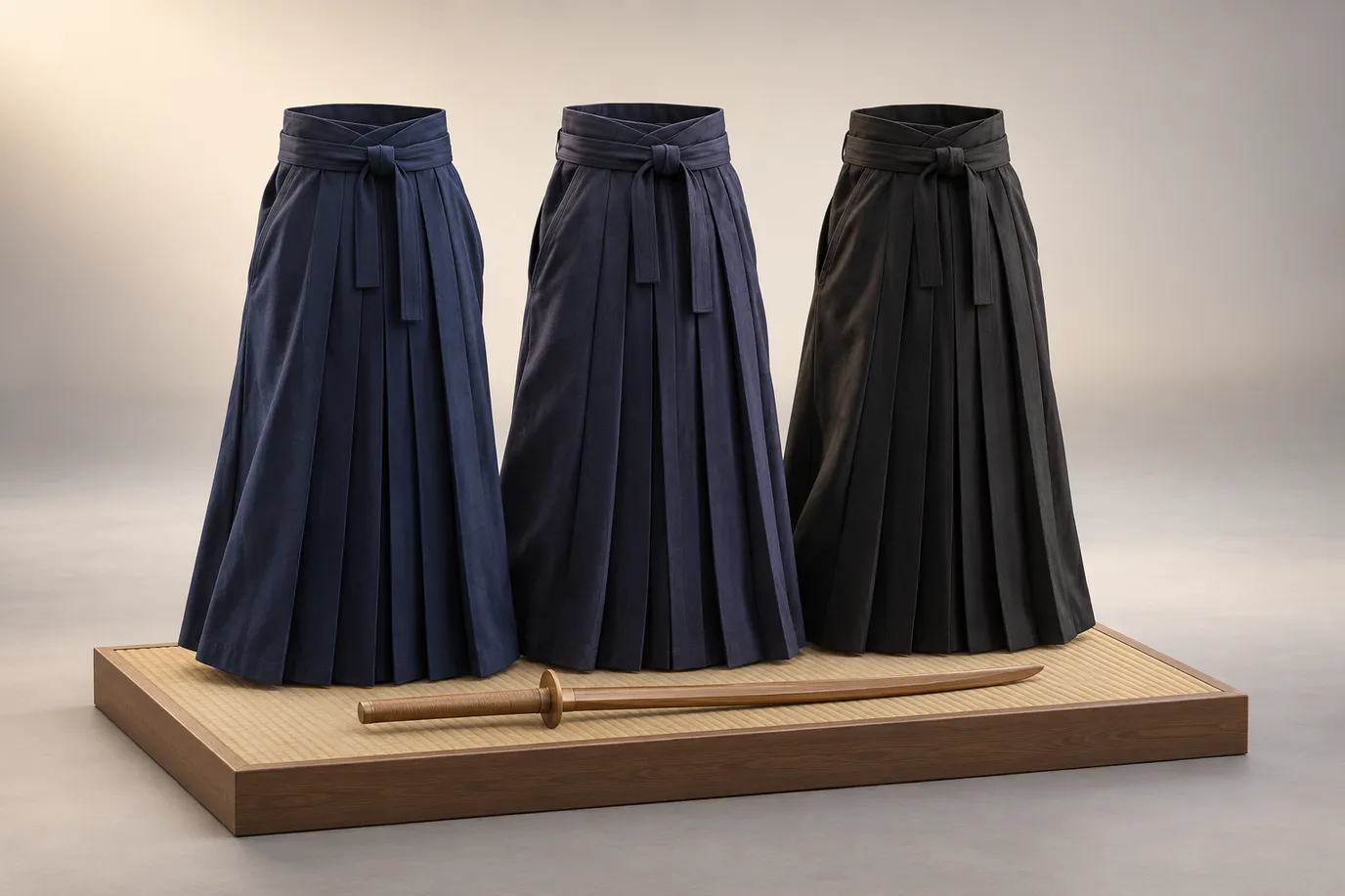
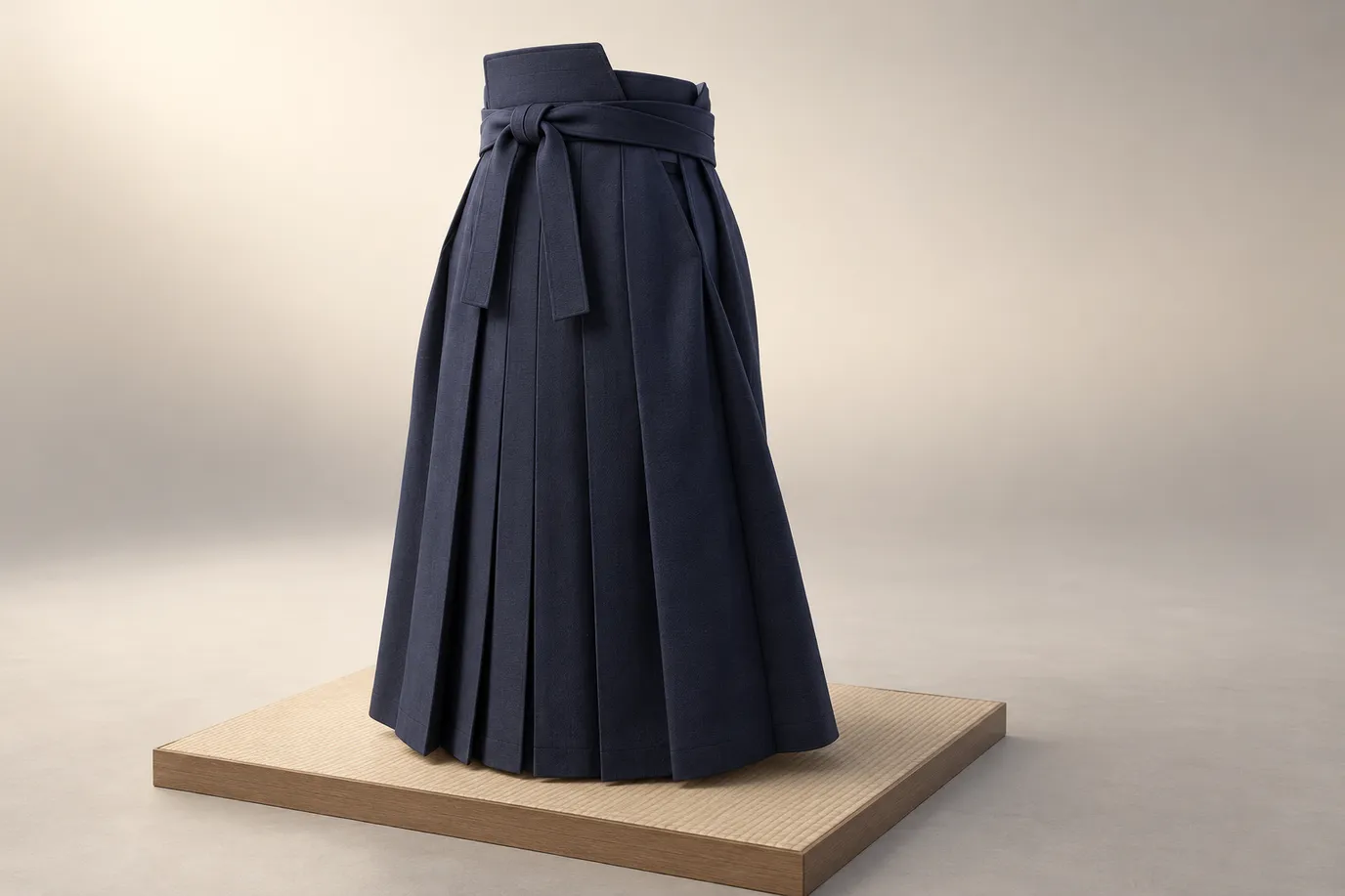
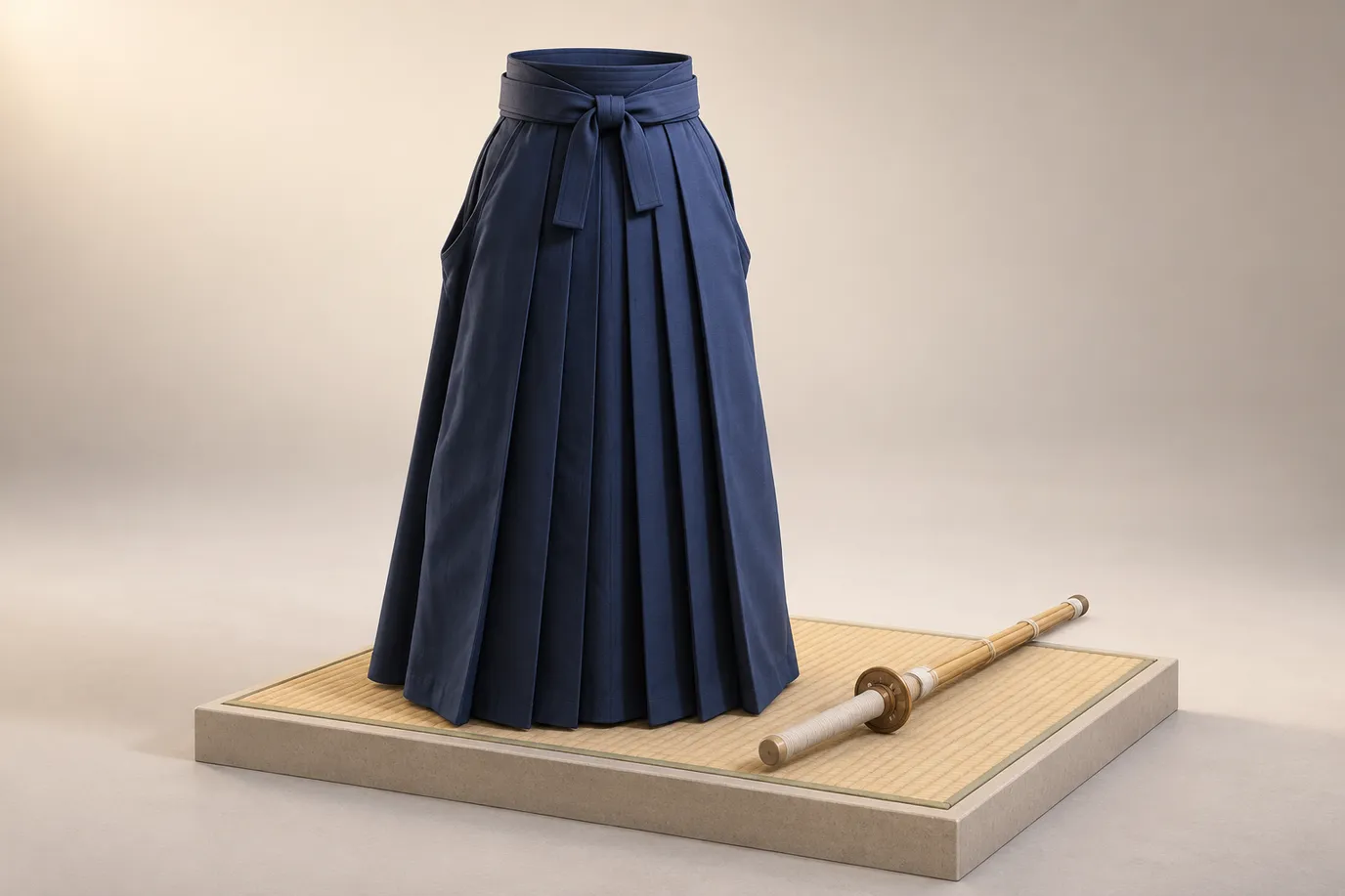
The iaido uniform is not just the jacket but a combination of three pieces: the iaidogi, the hakama and the obi. The hakama is a pleated wide-leg garment worn over the training jacket and the obi. It is an integral part of the uniform and gives the formal appearance commonly associated with iaido.
The obi, or belt, plays a crucial role. It is typically a firm, narrow belt known as a kaku obi. The obi is tied under the hakama and serves several purposes. It holds the jacket closed and gives a stable base for the hakama. It also holds the saya, the scabbard of the iaito (practice sword), in position at the left hip. The saya is slipped between the layers of the obi so that it stays in place for drawing and sheathing.
The hakama is tied over the obi, completing the uniform. The method of tying the hakama varies by dojo, with some schools preferring specific knots or tying sequences. New students should learn the correct way to tie their hakama from their instructors or senior practitioners, as it can differ from one dojo to another.
How the iaidogi differs from kendo and aikido tops
The iaidogi looks similar to other martial arts jackets, but there are differences that set it apart from kendo and aikido tops. One of the most notable is weight. Kendo keikogi are often heavier and more robust, a choice commonly linked to the physical demands of kendo, which involves strikes with bamboo swords.
Aikido practitioners, on the other hand, often wear a judo-style jacket. These jackets are relatively heavy and have longer, wider sleeves. Their design is commonly linked to the throws and grips of aikido, which put strain on the cloth.
In contrast, the iaidogi is usually lighter and closer fitting. The sleeves are typically shorter and narrower so they stay out of the way during the precise movements of iaido. The lighter weight also helps with breathability during practice. Tetron blends and cotton both appear, each with the general trade-offs described above.
These are general patterns, and variations exist. Different dojos may have their own preferences or requirements, so new students should always consult their instructors about the appropriate uniform.
Colours and dojo conventions
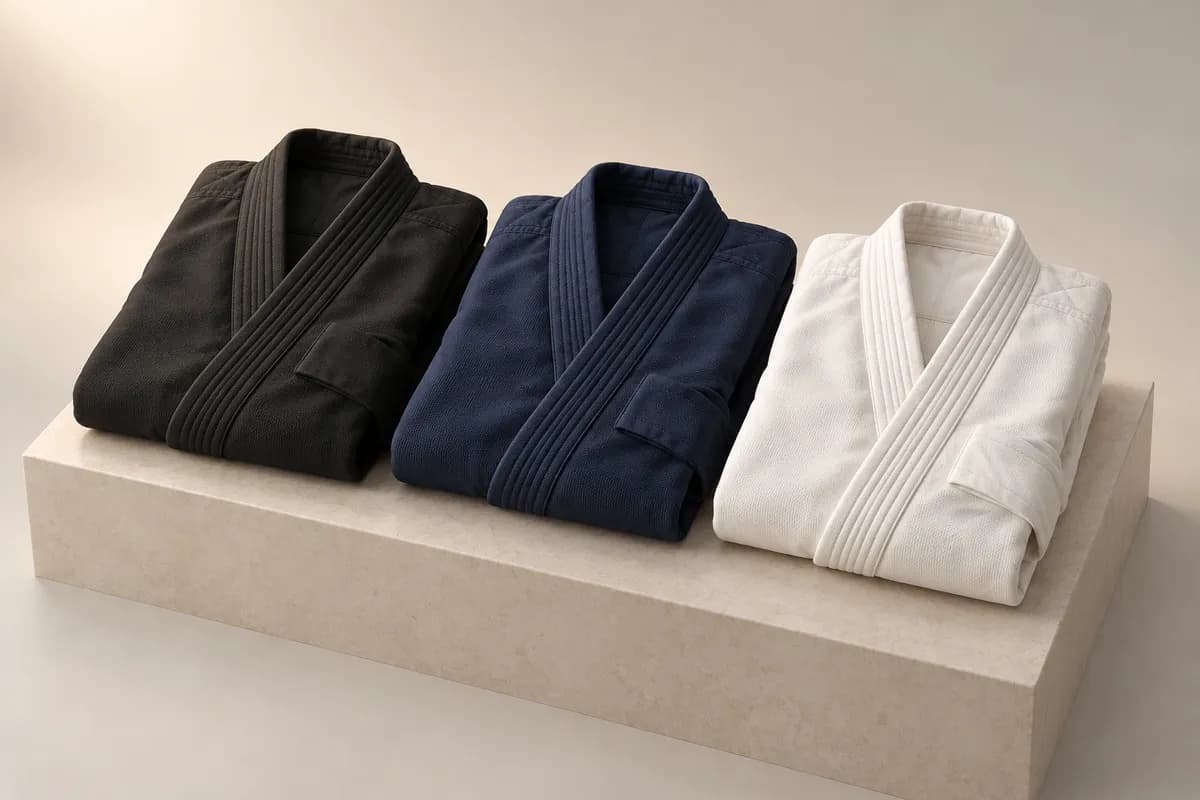
When it comes to colours, there are some common conventions, but the specific rules vary by dojo. Black, navy and white are the most frequently worn colours. They are commonly chosen for their formal, traditional appearance, in keeping with the disciplined character of iaido practice.
Some dojos set colour requirements by rank or occasion. For example, senior practitioners might wear a different colour, or certain events might have a designated uniform colour. Many dojos also have their own traditions and preferences when it comes to uniform colours.
Given this variety, new students should ask their dojo about the specific requirements before buying. Instructors or senior practitioners can explain the expected colours and any additional rules, so students can focus on practice instead of worrying about the uniform.
Choosing an iaido uniform
When selecting an iaido uniform, several factors help with both comfort and dojo conventions. First, check the dojo's colour rules. Next, pay attention to the jacket sleeve length: the sleeves should sit close without restricting movement. The hakama length matters just as much and should be measured with the store's size guide so that it falls to the ankles without dragging.
You can choose a complete set or separate pieces. A complete set keeps the colours matched and saves the trouble of coordinating individual items. Always consult your instructor before making a purchase to make sure you meet the dojo's requirements.

Wearing the uniform
Putting on an iaido uniform follows a specific order. Start by closing the jacket with the left side over the right, the usual way a Japanese garment is closed. Next, wrap the obi around your waist and tie it securely. The saya, or sword scabbard, is placed through the obi at the left hip, positioned for drawing. Finally, put on the hakama and tie it over the obi, beginning with the front ties and then settling the back board.
The method of tying the hakama varies by school, so follow a step-by-step guide or ask your instructor. Wearing the uniform correctly shows respect for the art and keeps the garments out of the way of the sword.
The Hakama Pant iaido uniform set
Hakama Pant does not sell a separate gi, obi, sword, or any training equipment; the gi is only available inside one complete set.
The Iaido Gi + Hakama Complete Uniform Set is a complete martial uniform set in indigo and white: a plain martial arts gi top with a classic wide pleated hakama uniform concept, listed in sizes S to XXL.
The Midnight Indigo Iaido Hakama is a practice-oriented visual concept in midnight indigo with a full pleated form, listed in sizes S to XXL.
The Kendo / Iaido Tetron Hakama is black, a practice-oriented wide hakama with straight pleats and a tie waist, listed in sizes S to XXL.
Check the stated details and listed sizes on each product page and confirm your dojo's rules before making a purchase.
Frequently Asked Questions
What is the uniform top for iaido called?
The uniform top for iaido is called the iaidogi, also known as an iaido keikogi. It is a wrap jacket closed left over right and held by the obi. It is usually lighter than a judo-style jacket, and its sleeves are often slightly shorter or narrower. The colours can vary depending on the dojo's rules, so ask before you buy.
How do you wear an iaido uniform?
To wear an iaido uniform, start by closing the jacket with the left side over the right, the usual way a Japanese garment is closed. Wrap the obi around your waist and tie it securely. Place the saya through the obi at the left hip. Finally, put on the hakama and tie it over the obi, starting with the front ties and settling the back board. Methods can vary by school, so consult your instructor for specific guidance.
Should you go larger or smaller for iaido gi tops?
It is best to follow your own measurements and the seller's size guide rather than sizing up or down by habit. Sleeve length and body length matter more than the letter size, and a fitted but unrestrictive jacket keeps the sword path clear. A jacket that is too large can catch the sword, while one that is too small restricts the arms. Always check with your instructor for personal advice.
What is an iaido gi?
An iaidogi is the jacket of the iaido uniform. It is usually lighter than a judo-style jacket, with slightly shorter or narrower sleeves. It is a wrap jacket closed left over right and held by the obi, and it is worn with a pleated hakama. Colour and fabric rules vary by school, so a new student should confirm them with the dojo before buying.
Conclusion
Before purchasing an iaido uniform, confirm the dojo's rules on colours and any other requirements. Then use the store's size guide to measure for the hakama and check the training jacket's sleeve and body length. A well-fitted uniform keeps the sword path clear and shows respect for the art and your fellow practitioners.