A guide to the form
What is a hakama?
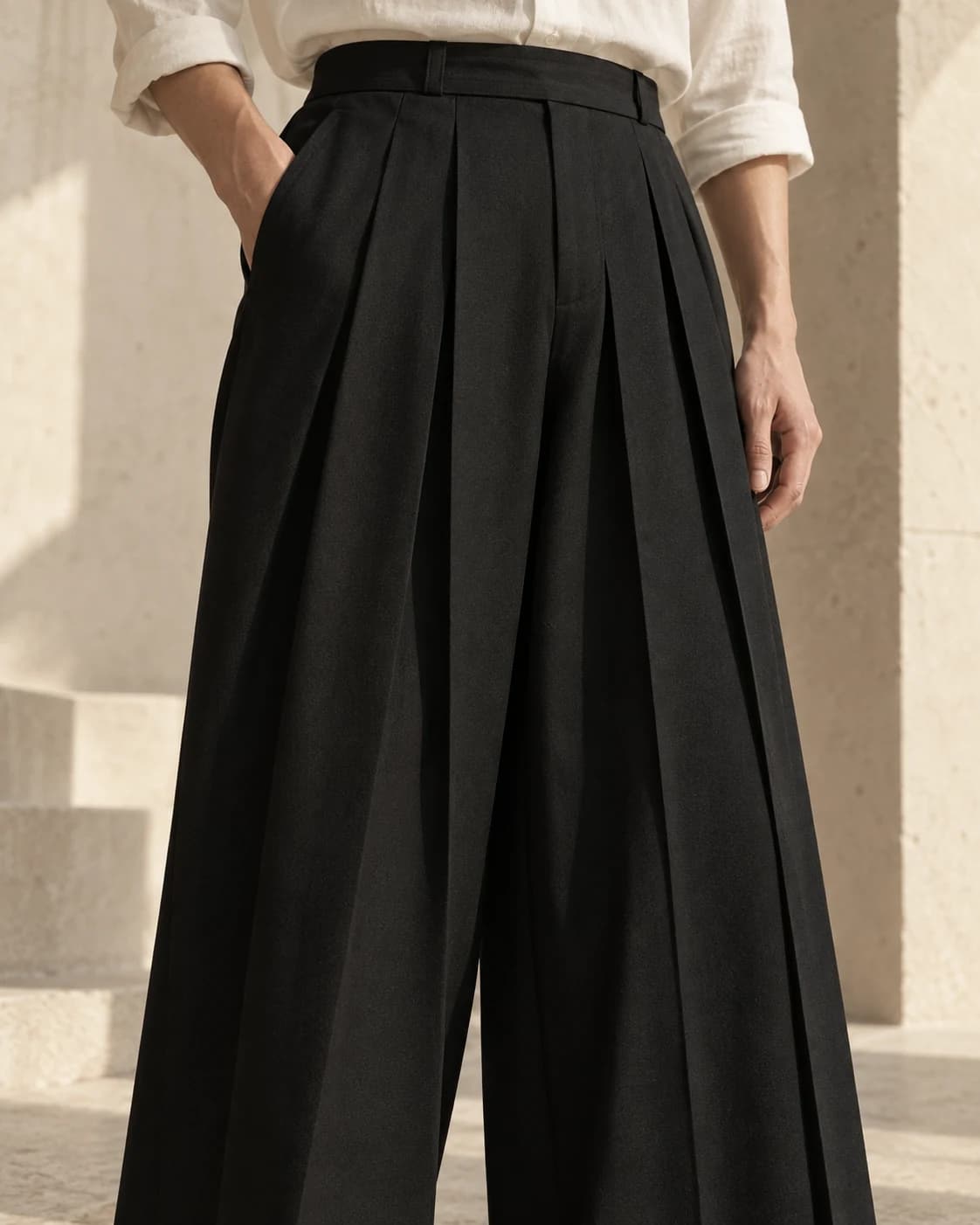
Hakama are pleated Japanese lower-body garments worn over an upper layer such as a kimono. Umanori hakama have divided legs; Andon hakama are undivided and skirt-like. Modern hakama pants borrow these shapes for contemporary outfits.
Hakama vs kimono: what is the difference?
A kimono is a robe; hakama are a separate lower-body garment worn over it. They can be parts of the same outfit. In contemporary fashion, “hakama pants” usually describes trousers influenced by the wide legs and pleats, so check the actual construction on the listing.
| Garment | Construction | What to check |
|---|---|---|
| Kimono | Robe worn as an upper layer | Length, sleeves and included accessories |
| Umanori hakama | Separate trouser legs | Waist ties, rise and leg length |
| Andon hakama | Undivided skirt-style shape | Waist construction and skirt length |
Terminology reference: Nikkei National Museum’s kimono culture handout (PDF). Product specifications must still be checked separately.
How to wear hakama pants in an everyday outfit
Show the waist
Try a tucked-in tee or a short jacket with a high-waist design. Leaving the waistband visible makes the start of the pleats easier to see.
Choose the hem with your shoes
A cropped style shows more footwear; a longer wide leg changes the outline around the shoe. Compare actual length measurements before choosing.
Let one detail lead
Use a plain upper layer with an asymmetric panel or broad wrap waist. For a quieter outfit, compare simple pleats and a tonal colour palette.
Explore hakama streetwear, samurai-inspired pants or traditional-style hakama. For waist and length, use the measurement guide.
The silhouette is defined by width, structure and movement. Pleats give its volume a deliberate shape.
01 / The origin
A garment with
somewhere to be.
Hakama are a traditional Japanese garment for the lower body: tied at the waist, falling to around the ankle, and worn over a kimono-style upper layer. The form is part of Japanese dress traditions, with constructions and uses that vary across formal clothing, ceremonial outfits and martial arts.
The version most people picture is the rider's. Divided legs gave a mounted wearer freedom the undivided form could not, and that shape is the one that survived into modern martial arts clothing. The appropriate cut depends on the discipline and school. A contemporary wide-leg trouser may borrow its appearance without meeting a dojo’s garment requirements.
What makes the garment worth borrowing is not the width. It is that the width is resolved — held by pleats at the waist and released down the leg, so the volume has a direction instead of simply being loose.
In short
- Worn
- Over a kimono-style upper garment, tied at the waist
- Construction
- Divided Umanori or undivided Andon forms
- Still worn for
- Martial arts practice, graduation and formal occasions
- Secured by
- Himo — long ties, two at the front and two at the back
02 / Two forms
Divided, or not.
Almost every hakama is one of two things. Knowing which you are looking at settles most of the questions that follow.
Umanori
馬乗り“horse-riding”
A divided form with separate leg sections. Its pleats can create a skirt-like outline when the wearer stands still; the division becomes clearer in movement.
Two legs. Reads as one silhouette.
DefinitionAndon
行灯“lantern”
An undivided, skirt-style form. Unlike Umanori, it has no separate trouser legs. Width and waist construction vary by garment, so the name alone does not establish fit.
One volume. No central division.
Definition03 / Seven pleats
Five in front.
Two behind.
A traditional hakama carries seven deep pleats — five across the front, two at the back. The count is commonly read as the seven virtues of bushidō, an association that is traditional rather than documented, and none the less part of how the garment is understood.
What is not symbolic is the effect. Seven folds distribute a very large amount of cloth across a normal waist without gathering it, which is the entire structural trick of the garment — and the reason pleat depth and placement are the first thing worth looking at on any piece.
Pleat, definedThe anatomy
Five parts, one silhouette.
Almost everything that makes a hakama read as a hakama happens in five places. Knowing what they are is the fastest way to judge a piece — ours or anyone else's.
- Himo紐
- The long waist ties that secure the garment.
- Koshiita腰板
- The structured back waist panel.
- Pleats
- Deep folds that give the volume its shape.
- Umanori馬乗り
- The divided-leg form — two legs, one silhouette.
- Hem
- Where the drop and the wearer's footwear meet.
04 / What to look for
Five checks,
in order.
Work down the list. Each one depends on the answer to the one above it.
Waist
Check the actual waist range and the fastening method, not the size label. A hakama waist can be a fixed band, a tie, or both — and a tie makes a far wider range wearable than a number suggests. Decide where on your body you intend the band to sit before you measure, because that point is what every other measurement is taken from.
Rise
The rise is what holds the pleat. Too low and the folds collapse into gathers; too high and the garment wears you. Measure the rise on a pair of trousers you already reach for, then compare it against the listed figure rather than guessing from a photograph.
Length
Measure from your chosen waist point to where you want the hem, and decide the footwear at the same time. A wide leg has a long break: a centimetre either side changes the whole line, and it is the single measurement people most often get wrong by eye.
Volume
Leg opening and pleat depth together decide how strong the silhouette reads. Judge them from a front view, a side view and — the one that actually matters — a movement shot. A wide leg that photographs beautifully standing still can behave very differently walking.
Fabric and care
Weight and drape change how the same cut feels more than the cut itself does. A crisp fabric holds a sharp pleat and a defined edge; a softer one falls closer to the body and reads quieter. Read the verified composition and the care label on the piece, not a general description of the style.
05 / Four common mistakes
Easy to avoid.
Sizing by the number on the label
Size by the garment measurements. A tie waist and a fixed band with the same label fit nothing like each other.
Judging the shape from one standing photo
Look for a movement view. Volume is a behaviour, not a shape — it only shows when the wearer moves.
Pressing a new crease across the pleats
Fold and hang along the folds that are already there. An unwanted cross-crease can be difficult to remove; use the care label to decide whether and how to press it.
Treating a fashion piece as practice wear
A hakama-inspired trouser is not a martial arts hakama. For a discipline, follow that discipline's requirements and the actual garment's specification.
Worth being clear about
What we are,
and what we are not.
Hakama Pant designs contemporary trousers that borrow the hakama's volume and pleat structure. They are not traditional hakama, and they are not practice wear for any discipline.
Everything on this page describes the form. Nothing on it describes a specific piece: price, listed sizes, care and what is or is not confirmed about fabric and measurements are on that product's own page in the Shop.
If you need a hakama for kendo, iaido, aikido or a ceremony, follow the requirements of that practice and the specification of the actual garment.