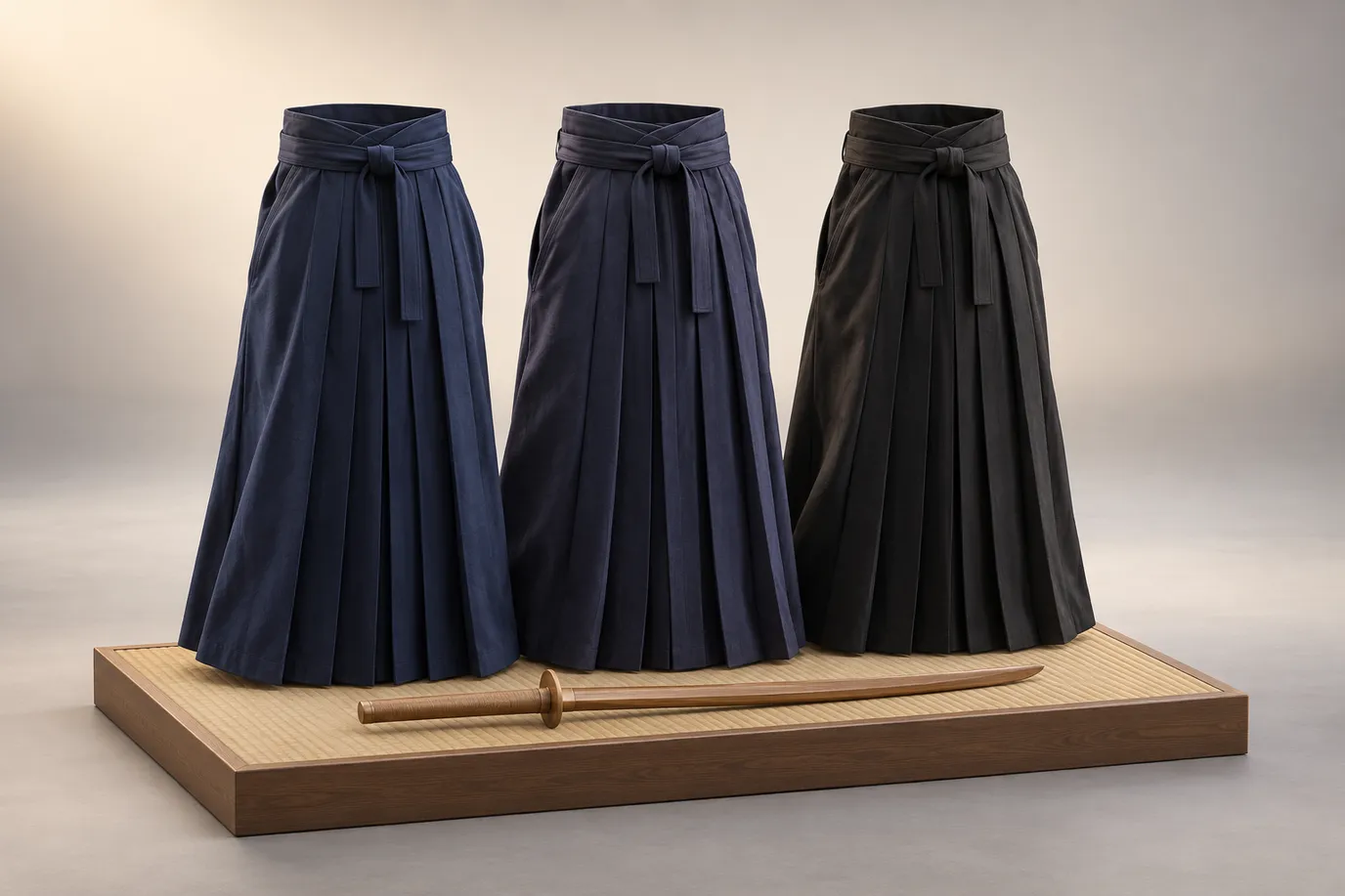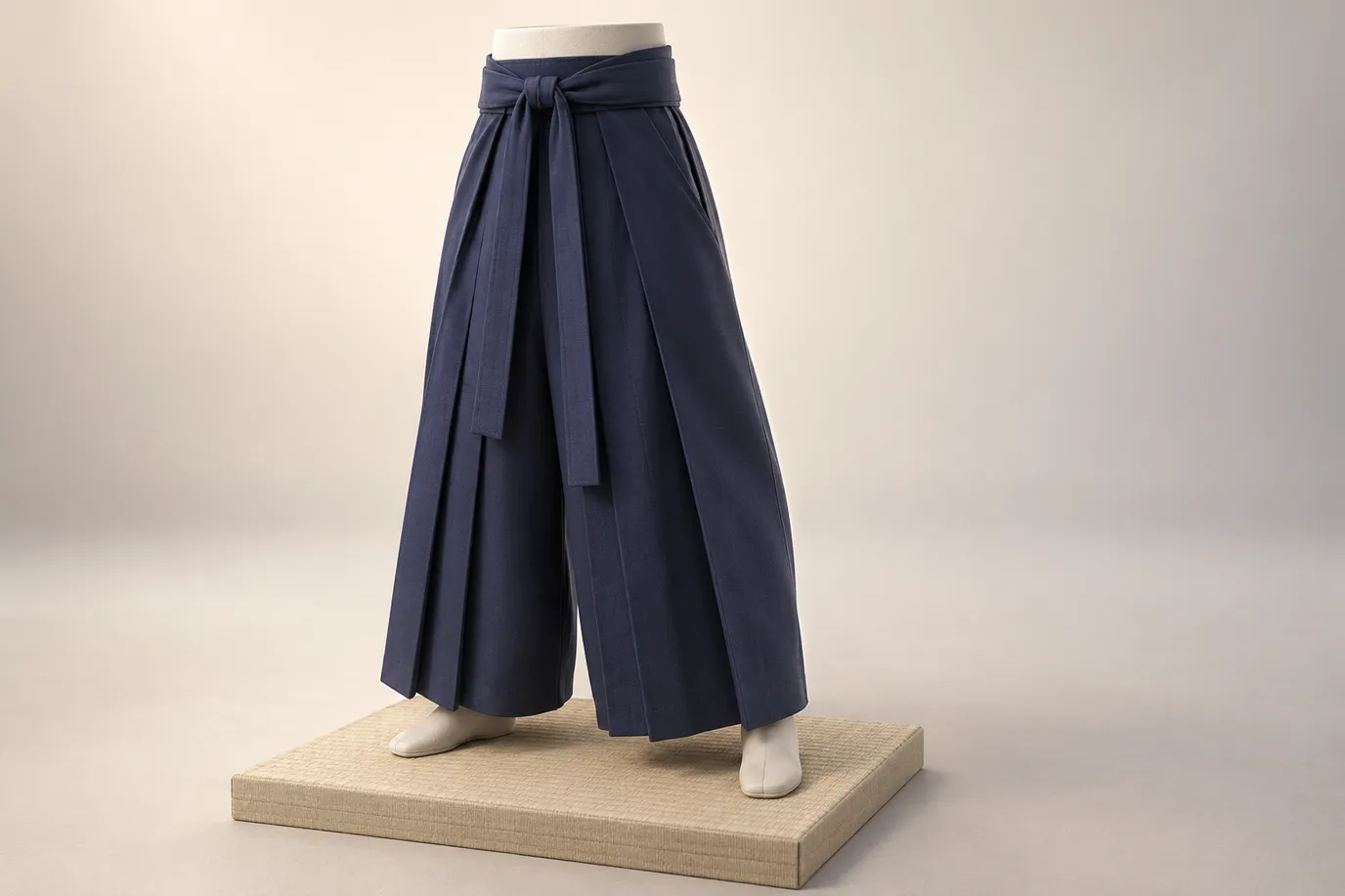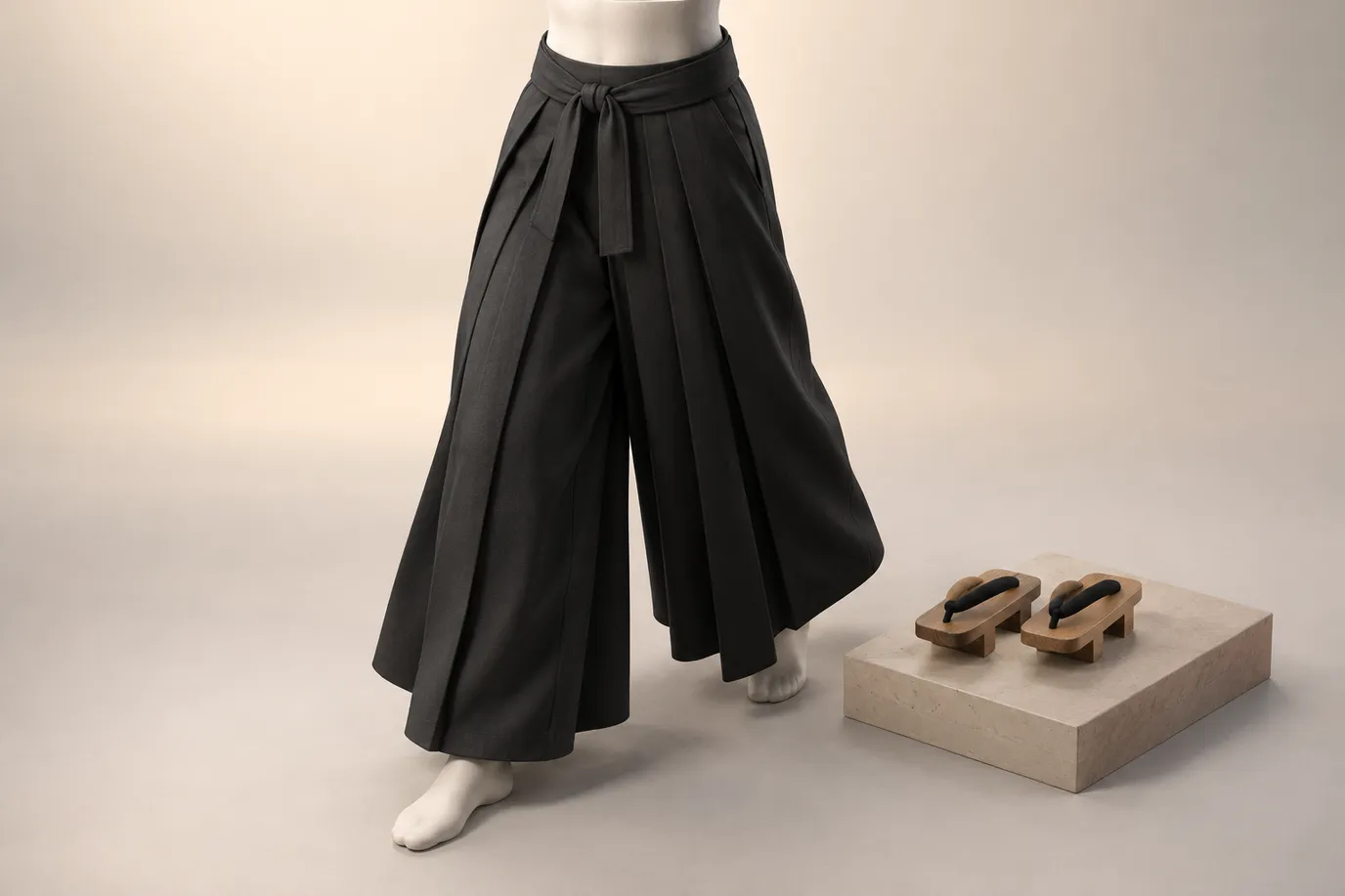

A hakama outfit works when the top is shorter or closer to the body than the wide pleated legs below. Tuck or crop the top so the waist shows, keep colours to two or three tones, and choose flat, simple shoes. Traditional outfits pair the hakama with a kimono or training jacket instead. This guide provides formulas for various occasions, explaining why each one works.
Key Takeaways
- Volume rule: Tuck or crop the top to show the waist and balance the volume of wide pleated legs.
- Monochrome outfits: Stick to two or three tones to avoid a costume look.
- Footwear choice: Opt for flat, simple shoes like sneakers, loafers, or zori.
- Single Japanese element: Limit Japanese-coded pieces to one per outfit to keep it modern and stylish.
- Hem and shoe: The hem should break on a flat shoe for a cleaner look.
- Traditional rules: Traditional dress follows its own rules and should not be styled with streetwear principles.
The one rule behind every hakama outfit: balance the volume
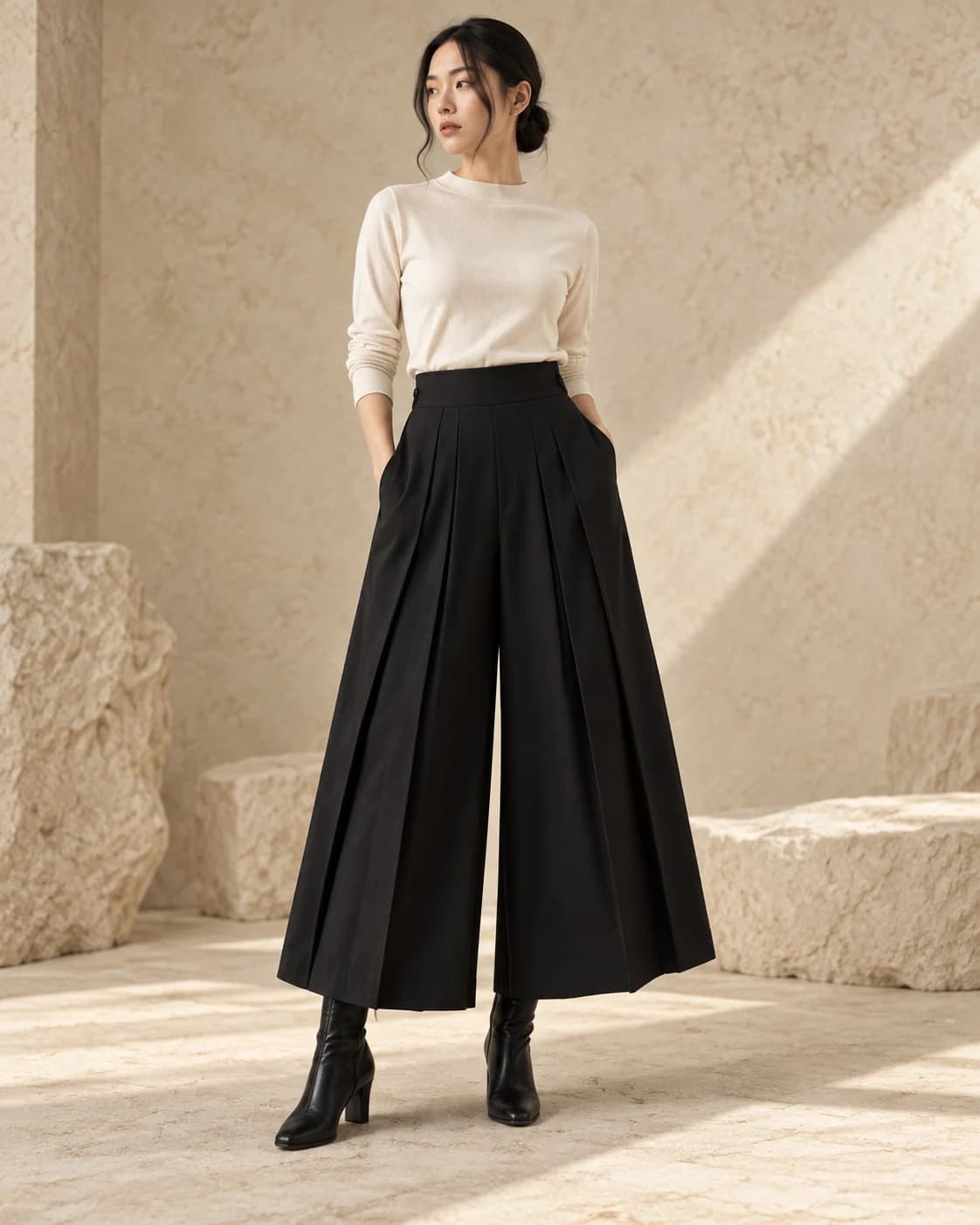
The key to styling hakama is balancing the volume of the wide pleated legs. This means ensuring that the top you wear is either shorter or closer to the body than the hakama. Tucking in your top or choosing a cropped design helps create a visually balanced look. The waist should be visible, which helps to define your silhouette and prevent the outfit from looking too bulky. The pleats and wide legs carry all the visual weight below the waist, so a long, loose top hides the waistline and turns the body into one block. To balance this, you can tuck, crop, or choose a close fit. The designs in the hakama streetwear collection all share that wide pleated leg, so the rule applies to each of them.
Three mistakes can break the balance of the look. A long untucked hoodie or tee that covers the waistband and the top of the pleats. Fix: tuck in the top. Wearing several Japanese-coded pieces at once, like a kimono-style jacket, split-toe shoes, and a hakama. Fix: mix one or two pieces only. A hem that pools over a bulky shoe. Fix: choose smaller, neater shoes.
The table below sets out five formulas by occasion.
| Outfit type | Hakama style | Top | Footwear (not sold by Hakama Pant) | Works for |
|---|---|---|---|---|
| Everyday streetwear | Wide divided-leg hakama pants | Plain tee or short knit, tucked | Low sneakers | Daily wear |
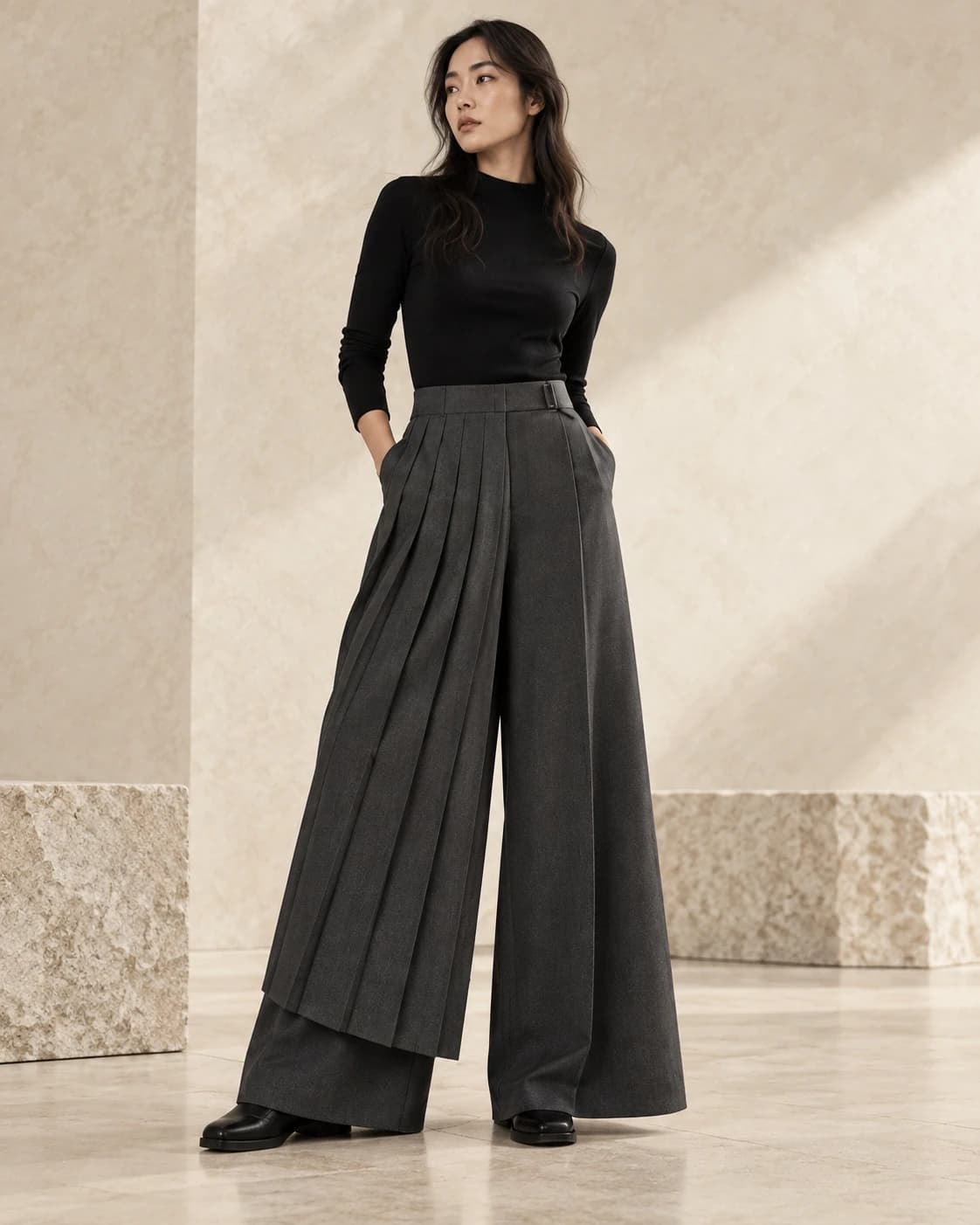
| Monochrome darkwear | Black hakama with long front pleats | Black fitted long sleeve | Black boots or sneakers | Evenings, events |
| Smart casual | Tailored hakama trousers | Tucked shirt or fine knit | Loafers or plain leather shoes | Office-casual, dinners |
| Techwear | Utility cargo hakama | Technical shell or cropped layer | Trail-style sneakers | City, travel |
| Traditional formal | Hakama as part of a kimono and hakama set | Kimono, with haori where the set includes one | Zori | Ceremonies, graduation |
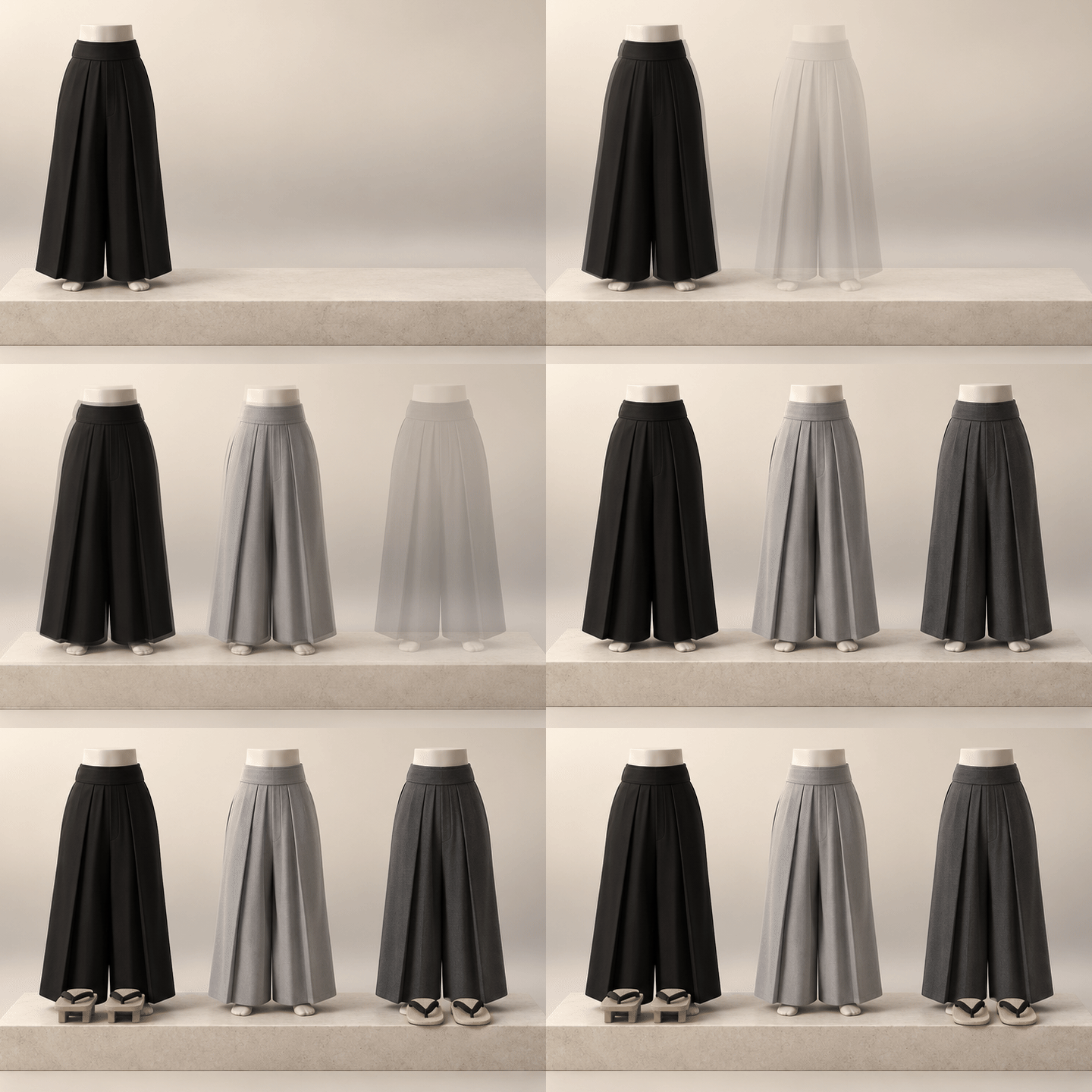
Everyday streetwear looks
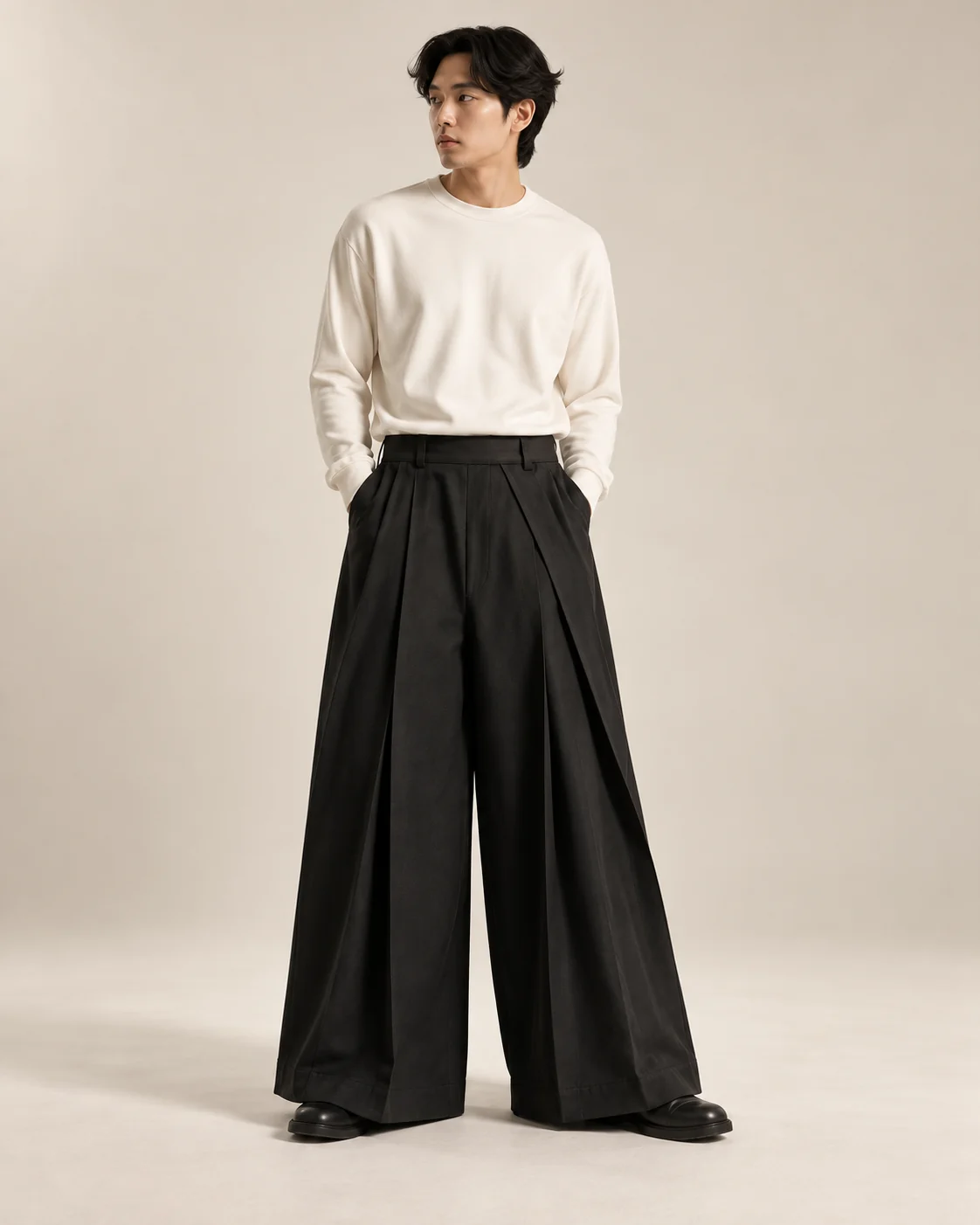
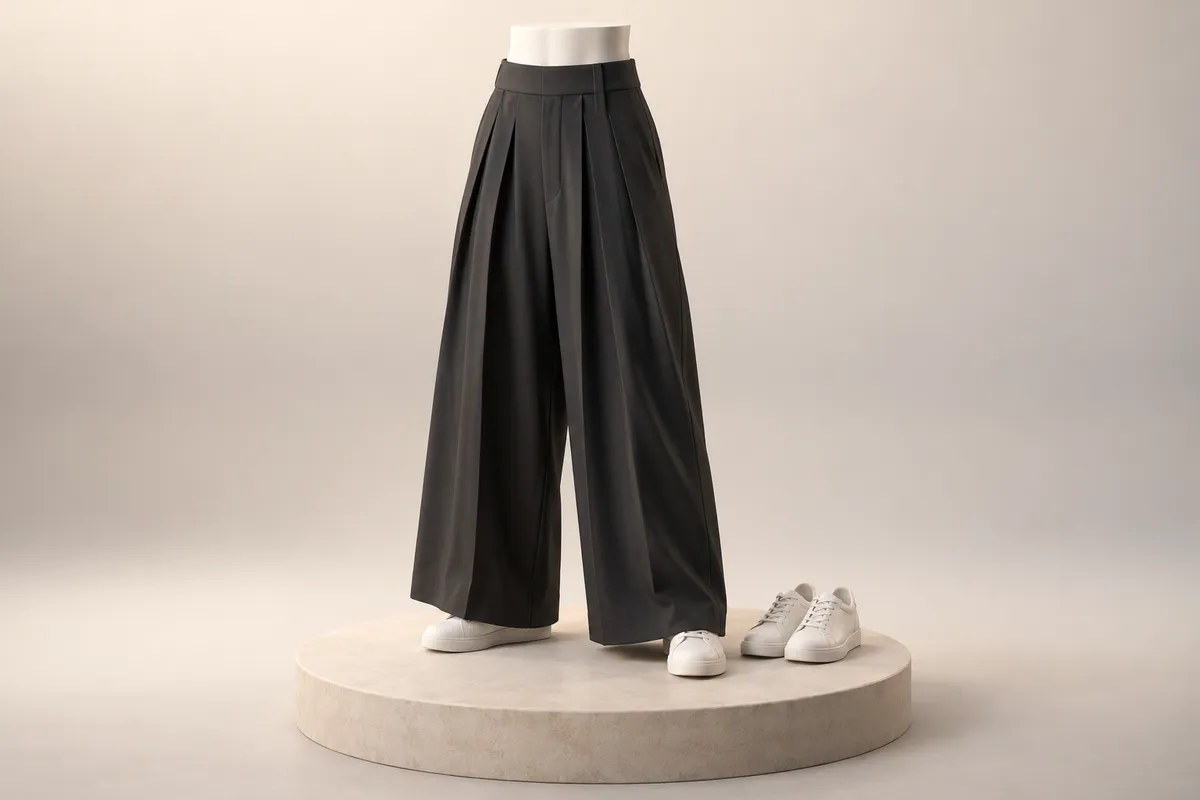
For an everyday streetwear look, opt for Modern Streetwear Hakama Pants in black. These pants feature deep front pleats, generous divided legs, and a clean flat waistband, available in sizes S to XXL. Pair them with a plain tee or a short knit, both of which should be tucked in to show the waist. Low sneakers are a great choice for footwear, keeping the overall look simple and modern. The formula is straightforward: a plain, tucked top, and low sneakers, with one colour accent at most.
For everyday streetwear, if you prefer an oversized tee, tuck only the front so the waistband shows. Keep the tee plain because the pleats already supply the detail. One accent is enough, such as a cap, a bag, or a sock colour. This outfit works because one loose piece is paired with one neat piece.
All-black and monochrome looks
A monochrome hakama outfit is the easiest way to make wide pleats look deliberate. The store lists a Black Streetwear Hakama described as dramatic monochrome volume with longer front pleats and darkwear styling. Pair this hakama with a black fitted long-sleeve top. The key is to maintain a cohesive colour palette, using no more than two or three tones. Black boots or sneakers are ideal for completing the look, which suits evenings and events. All-black works because the eye reads shape and texture instead of colour, so vary texture (matte against a slight sheen, knit against woven) and keep the top fitted.
In a monochrome outfit, blacks from different garments rarely match exactly. Treat the difference as intended by mixing textures. A dark charcoal or deep navy top counts as a second tone and still reads as monochrome. Silver or matte black hardware on a bag is enough decoration.
Smart casual: hakama trousers with a shirt or knit
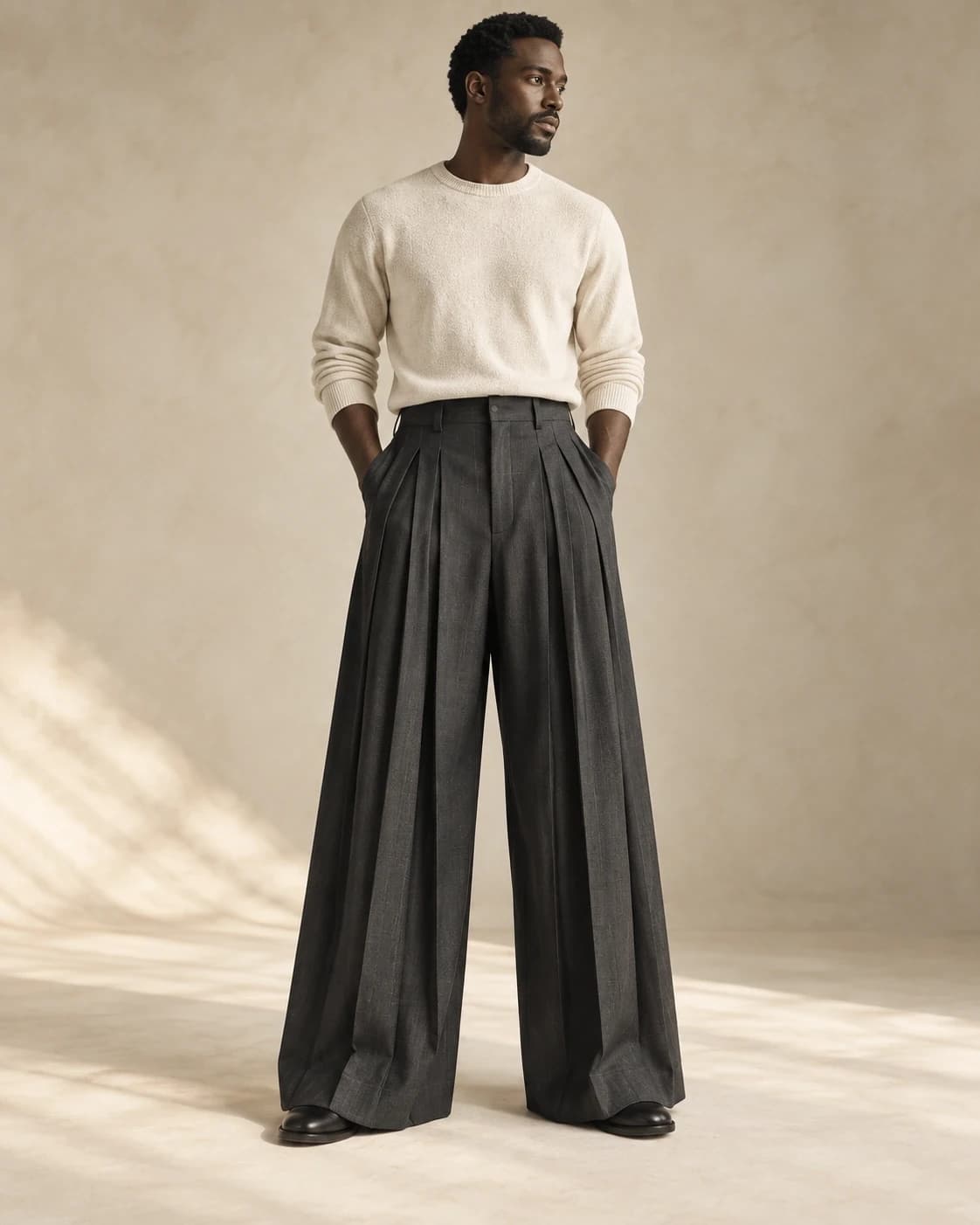
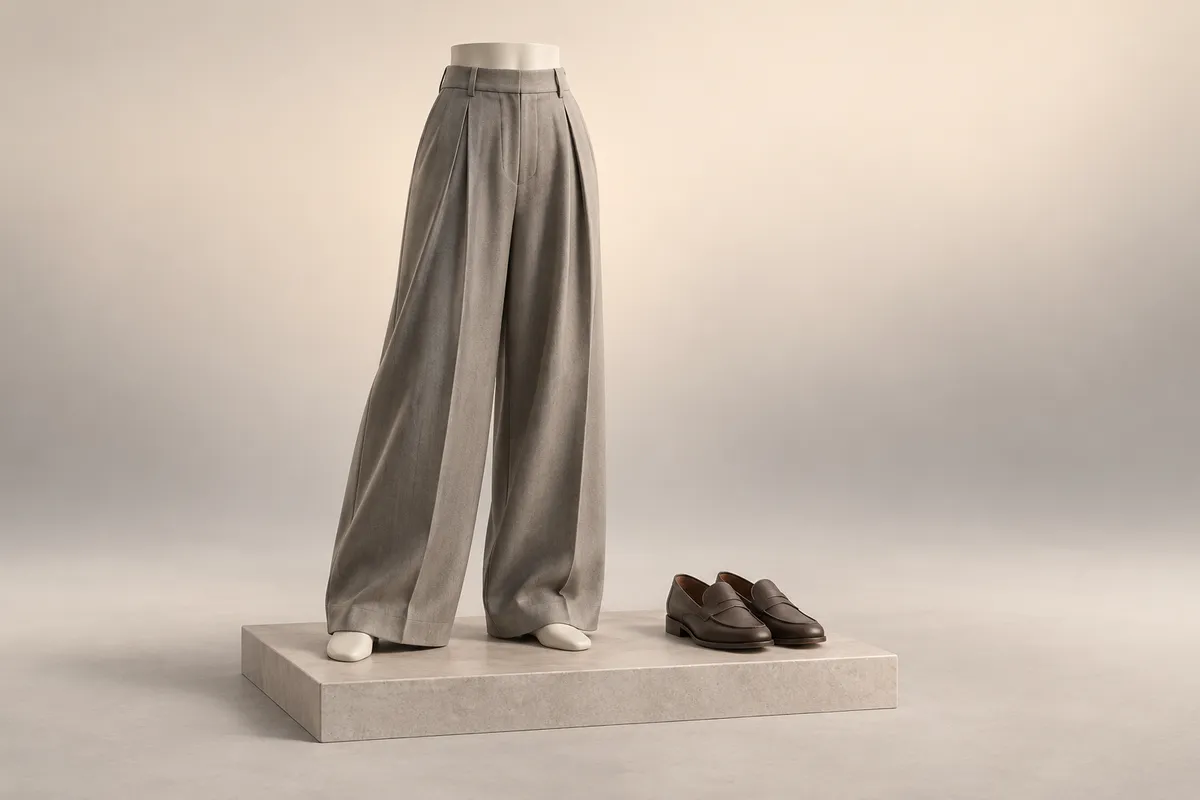
For a smart casual look, tailored hakama trousers are a great choice. The store lists Hakama Trousers in stone grey, a tailored wide-leg trouser interpreting hakama volume with crisp front pleats. Pair these with a tucked shirt or a fine knit, creating a polished yet relaxed appearance. A belt is only necessary if the waistband has loops (check the product page). Loafers or plain leather shoes are ideal for this outfit. This look is suitable for office-casual settings, dinners, and other semi-formal occasions. The hem should just touch the shoe.
For a smart casual look, a fine-gauge knit or a shirt with a neat collar keeps the top half quiet. If a jacket is needed, choose one that ends at the waistband so the pleats stay visible. Press or steam the top, because creases above sharp pleats look careless. Keep socks plain.
Techwear and utility looks
Techwear and utility-inspired outfits can be achieved with utility cargo hakama. The store lists a Utility / Techwear Cargo Hakama in black with quiet utility pockets integrated at the side seam beneath broad pleats. Pair these hakama with a cropped or hip-length technical layer, and a cross-body bag worn high so it does not cut across the pleats. Trail-style sneakers are the perfect footwear for this outfit, making it ideal for city wear and travel. The key is to keep the layers and accessories minimal and functional.
Traditional and formal dress
For traditional and formal events, a hakama is worn as part of a formal outfit, and the site's hakama guide explains the garment itself. A formal outfit is a kimono with a hakama over it, an obi underneath, and in men's formal dress often a haori on top. Graduation outfits for women commonly pair a kimono with an undivided andon hakama. Zori are the usual footwear. Traditional dress follows its own rules and should not be styled with streetwear principles.
The store groups its formal designs as kimono and hakama sets. What each set includes is written on its product page. For a ceremony, follow the dress expectations of the school or venue. For graduation, a professional dresser is commonly booked.
Outfits for men and for women
Outfits can be tailored to fit both men and women, with specific considerations for each. For men, a boxy tee half-tucked or a fitted knit works well. A cropped jacket that ends at the waistband balances the volume of the hakama, and flat sneakers or loafers are ideal. Avoid long coats that cover the pleats. For women, a cropped top, bodysuit, or tucked blouse is ideal. A high waist position lengthens the leg line, and a fitted cardigan or short jacket adds a polished touch. Flats or low boots complete the look. Cuts labelled for men or women differ in rise and waist shape, and the listed sizes are on each product page; the guide on how to measure for hakama pants shows what to compare them with.
Shoes and layers that work (and what we do not sell)
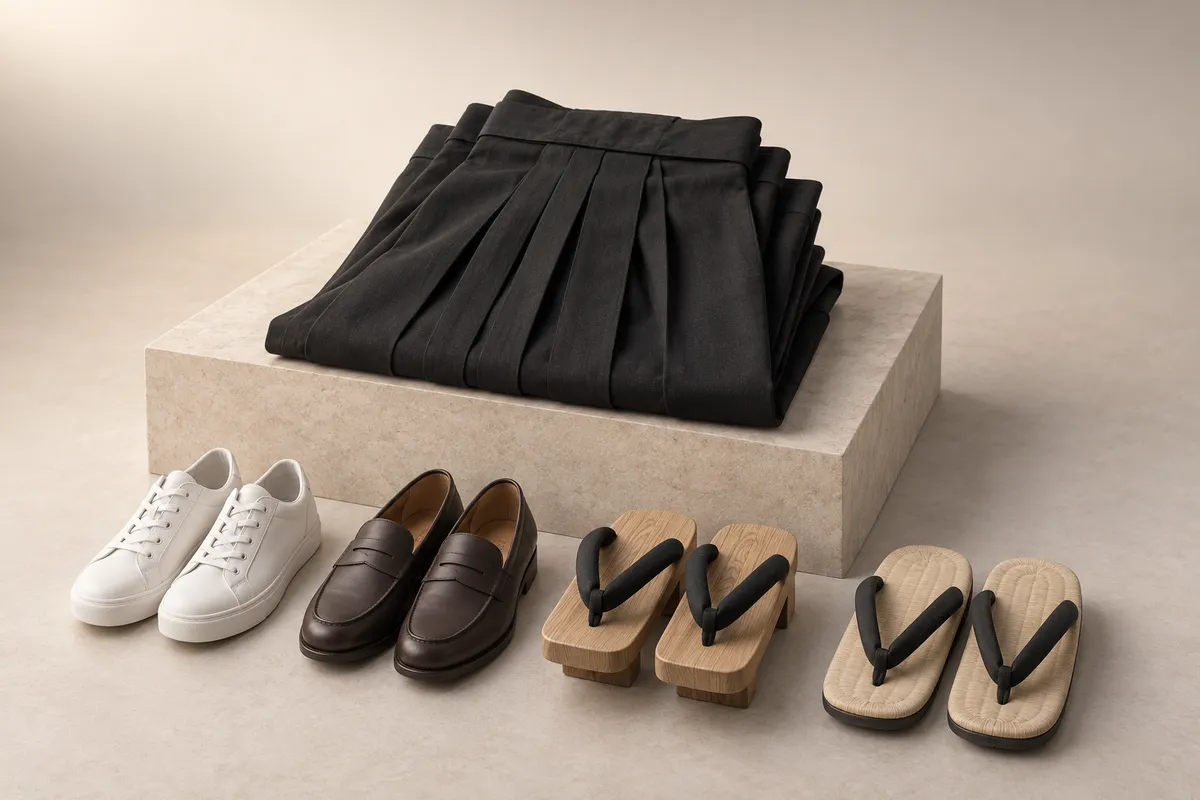
When it comes to completing a outfit, the choice of shoes and layers is crucial. Hakama Pant sells hakama and hakama sets only, so shoes, tops, and jackets come from the reader's own wardrobe. Low sneakers, loafers, boots with a slim shaft, and zori or geta for traditional dress are ideal. The hem decides the shoe: the wider the leg, the flatter and simpler the shoe.
Frequently Asked Questions
How to style hakama pants?
To style hakama pants, ensure the top you wear is shorter or closer to the body than the wide pleated legs. Tuck in your shirt or choose a cropped top to show the waist, which helps balance the volume of the hakama. Keep the colour palette to two or three tones to avoid a costume look. Flat, simple shoes like sneakers or loafers complete the look.
How to style hakama pants for men?
For men, styling hakama pants involves balancing the volume of the wide pleated legs. Choose a shorter or tucked top, such as a plain tee or a fitted long-sleeve shirt. A cropped jacket that ends at the waistband works well, and flat, simple shoes like sneakers or loafers are ideal. Avoid long coats that cover the pleats.
How to style hakama pants for women?
Women can style hakama pants by choosing a cropped top or a blouse that can be tucked in. This helps show the waist and balance the volume of the hakama. A high waist position lengthens the leg line, and a fitted cardigan or short jacket adds a polished touch. Flats or low boots complete the look.
What do men wear with hakama?
Men can wear a variety of tops with hakama, including plain tees, short knits, or fitted long-sleeve shirts. In traditional settings, a kimono and obi are worn under the hakama, with a haori for formal dress. In martial arts, a keikogi is worn. For everyday fashion, a plain tee, shirt, or knit is ideal. The key is to ensure the top is shorter or tucked in to show the waist, balancing the volume of the hakama. Flat, simple shoes like sneakers or loafers are ideal.
How to wear hakama pants?
To wear hakama pants, start by ensuring the top you choose is shorter or closer to the body than the wide pleated legs. Tuck in your shirt or select a cropped top to show the waist, which helps balance the volume of the hakama. Keep the colour palette to two or three tones and choose flat, simple shoes like sneakers or loafers to complete the look. Measure before ordering to ensure the hem falls to the ankle or just touches the shoe, and check the fastening on the product page.
Conclusion
Styling hakama pants is all about balancing the volume of the wide pleated legs. By tucking or cropping the top to show the waist and keeping the colour palette to two or three tones, you get a balanced look. Whether you're dressing for everyday wear, a formal event, or a techwear-inspired outfit, the same rule decides whether a outfit looks deliberate. Compare the streetwear designs on the store and measure before ordering.