
A hakama can be either a skirt or pants, depending on its construction. The andon hakama, an undivided form, is worn like a long pleated skirt, while the umanori hakama is divided into two wide legs, like trousers. Both share the same pleated front, which makes them look alike when the wearer is standing still. The undivided form is what people usually mean by a hakama skirt. This guide shows how to tell the two apart, who wears which, and where the modern versions fit.
Key Takeaways
- Both exist: A hakama can be either a skirt or pants, because the word names the garment and not one construction.
- Andon form: The andon hakama is one undivided tube from waist to hem.
- Umanori form: The umanori hakama has two separate wide legs.
- How to tell: A wide step or a seated pose reveals the difference, while a standing pose hides it.
- Who wears which: Graduation and formal outfits with a kimono commonly use andon, while martial arts and formal men's dress often use umanori, though conventions vary.
- Modern versions: Modern hakama-style skirts and hakama pants borrow the two shapes.
Is a hakama a skirt or pants?
A hakama can be either a skirt or pants. The term "hakama" refers to the pleated, tied lower-body garment, not to a specific construction. Both the andon hakama and the umanori hakama share the same front pleats, ties (himo) and back panel (koshiita). These similarities lead to confusion, especially when a person is standing still, as the legs are hidden by the pleats and the long hem.
Photographs add to the confusion, because they often show the garment in a pose that hides whether it is a single tube or two legs. The difference matters for practical reasons: how freely you can stride, kneel or sit, and what is expected at a particular event or school. The site's guide covers umanori and andon forms in the hakama guide if you want the wider picture.
The construction also affects how the garment is put on. With the andon hakama, you step into one continuous tube. With the umanori hakama, you step into two legs, as with any pair of trousers. The ties and the back panel are then handled in the same way on both.
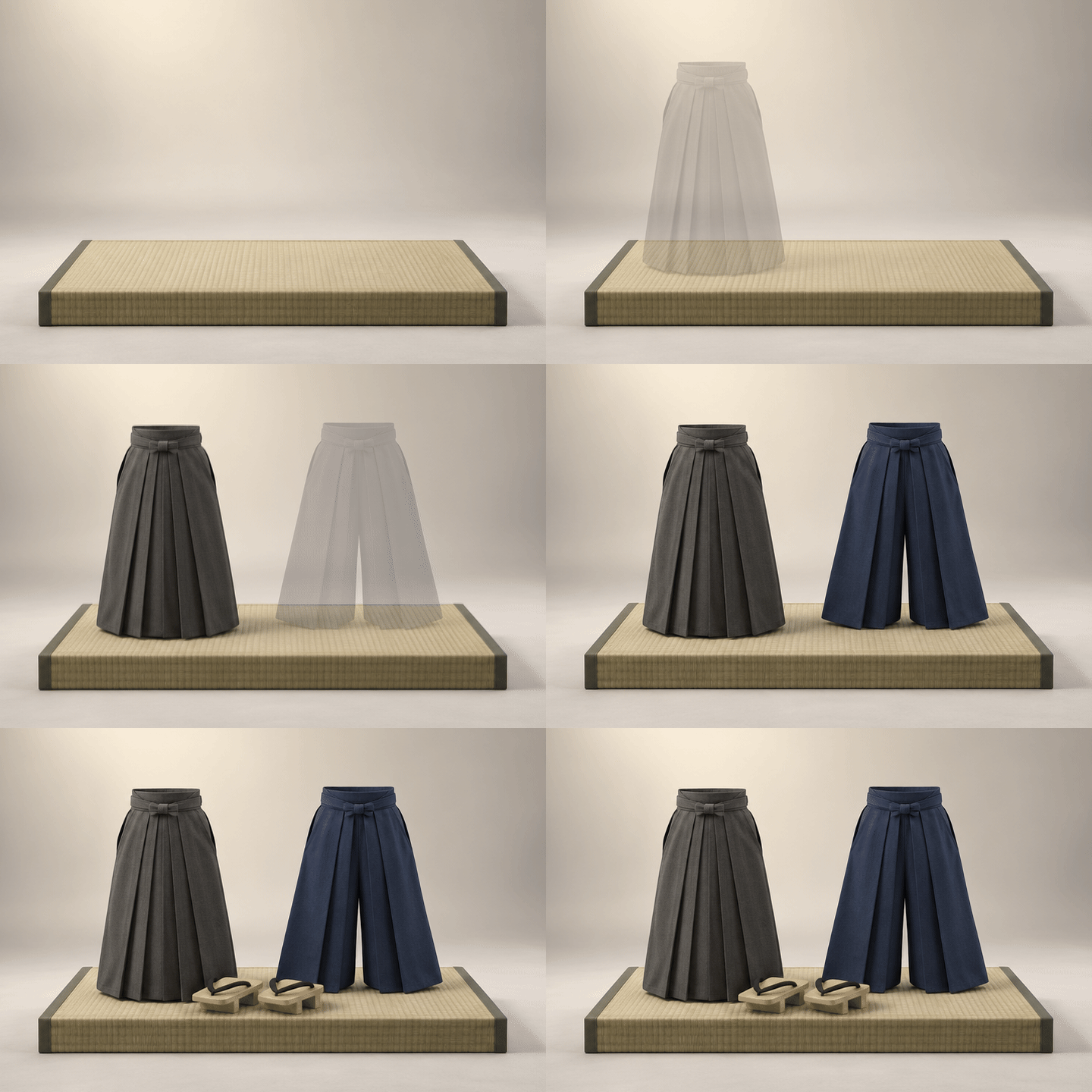
The andon hakama: the skirt form
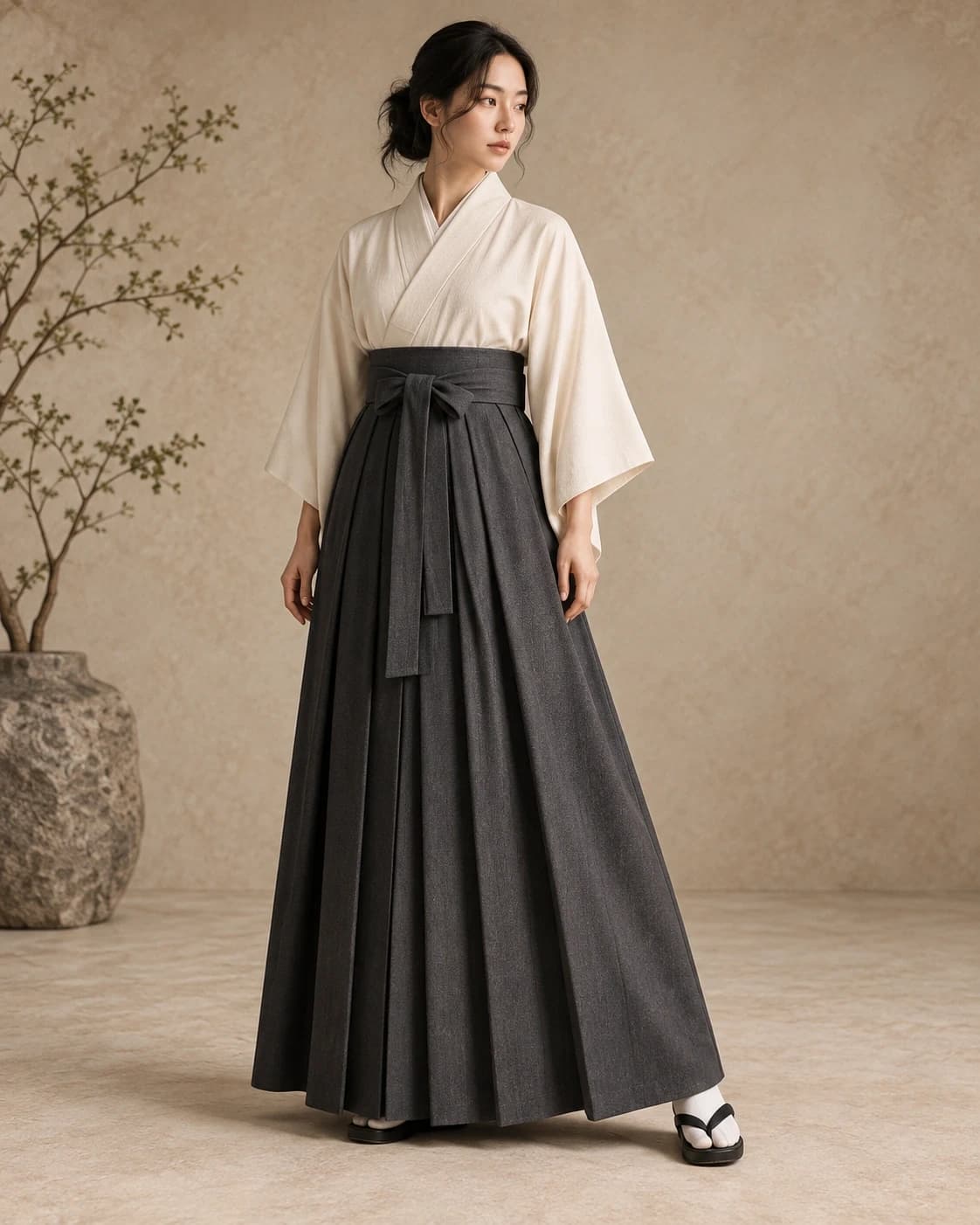
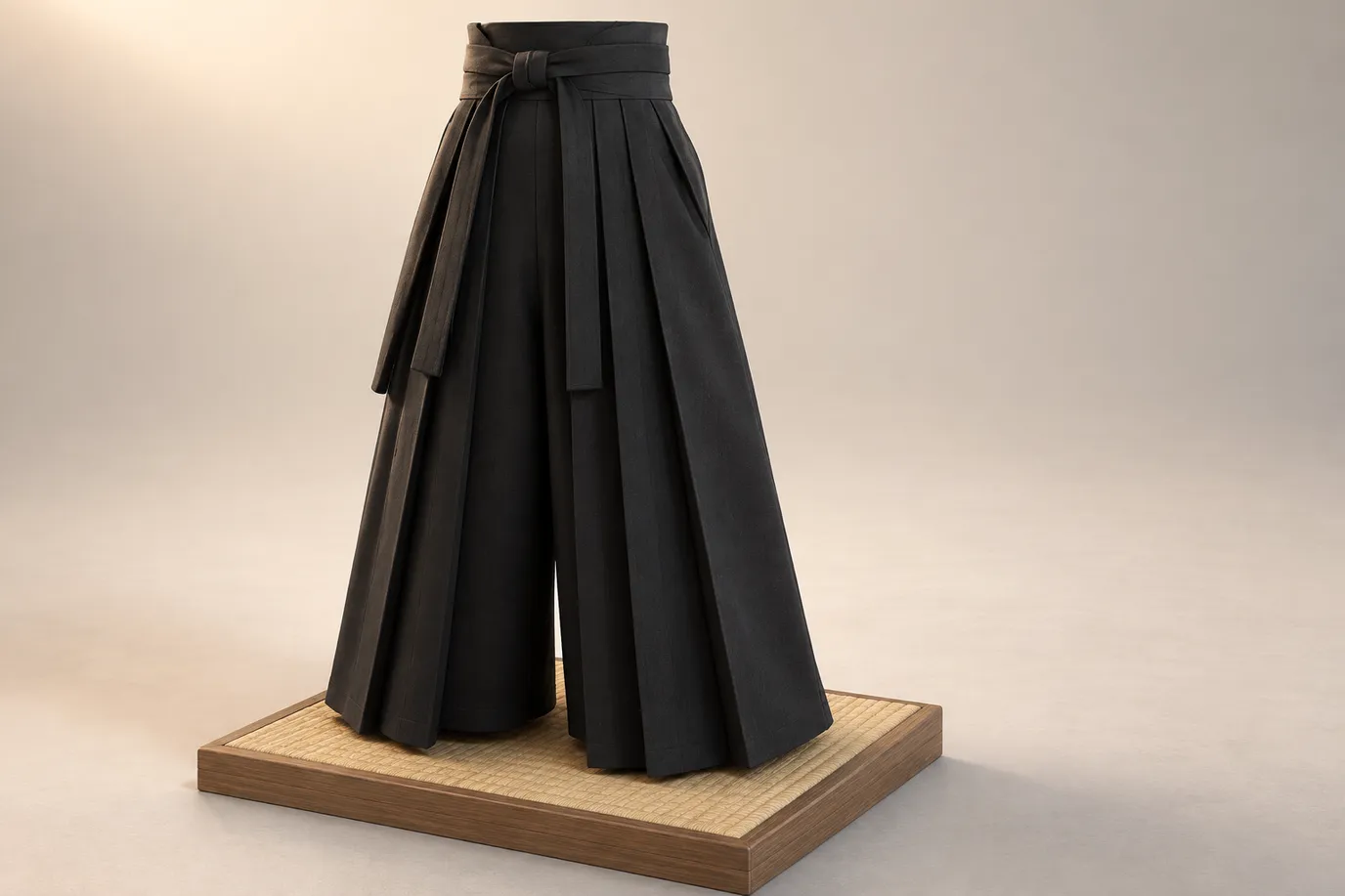
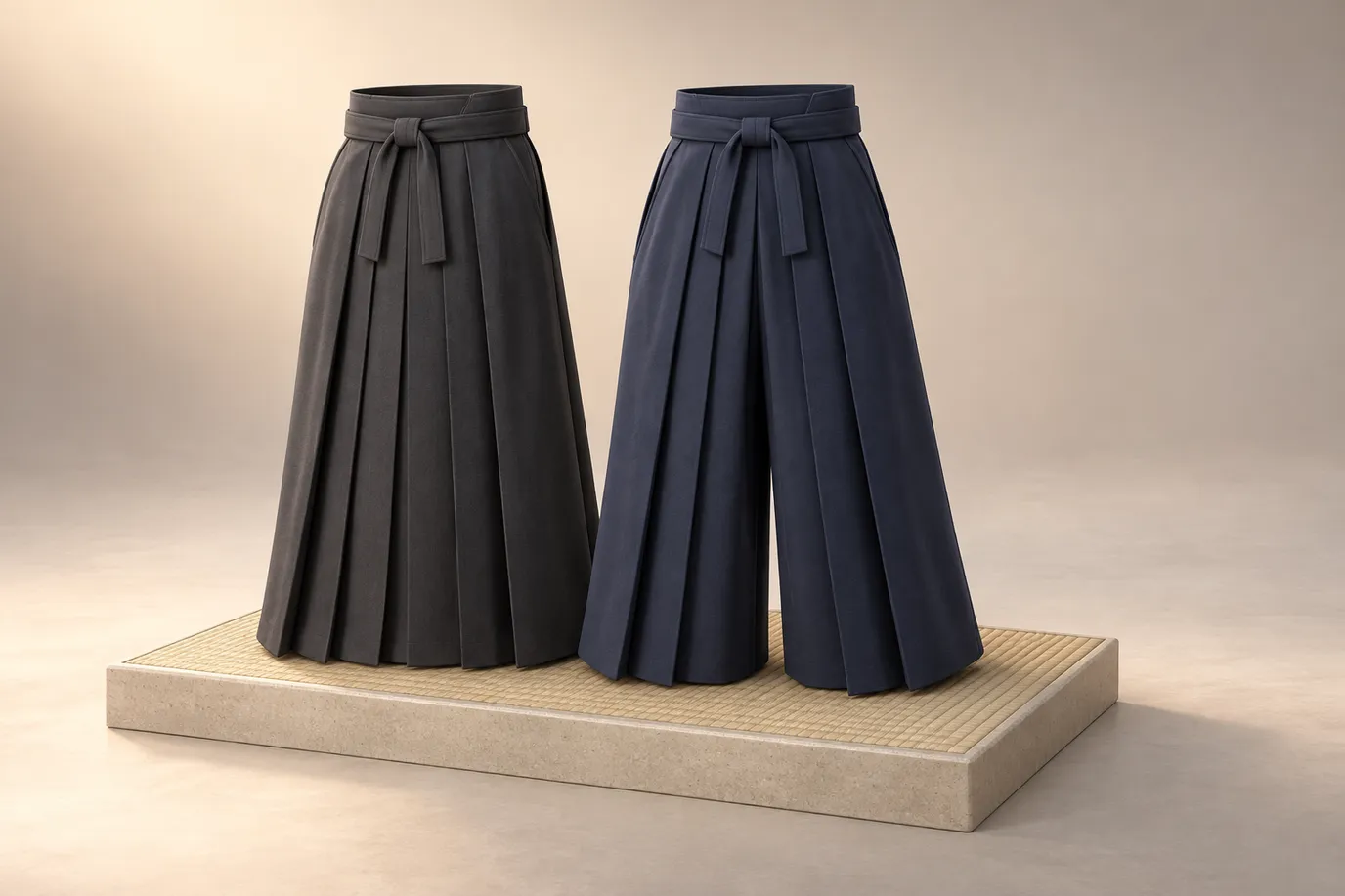
The andon hakama is constructed as one undivided tube that runs from the waist to the hem. Its name is commonly traced to the shape of a paper lantern (andon), which it resembles when worn. Hakama Pant lists an Andon Skirt-Style Hakama in charcoal as a design concept in this form.
This form is well suited to walking, standing and sitting on a chair, and it sits smoothly over a long kimono. The single hem keeps one unbroken line from waist to floor. A very long stride is limited by that single hem, which is the main difference you feel in movement.
It is commonly seen in graduation outfits, paired with a kimono or furisode and an obi, as well as in other formal dress. The conventions for wearing it vary by school and event, so confirm what is expected before you buy for a specific occasion.
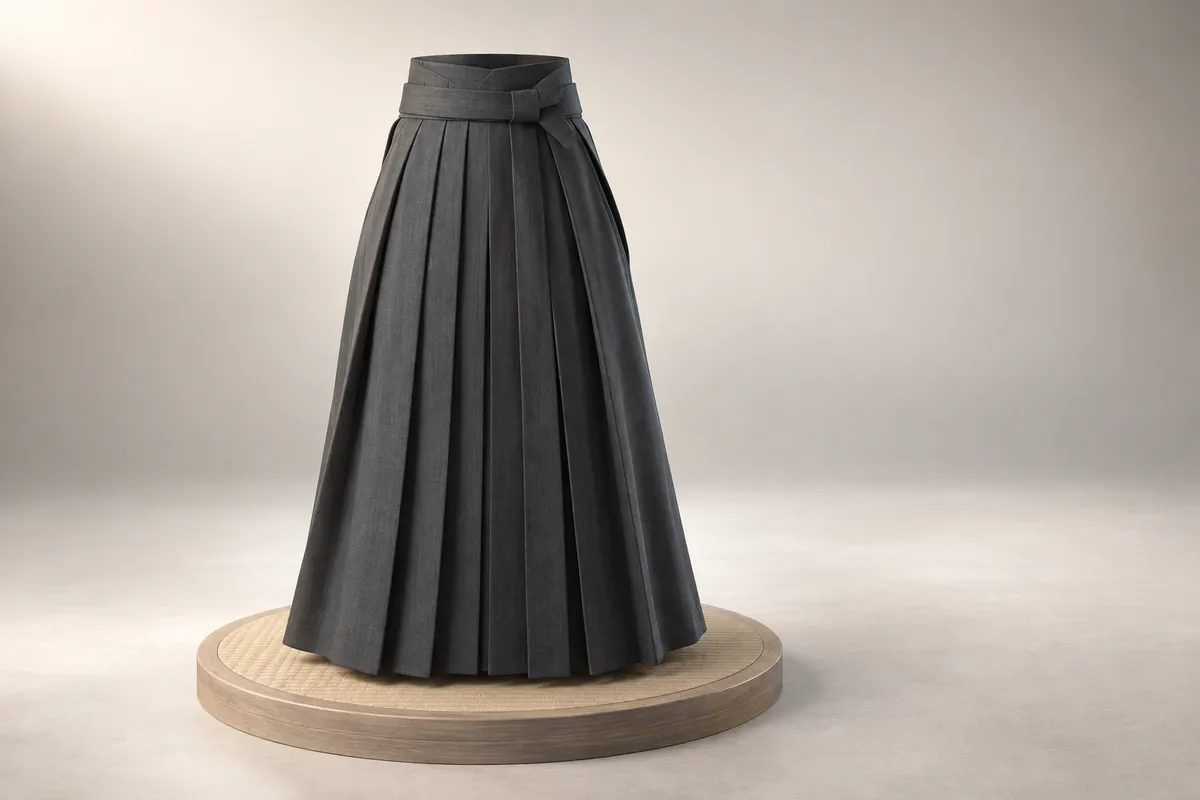
The umanori hakama: the divided form
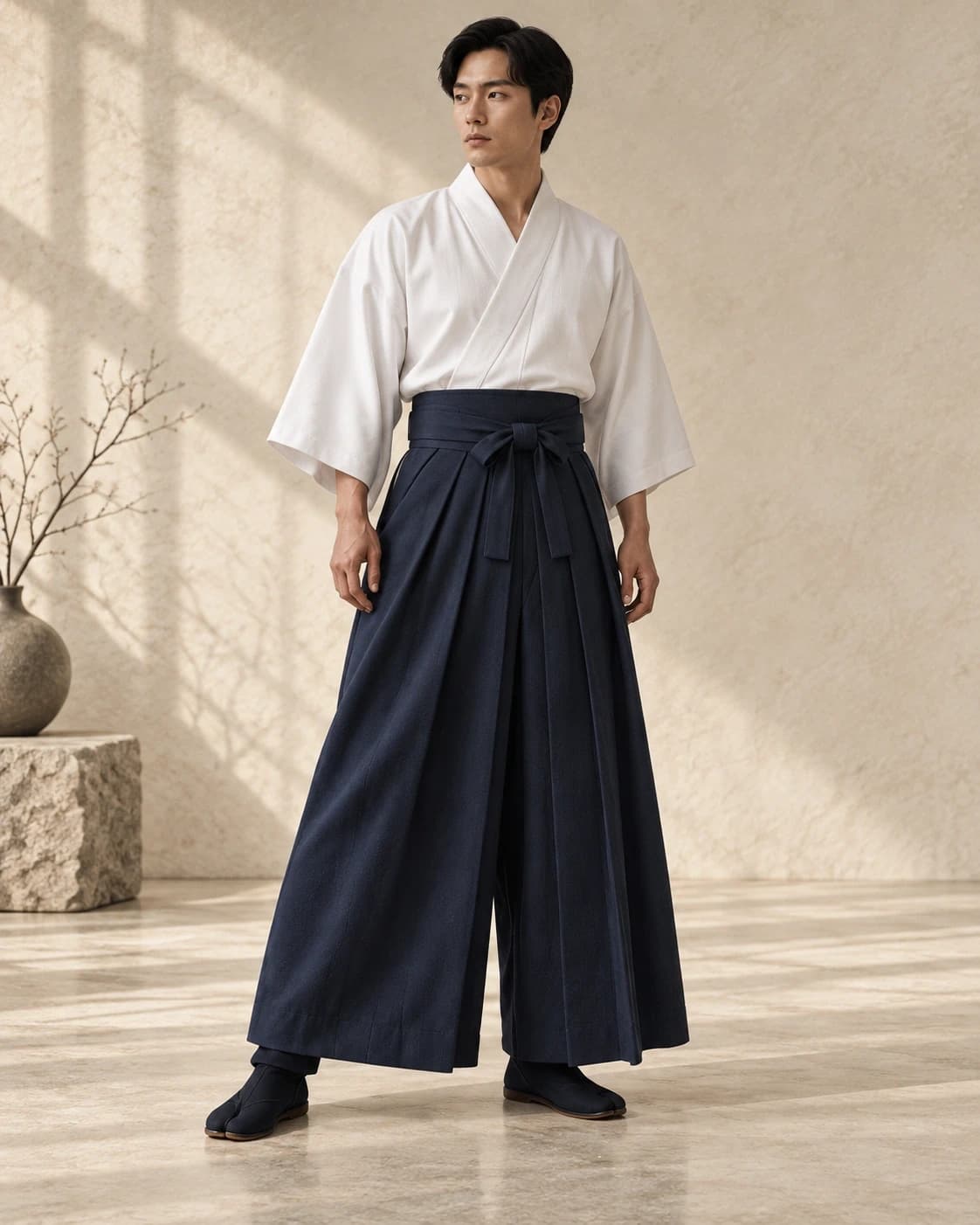
The umanori hakama is constructed with two separate wide legs joined at the crotch. Its name is commonly translated as "horse-riding hakama" and is traced to riding. Each leg moves independently, so wide stances, kneeling and long strides are unrestricted.
The hem of each leg is wide enough that the division is not noticeable when standing, which gives the appearance of a single garment. This form is commonly seen in martial arts such as aikido, kendo, iaido and kyudo. It is also seen in formal men's dress. The store's Umanori Divided-Leg Hakama in deep navy is a traditional-style design concept in this form.
The specific conventions for wearing a divided hakama vary by school and event, so confirm with your instructor before buying one for training. Colour, length and even the way the ties are knotted can differ from one club to the next.
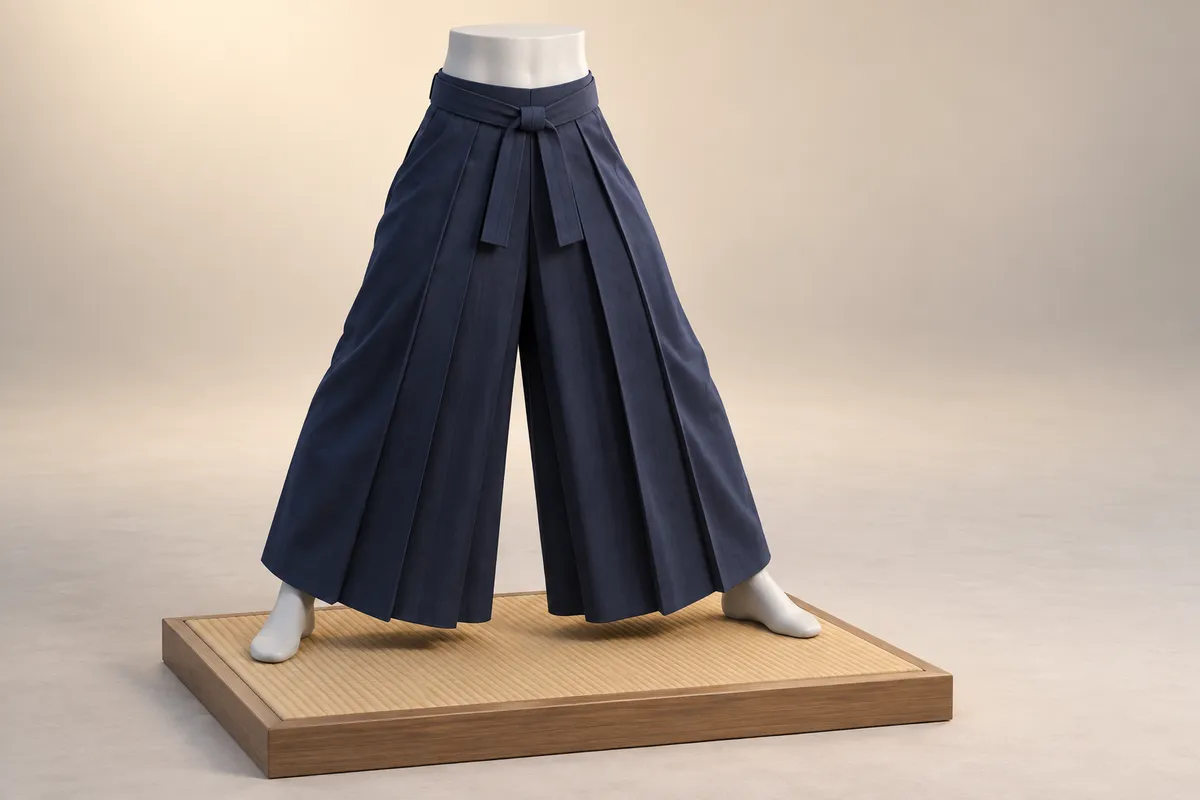
How to tell the two apart
| Feature | Andon hakama (skirt form) | Umanori hakama (divided form) |
|---|---|---|
| Construction | One undivided tube | Two separate wide legs |
| How to tell | No split between the legs when the wearer steps or sits | A split shows between the legs in a wide step |
| Commonly worn for | Graduation and formal outfits with a kimono | Martial arts and formal men's dress |
| Movement | Walking and standing | Wide stances, kneeling, riding in origin |
| Modern versions | Hakama-style skirts | Hakama pants and trousers |
When trying to distinguish between the two forms from a photo, look for a moment of movement, such as a wide step, a kneeling pose or a seated position. A split between the legs indicates the umanori form, while a continuous hem suggests the andon hakama. Standing shots rarely give enough to go on.
In a shop, or with the garment in your hands, you can tell by putting a hand inside from the hem or lifting one side. If you feel two separate tubes, it is the umanori form. If it is one continuous piece, it is the andon hakama. The inside of the hem at the centre shows the same thing.
On a product page, the form is usually named in the title or description. Terms like "divided", "umanori", "undivided", "andon" or "skirt-style" give you the answer. A concept image shows design intent, but it does not confirm the construction, so read the written details carefully.
Who wears which form, and when
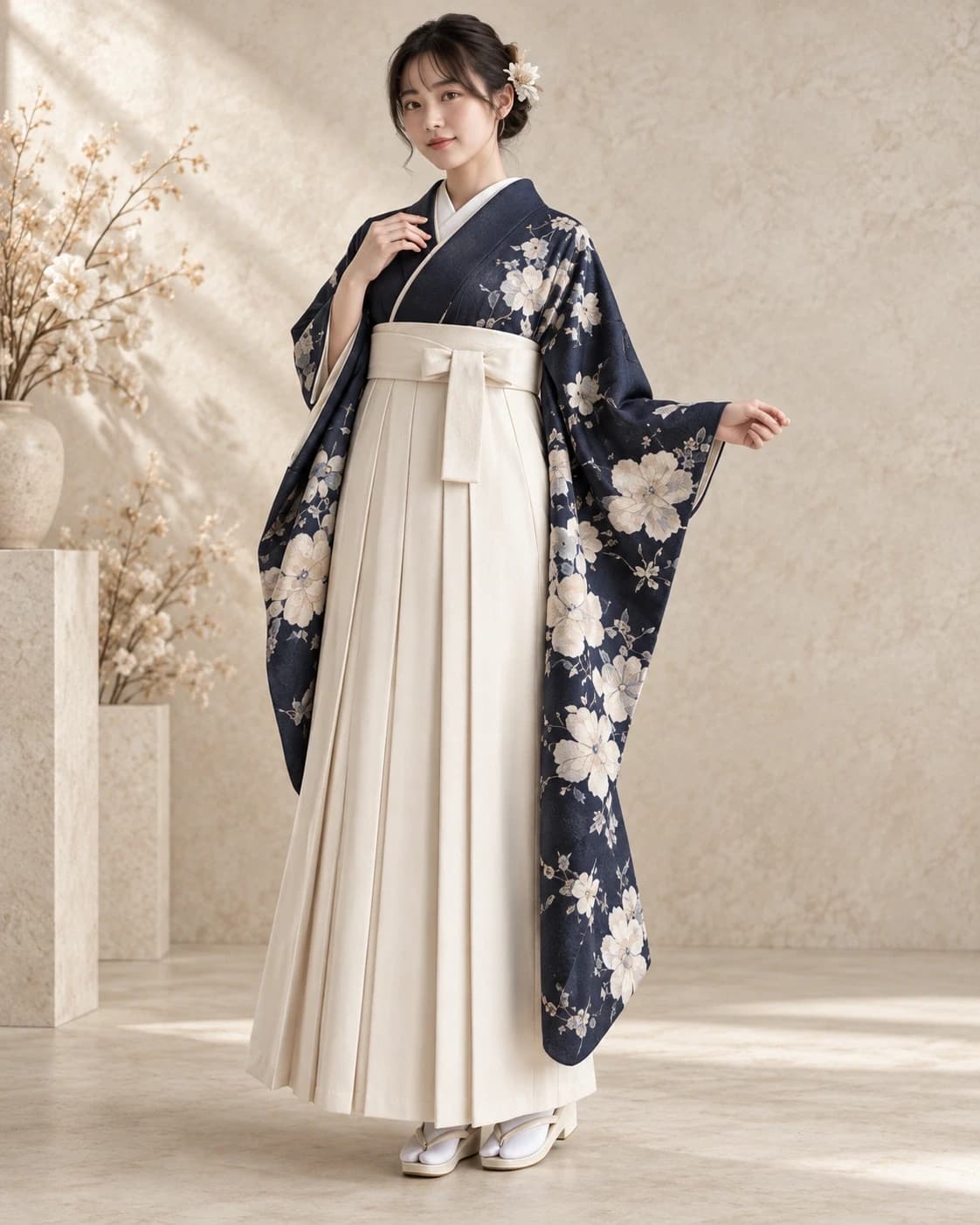
For graduation and formal outfits, an andon-style hakama over a kimono or furisode, worn with an obi, is commonly seen as the graduation look for women in Japan. The store lists this combination as a Furisode Kimono + Andon Hakama Graduation Set, sold as a set only.
In martial arts and men's formal dress, the divided form is usually the choice for aikido, kendo, iaido and kyudo. It is also common with formal men's kimono. The choice can vary by school and event, and some kyudo and ceremonial contexts differ, so ask for specific guidance.
There is no single "female version" of the hakama. Women wear both the andon and the umanori forms, and the choice depends on the occasion and the school's conventions, not on a fixed rule. For the dressing order itself, see the guide on how to put on and tie a hakama.
Modern hakama skirts and hakama pants
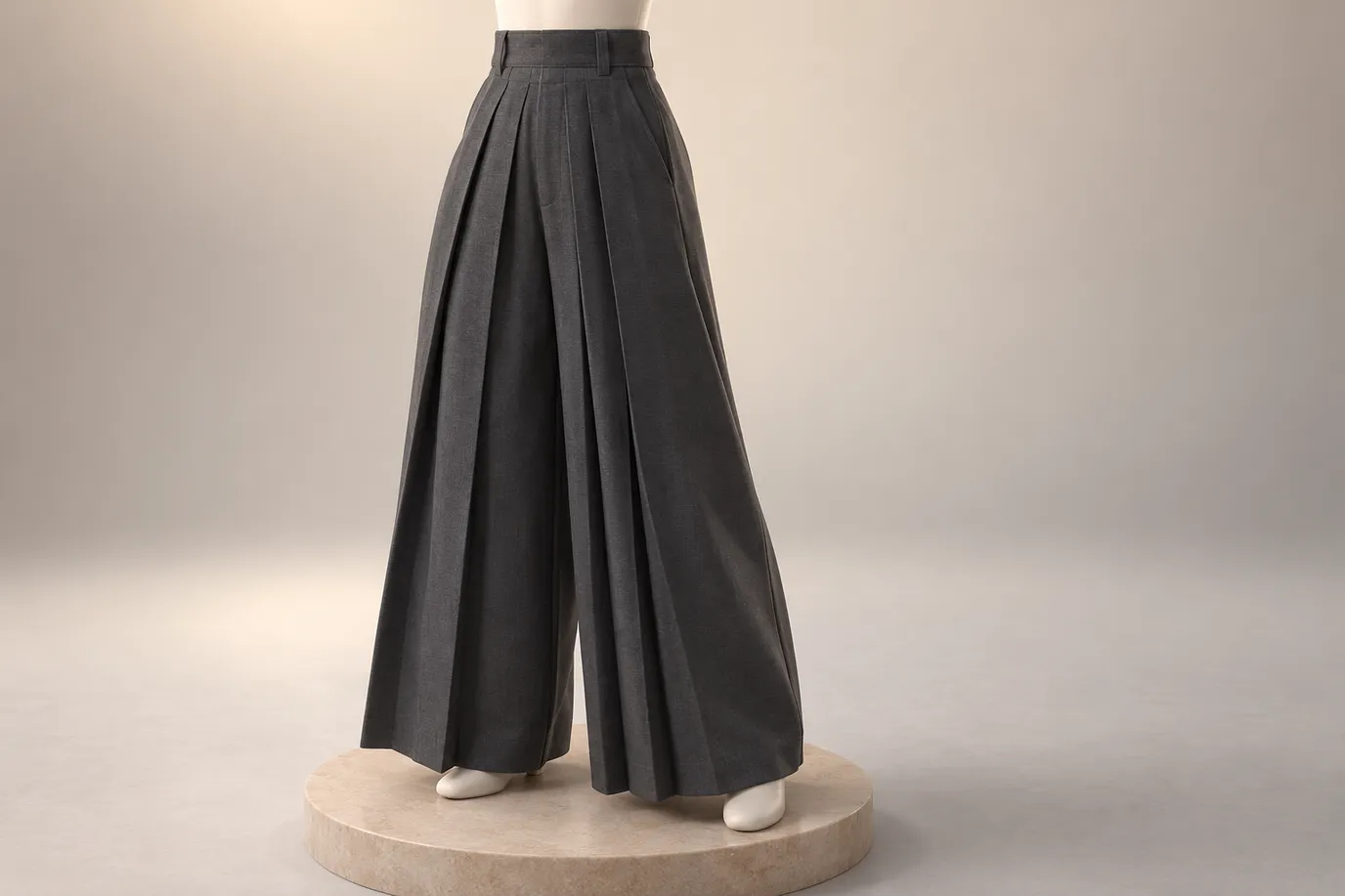
Modern hakama-style skirts are often pleated wrap or maxi skirts that borrow the andon outline. They frequently keep a tied waist, which carries a detail of the traditional garment into everyday fashion.
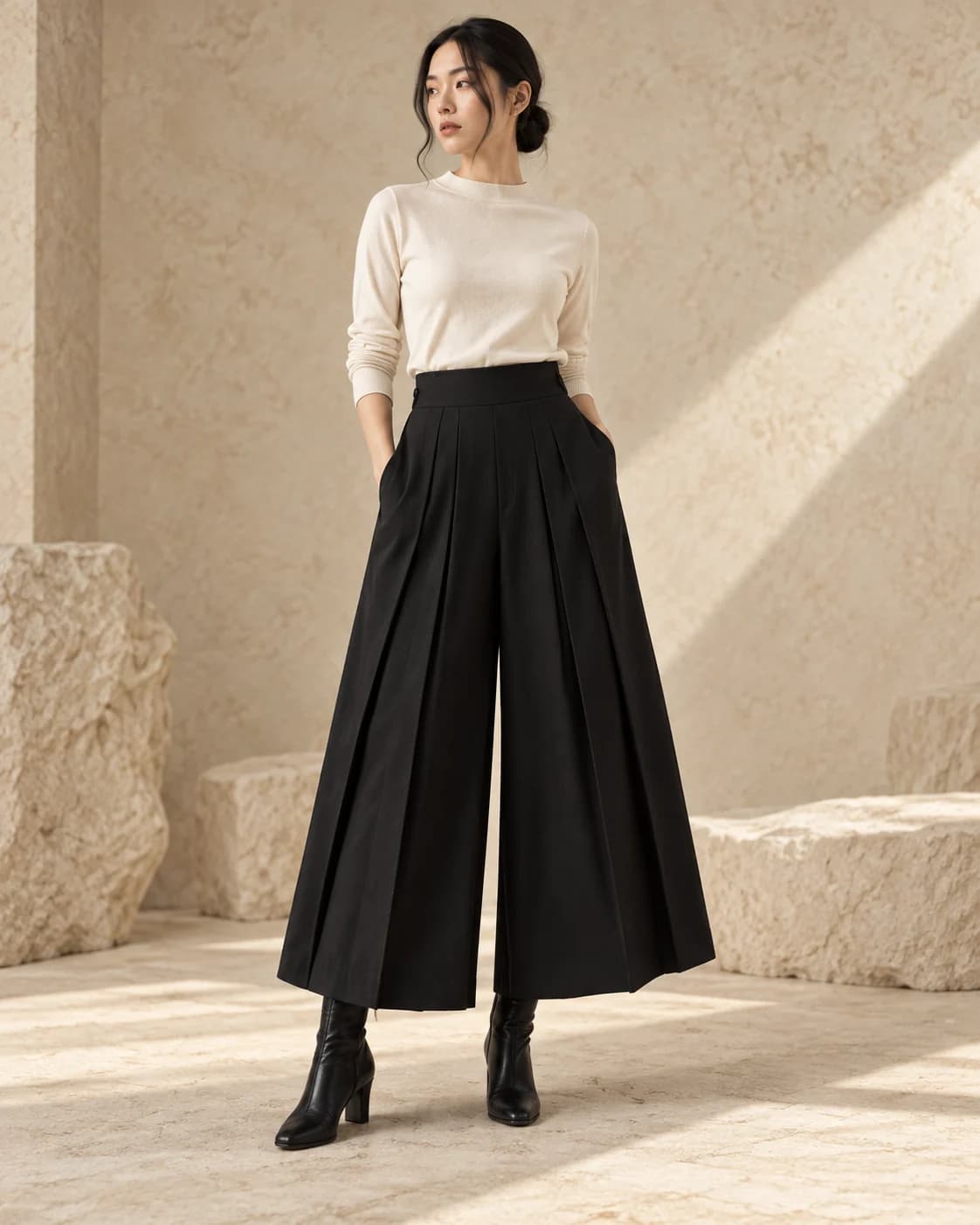
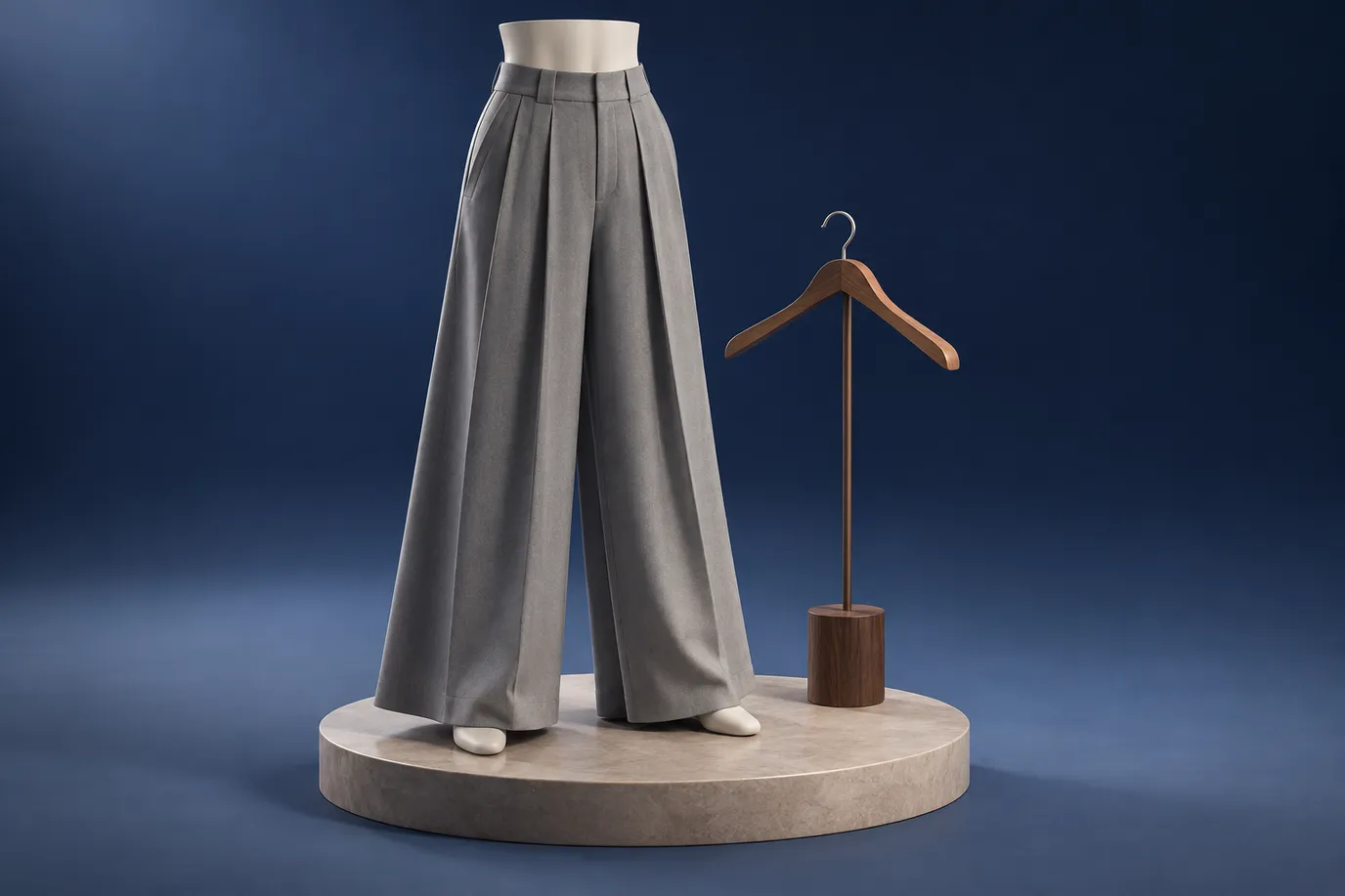
Hakama pants and trousers are wide pleated trousers that borrow the umanori outline. They usually come with a flat or elastic waistband and can resemble culottes when cropped. The women's hakama pants collection groups designs of this kind.
When choosing between the two, consider the movement you need and the formality of the occasion first. The length of the garment with your shoes and the colour come next. Neither modern version replaces the traditional hakama where a school or ceremony asks for one.
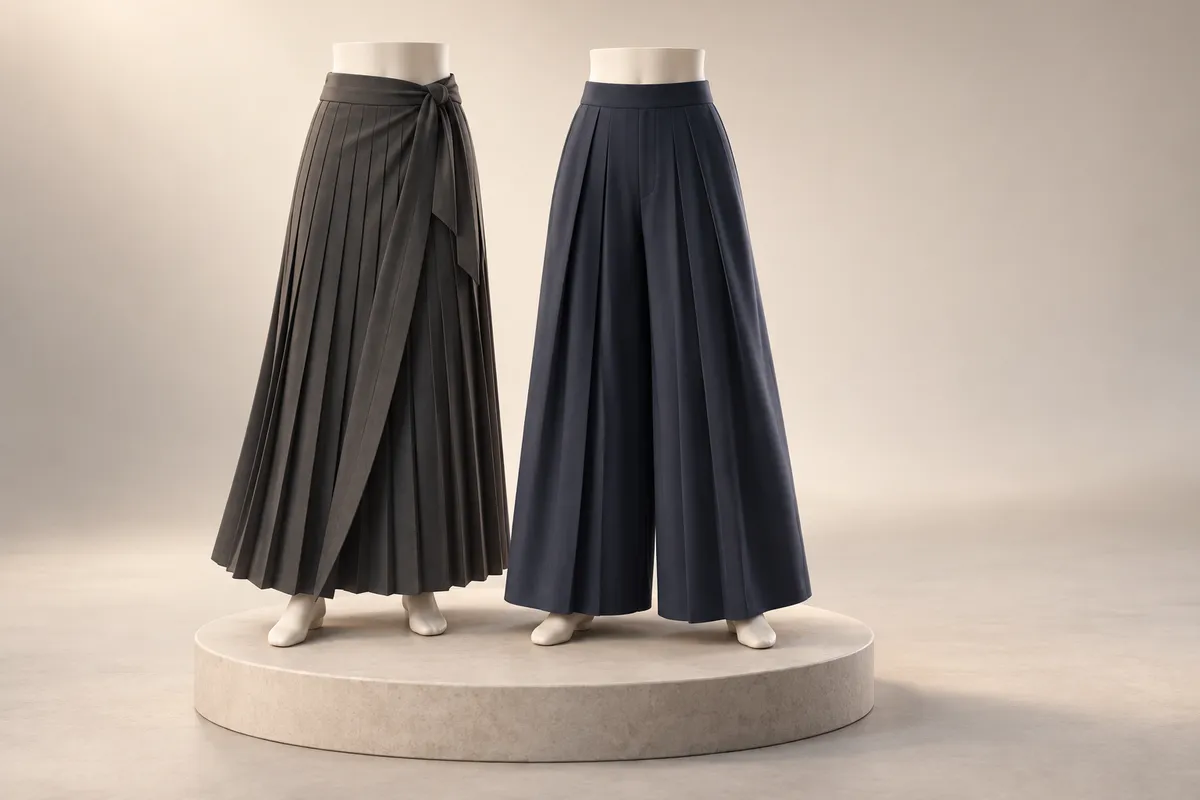
Hakama Pant designs in each form
The Andon Skirt-Style Hakama is a charcoal design with an un-divided andon skirt silhouette, a structured waist and cascading pleats, in listed sizes S to XXL.
The Umanori Divided-Leg Hakama is a deep navy, traditional-style divided-leg silhouette with a tie waistband and measured pleats, also in listed sizes S to XXL.
The Furisode Kimono + Andon Hakama Graduation Set combines a deep navy and ivory long-sleeved kimono with subtle abstract floral art and a flowing andon-style hakama. The store does not sell a kimono or furisode on its own. These are design concepts, so compare the form named on each product page, the colour and the listed sizes.
Frequently Asked Questions
Can hakama be a skirt?
Yes, the andon hakama is undivided and worn like a long pleated skirt. Its name is traced to the shape of a paper lantern. It is commonly worn over a kimono at graduations and in formal dress. From the front it looks the same as the divided form, because the pleats, the ties and the back panel do not change, so the hem is the place to check.
What is the female version of a hakama?
There is no single female version of a hakama. Women wear both the andon and the umanori styles. The andon style over a kimono or furisode is a common graduation look, while in martial arts women usually wear the same divided hakama as men. Practice varies by school, so the occasion decides the form, not the wearer's gender.
What is a hakama worn for?
A hakama is worn for martial arts such as aikido, kendo, iaido and kyudo. It is also used for formal dress, graduations, and shrine and ceremonial roles, and, in modern cuts, for everyday fashion. The form, the colour and the way it is tied can vary by school or occasion, so check what your setting expects before choosing one.
Is hakama a skirt or pants?
A hakama can be either a skirt or pants, depending on the form. The divided umanori is a pair of pants, while the undivided andon is a skirt. The pleated front looks the same in both forms, so check for a split between the legs in a wide step, or look inside the hem, to see which one you have.
Are hakama pants or skirts?
Products sold as "hakama pants" are trousers with two legs. A traditional hakama, however, can be either a skirt or pants, so read the product title and description and look for the words "divided" or "undivided". If the page names the form as umanori, it has two legs. If it says andon or skirt-style, it has a single hem.
Conclusion
A hakama is not one construction: it can be a hakama skirt or a pair of pants. Name the form first, andon or umanori, and match it to the occasion or to your school's expectation. Then check the form, the colour and the listed sizes on the product page. To compare both forms side by side, browse the traditional-style hakama collection.