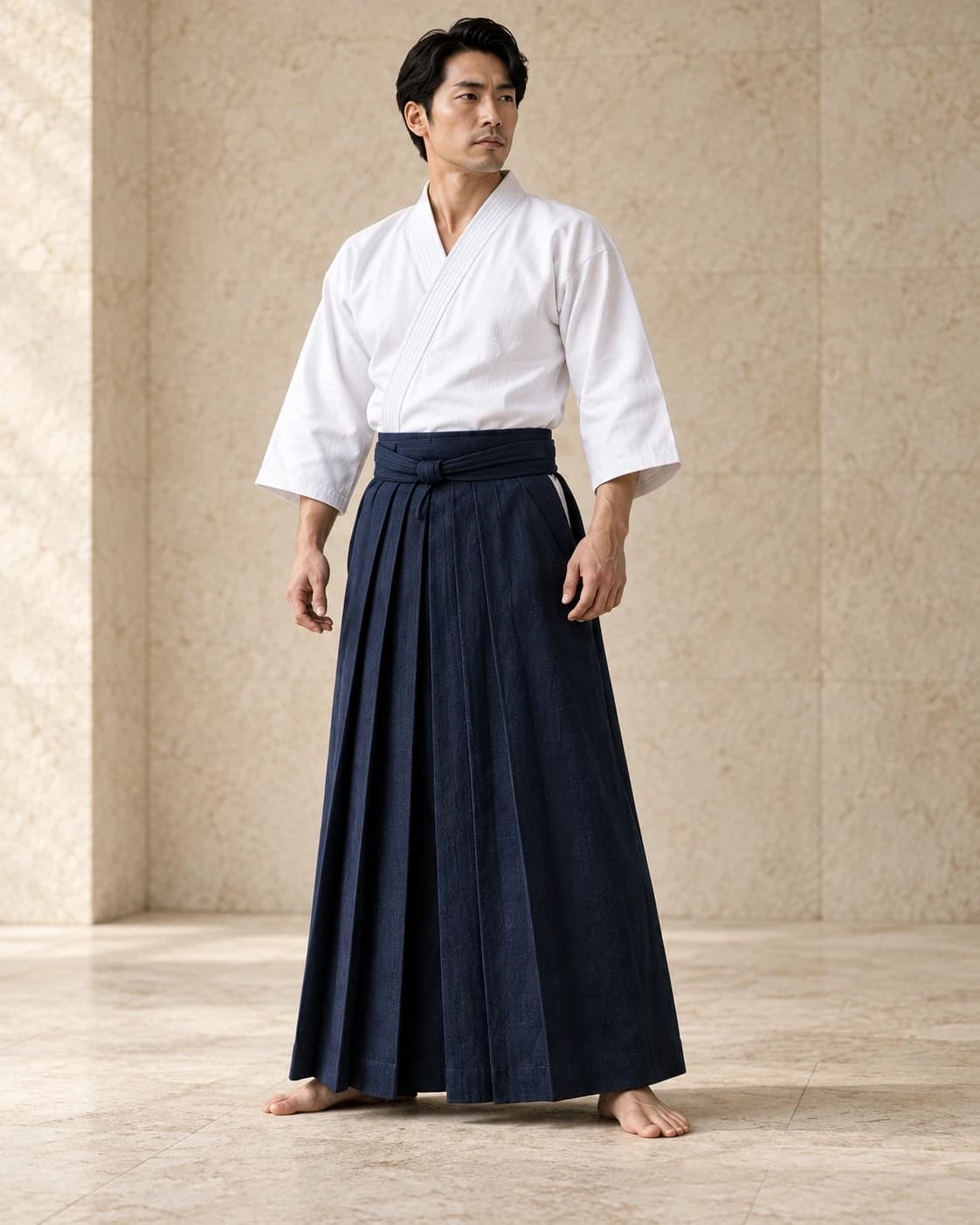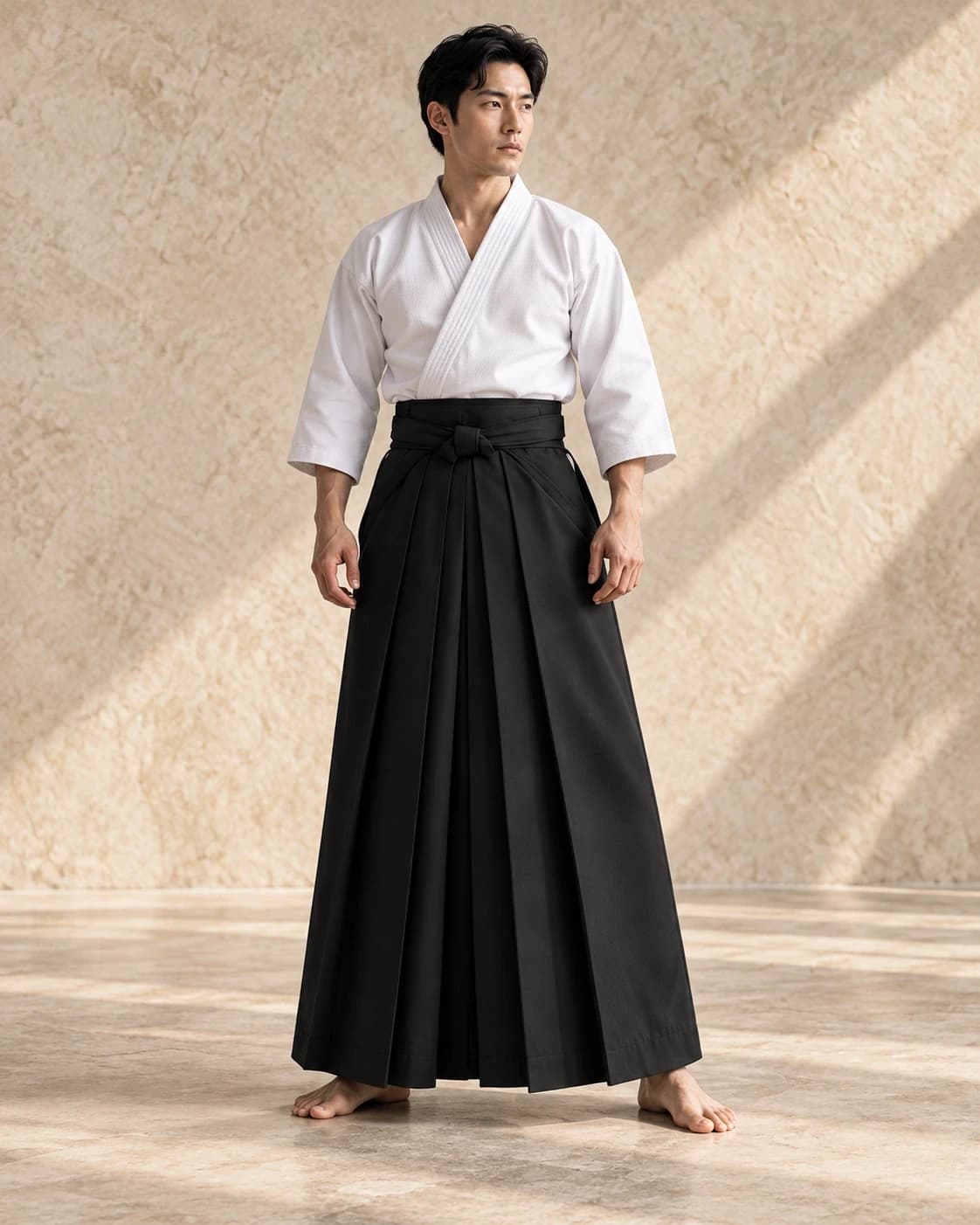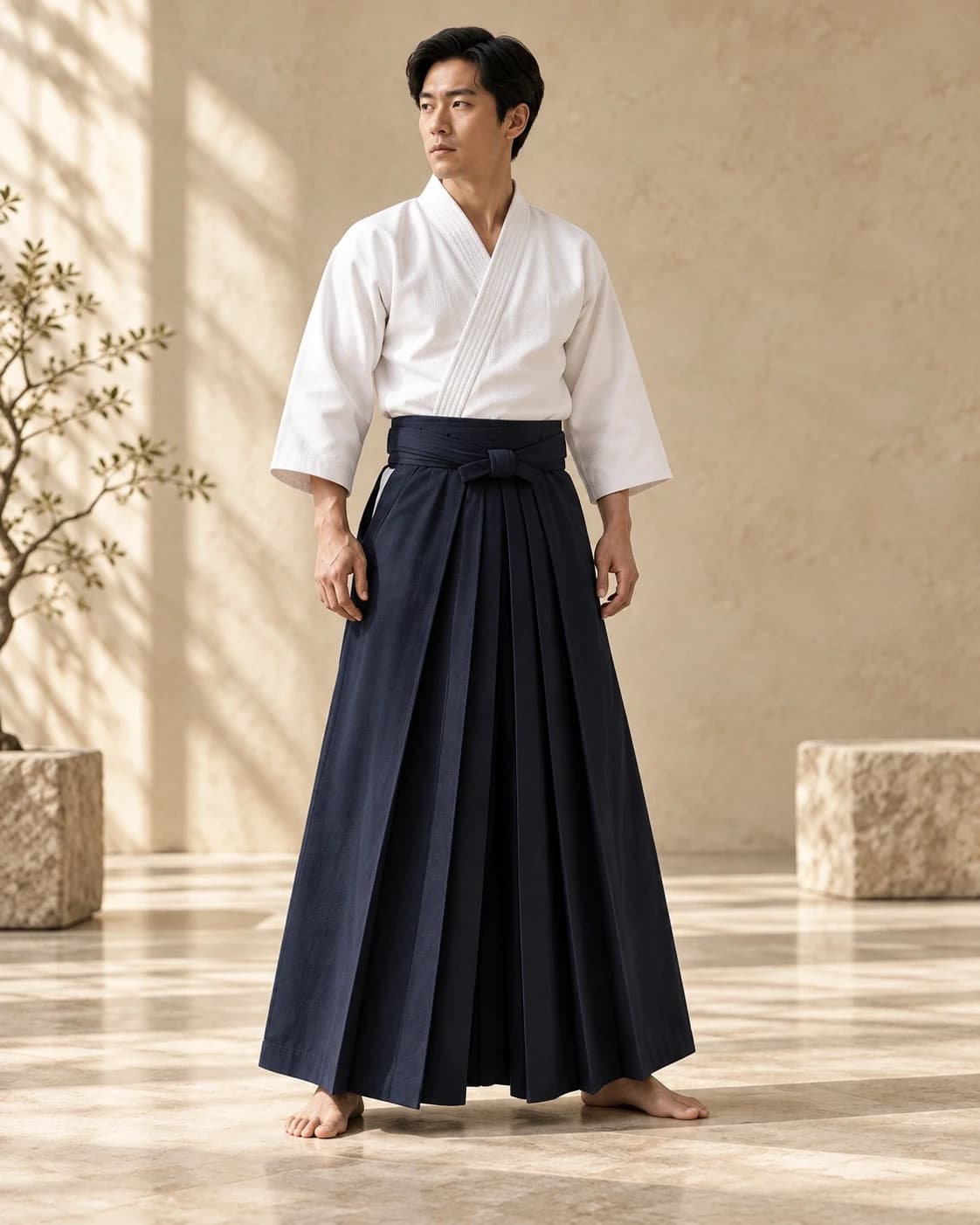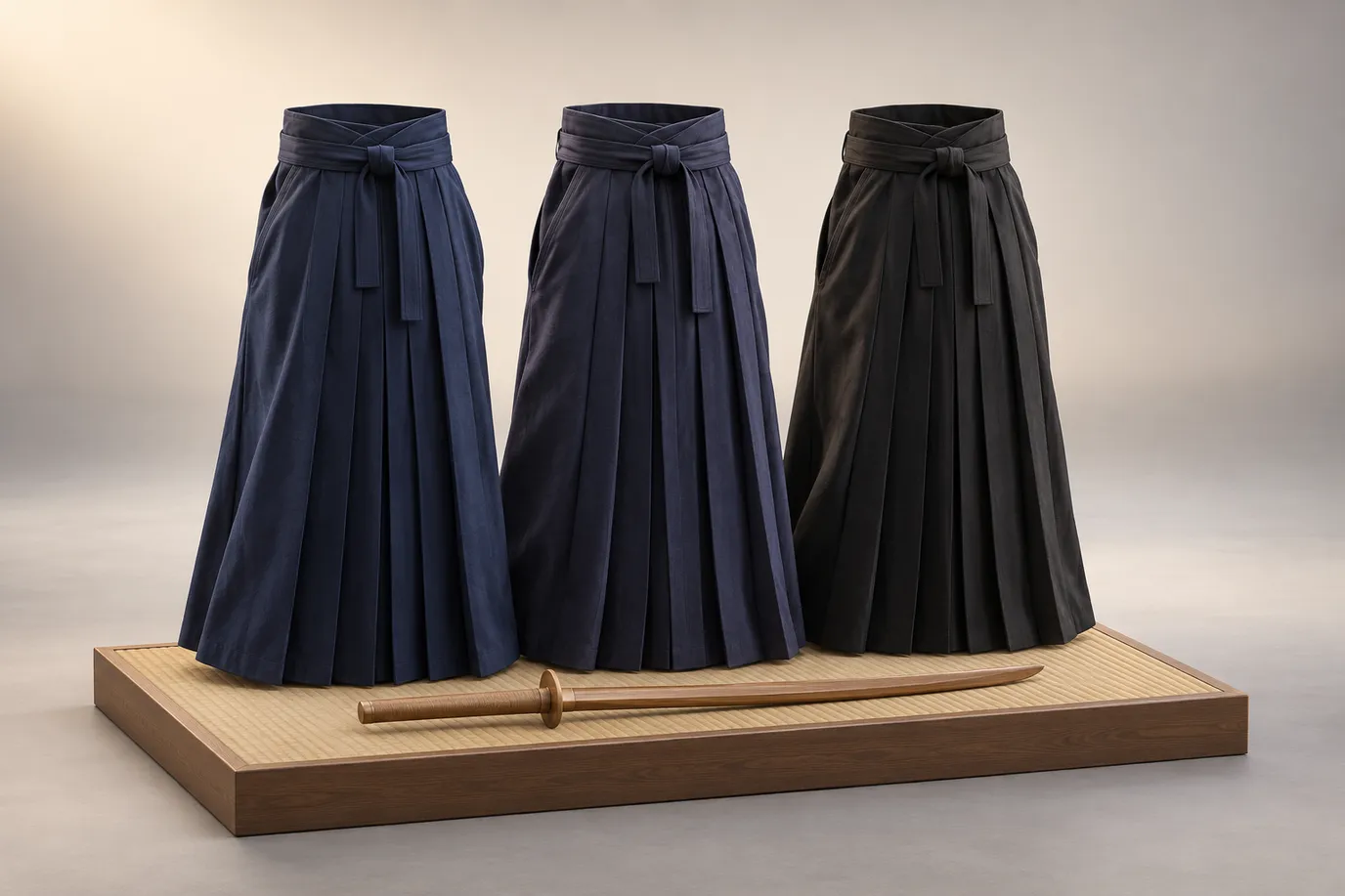
A hakama uniform is a pleated wide-leg hakama worn over a training jacket in arts such as aikido, kendo, and iaido. Conventions differ: kendo usually pairs an indigo hakama with a keikogi, many aikido schools reserve the hakama for senior ranks, and iaido commonly uses black or navy. Confirm with your instructor.
Key Takeaways
- Three-part outfit: In most dojos the word uniform means the hakama, the training jacket and the belt together, so a hakama bought alone is only the lower garment.
- Aikido rank rule: Aikido often reserves the hakama for senior ranks, with the specific grade varying by school.
- Kendo from day one: Kendo pairs an indigo hakama with a kendogi, typically worn from the first day of training.
- Iaido and the obi: Iaido commonly uses black or navy hakama, often paired with an iaido gi and obi from the first day.
- Divided or undivided form: Hakama can be found in divided-leg (umanori) and skirt-style (andon) forms, with the choice depending on the art and school.
- Ask before ordering: Always confirm specific requirements with your instructor before purchasing a hakama.
What a hakama uniform is (and what it is not)
The outfit is built around a pleated lower garment with wide legs. It is worn over a training jacket, the keikogi, in several martial arts. The uniform typically includes the hakama, the keikogi, and the obi (belt).
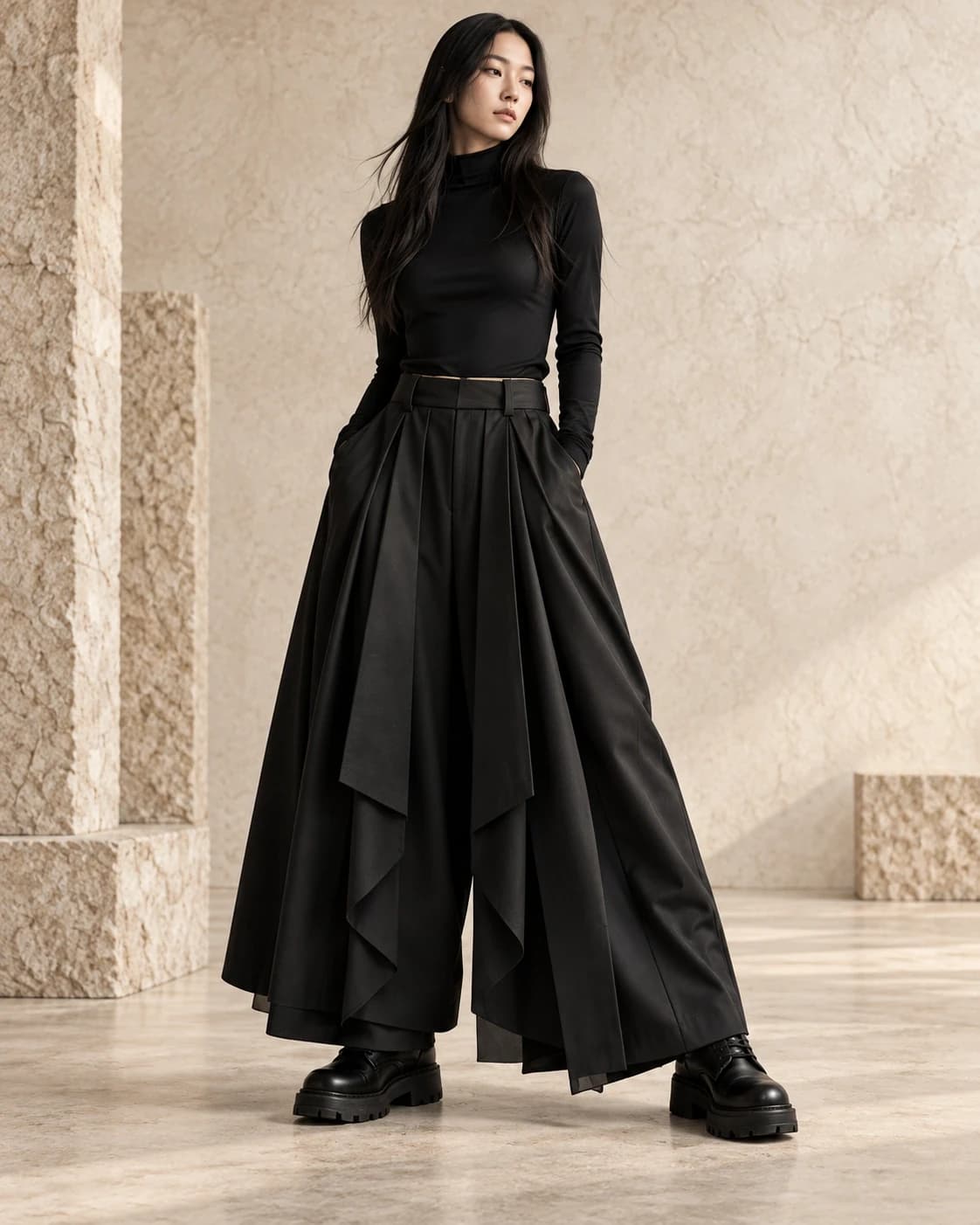
The pleats, the himo (ties), and the koshiita (stiff board built into the back waist) are key features that distinguish the hakama from other garments. The hakama is not the same as fashion hakama pants for street outfits, nor is it a costume piece.
For example, Hakama Pant lists an Iaido Gi + Hakama Complete Uniform Set, an indigo and white concept with a plain martial arts gi top and a classic wide pleated hakama, available in sizes S to XXL. If you buy a hakama alone, you will still need to acquire the jacket and belt your dojo specifies, which the store does not sell separately.
Aikido, kendo and iaido at a glance
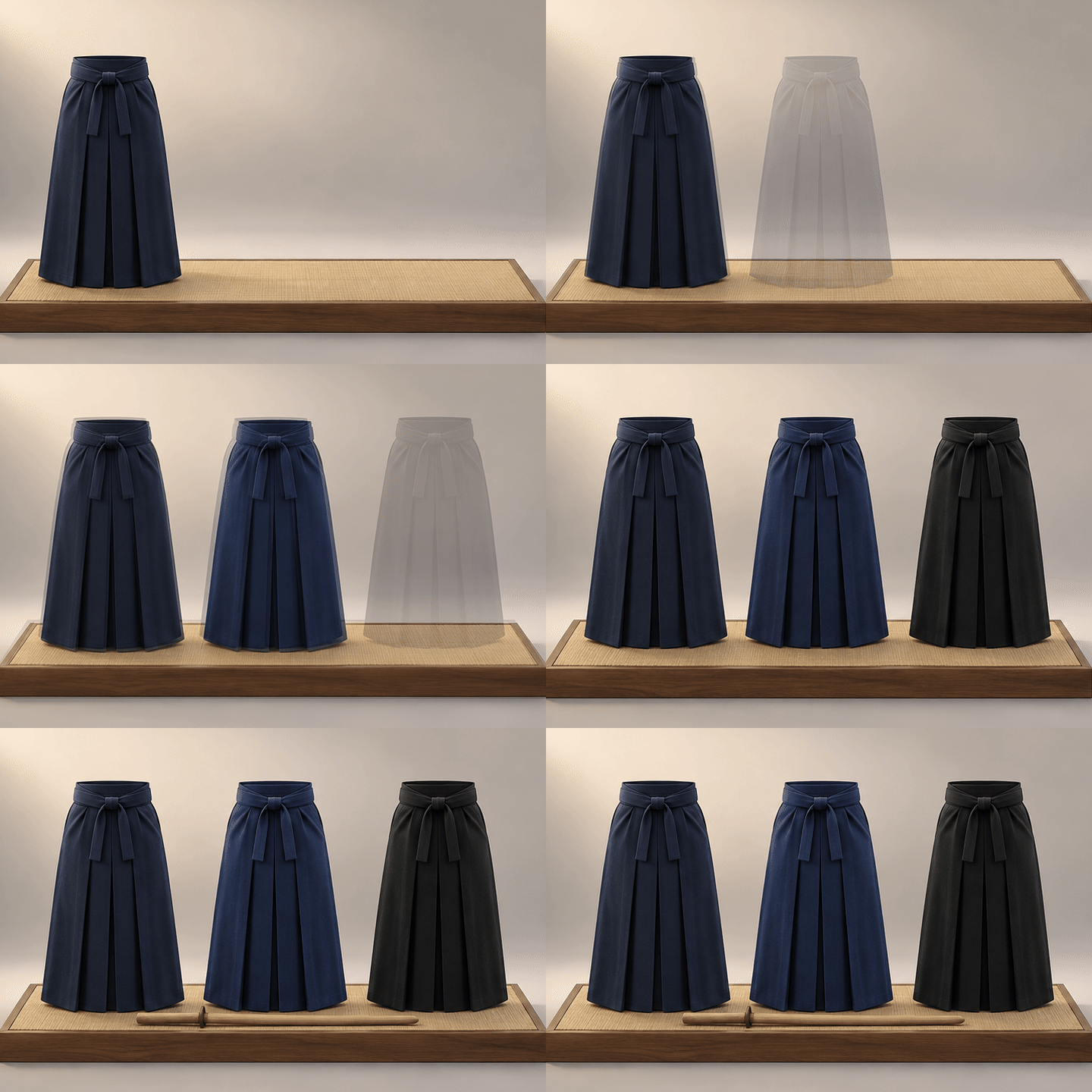
Aikido, kendo, and iaido are three martial arts that prominently feature the hakama in their training attire. Each art has its own approach, and the martial arts hakama collection groups the designs listed for them.
| Martial art | Usually worn on top | Common hakama colours | When students usually start wearing it | Confirm with your dojo |
|---|---|---|---|---|
| Aikido | Keikogi with belt | Black or dark navy | Often from a senior rank; varies by school | Rank rule, colour |
| Kendo | Kendogi (keikogi) | Indigo most common; white also seen | From the first day in most clubs | Colour for gradings, length under armour |
| Iaido | Iaido gi with obi | Black or navy; white in some groups | From the first day | Colour, whether a set is expected |
These conventions can vary significantly by school and federation, so it's essential to confirm with your instructor.
Aikido: who wears a hakama and in which colour
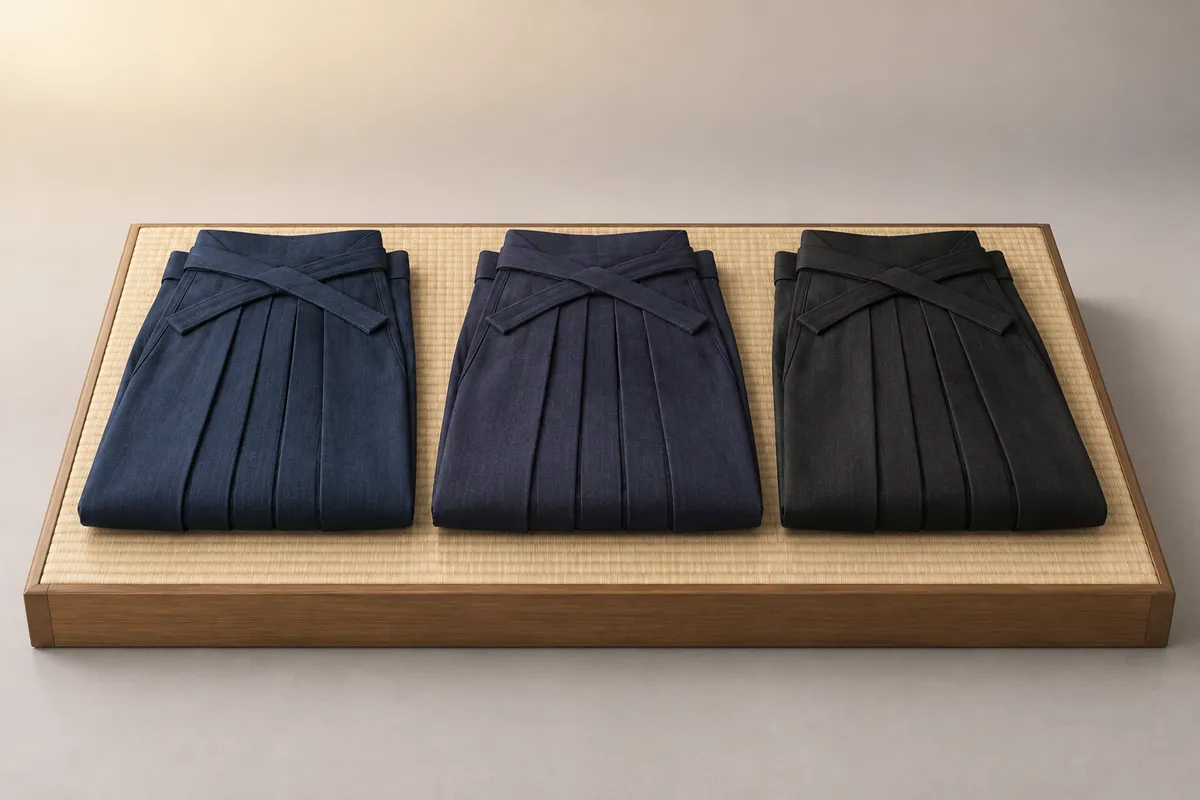
In aikido, the hakama is often reserved for senior ranks, typically from the first dan grade, though some schools introduce it at an earlier kyu grade or from the first class. The rule varies by school and organization. The most common colours for aikido hakama are black or dark navy.
When purchasing an aikido hakama, it is crucial to consider the specific requirements of your dojo. Some schools may have strict rules about the colour and style of the hakama, while others may be more flexible. Practice hakama are commonly sold in tetron or cotton fabric. Hakama Pant lists an Aikido Tetron Hakama in deep navy, a traditional-style wide design with a tie waist and ordered pleats, available in sizes S to XXL. Always check the colour rule with your instructor before ordering.
Kendo: the hakama with a kendogi
Kendo, the Japanese art of swordsmanship, pairs the hakama with a kendogi (also known as a keikogi), which is the training jacket. The hakama in kendo is typically indigo, although white hakama are also seen in some clubs. Unlike aikido, kendo students usually begin wearing the hakama from their first day of training, as it is an integral part of the uniform.
Kendo hakama are commonly sold in tetron or in cotton, often indigo-dyed cotton, and like every hakama they have a koshiita, the stiff board built into the back waist. Kendo armour, specifically the waist protector (tare), is tied over the hakama, so clubs often have specific views on hem height. When purchasing a kendo hakama, it is important to confirm the specific requirements of your dojo, such as the colour and length, especially for gradings. Hakama Pant lists a Kendo / Iaido Tetron Hakama in black, a practice-oriented wide design with straight pleats, a tie waist, and an uncluttered surface, available in sizes S to XXL.
Iaido: hakama, gi and obi as one outfit
Iaido, the art of drawing and cutting with the Japanese sword, typically requires a complete uniform set consisting of a hakama, an iaido gi (training jacket), and an obi (belt). The hakama in iaido is commonly black or navy, with some groups using white hakama. Students usually start wearing the hakama from their first day of training, making it an essential part of the iaido uniform.
The obi is particularly important in iaido because the scabbard is carried through it, under the hakama ties. Therefore, the jacket, belt, and hakama are chosen as one cohesive outfit. When purchasing an iaido uniform, it is important to confirm with your instructor whether a complete set is expected and the specific colour requirements.
Divided-leg or skirt-style: which form is used for practice
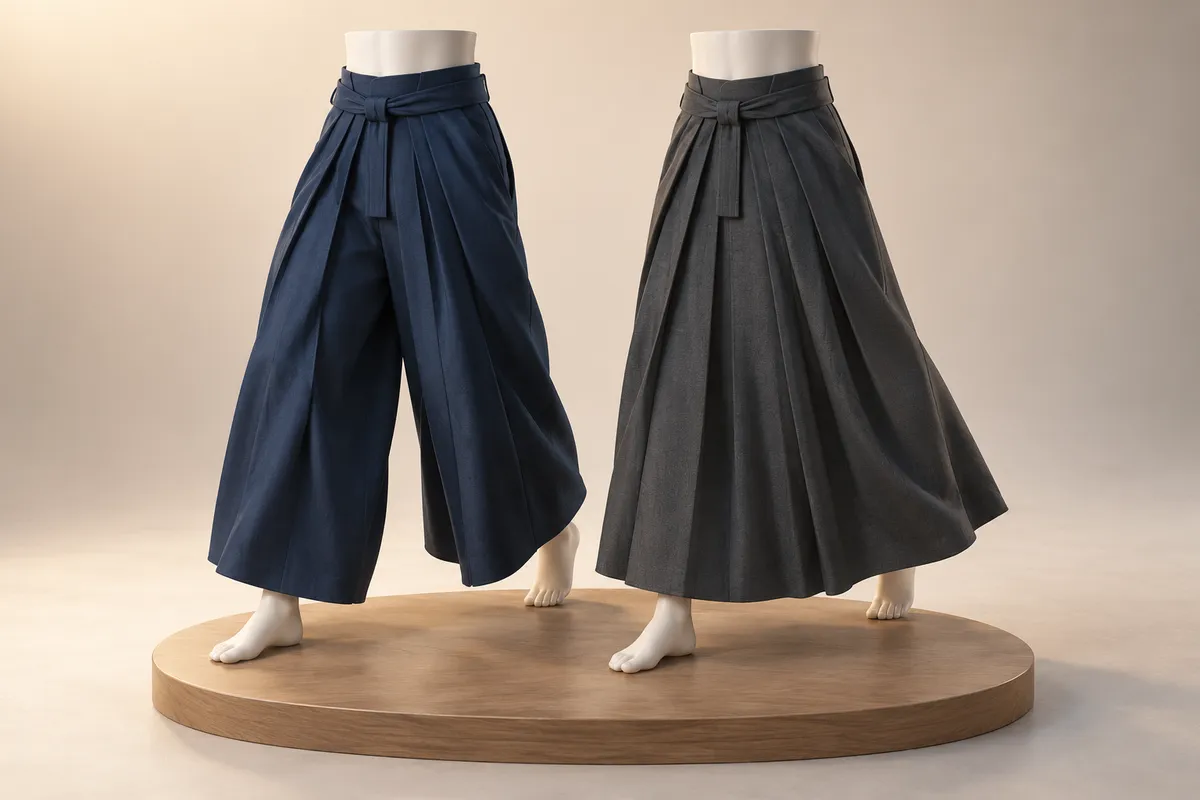
Practitioners meet the two hakama forms: divided-leg (umanori) and skirt-style (andon). The divided-leg form, also known as umanori, has two separate legs like very wide trousers. The skirt-style form, or andon, is one undivided tube. The deep pleats make them look alike from the front.
The choice between these forms often depends on the specific martial art and the preferences of the dojo. Practice hakama in these three arts are generally the divided umanori form, and the undivided andon form is seen more in formal and graduation dress. However, it is always best to confirm with your instructor.
The store also lists a Basic Tetron Japanese Hakama in black, a practice-oriented divided-leg design with crisp multiple pleats and a tie waist, available in sizes S to XXL.
What to ask your instructor before you buy
Before purchasing a hakama, it is crucial to confirm the specific requirements of your dojo. Here are some questions to ask your instructor:
- What colour hakama is required for my rank and art?
- Is the hakama reserved for senior ranks, or can all students wear it?
- Should I purchase a divided-leg (umanori) or skirt-style (andon) hakama?
- If it's a kendo hakama, what are the specific length requirements under the armour?
- Is a complete uniform set expected, or can I purchase the hakama alone?
- Which fabric type does the dojo accept?
Always confirm these details with your instructor before placing your order to ensure you meet the dojo's standards.
How to measure for a practice hakama
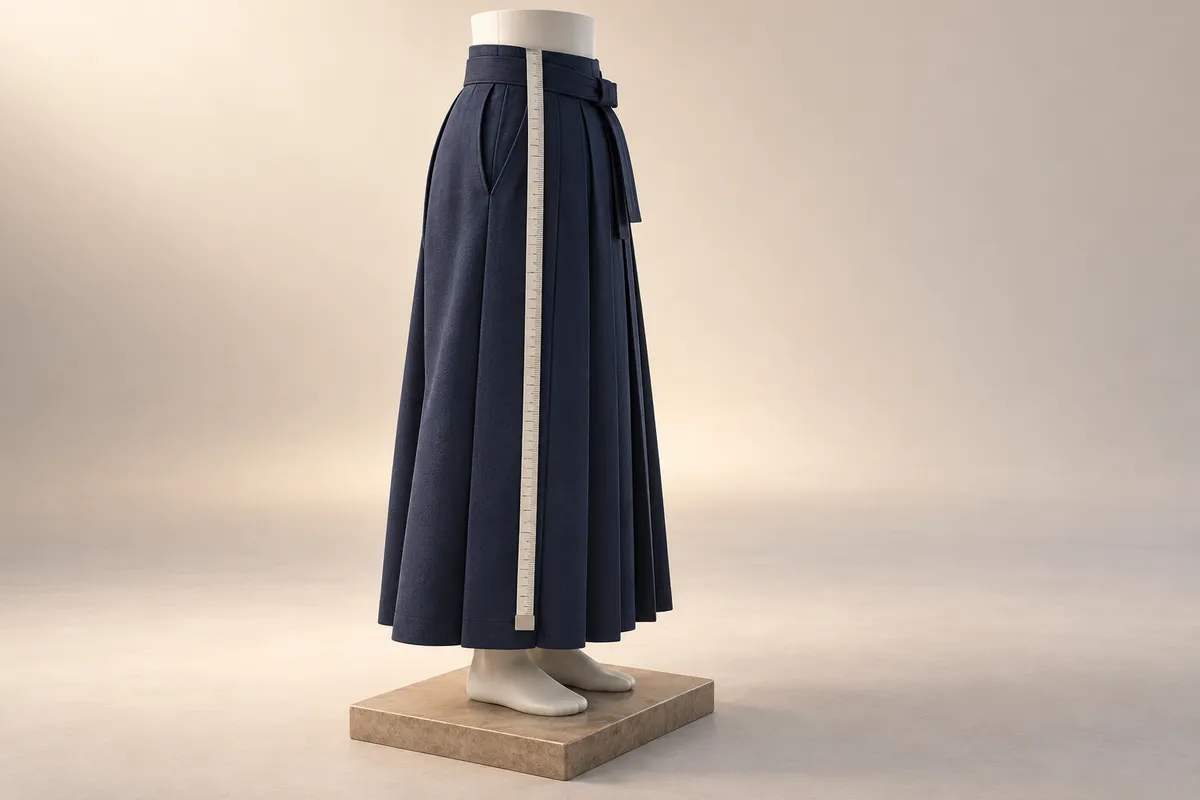
Measuring comes before any order. The site guide on how to measure for a hakama shows the method. To measure, you will need a flexible measuring tape and a flat surface. Here are the key measurements to take:
- Measure around the natural waistline, where the hakama will sit.
- Measure around the fullest part of the hips.
- Measure from the waist position down to the crotch.
- Measure from the waist to the desired length of the hakama.
- Measure from the crotch to the desired hem length.
Hakama length is taken from where the waist will sit down to the hem you want. Decide where the waist sits before measuring. The product page shows the listed sizes S to XXL, and no garment measurement should be assumed.
Frequently Asked Questions
What martial arts wear hakama?
Aikido, kendo, iaido, kyudo, and naginata are the primary martial arts that wear hakama. Each art has its own specific conventions, including the colour, when it is first worn, and the form (divided-leg or skirt-style). For example, aikido often reserves the hakama for senior ranks, while kendo students typically wear it from the first day. Always confirm the specific requirements with your instructor.
Is hakama for men or women?
The hakama is a unisex garment and can be worn by both men and women. In aikido, kendo, and iaido, the hakama is worn by all genders. Cuts labelled for men or women exist mostly in fashion and formal wear. Formal women's hakama for graduation are usually the undivided andon form. On a product page, read the stated form and the listed sizes instead of relying on a men's or women's label, and ask your instructor if the dojo has a preference.
How to wear hakama for iaido?
To wear a hakama for iaido, start by putting on the iaido gi and obi. Place the hakama around your waist, ensuring it is centered and the pleats are aligned. Tie the himo (ties) securely to keep the hakama in place. The hakama should be comfortable and allow for smooth, fluid movements. The obi is particularly important as it holds the scabbard, which is carried through it under the hakama ties.
How to put on a kendo hakama?
To put on a kendo hakama, place the hakama around your waist, ensuring it is centered. Adjust the pleats to be even and aligned. Tie the front himo (ties) securely first, then place the back with the koshiita against the lower back. Knot the back ties at the front. The pleats should hang straight and the hem should sit level when you stand. Details vary between clubs, so follow the way your own club teaches it and ask a senior student to check the result the first few times.
Are hakama pants or skirts?
Hakama can be considered both pants and skirts, depending on the form. The divided-leg (umanori) form is more like pants, with separate legs for greater mobility. The skirt-style (andon) form is more like a skirt, with a flowing, wide-leg design. The umanori form is more common in practice, while the andon form is often used in formal settings.
Conclusion
Understanding the conventions and requirements of your martial art is essential when choosing a hakama uniform. Whether you practice aikido, kendo, or iaido, confirming the specific details with your instructor will ensure you select the right hakama for your needs. Always measure carefully and consider the form that best suits your practice. Compare the martial arts hakama designs on the store and check the listed sizes on the product page.