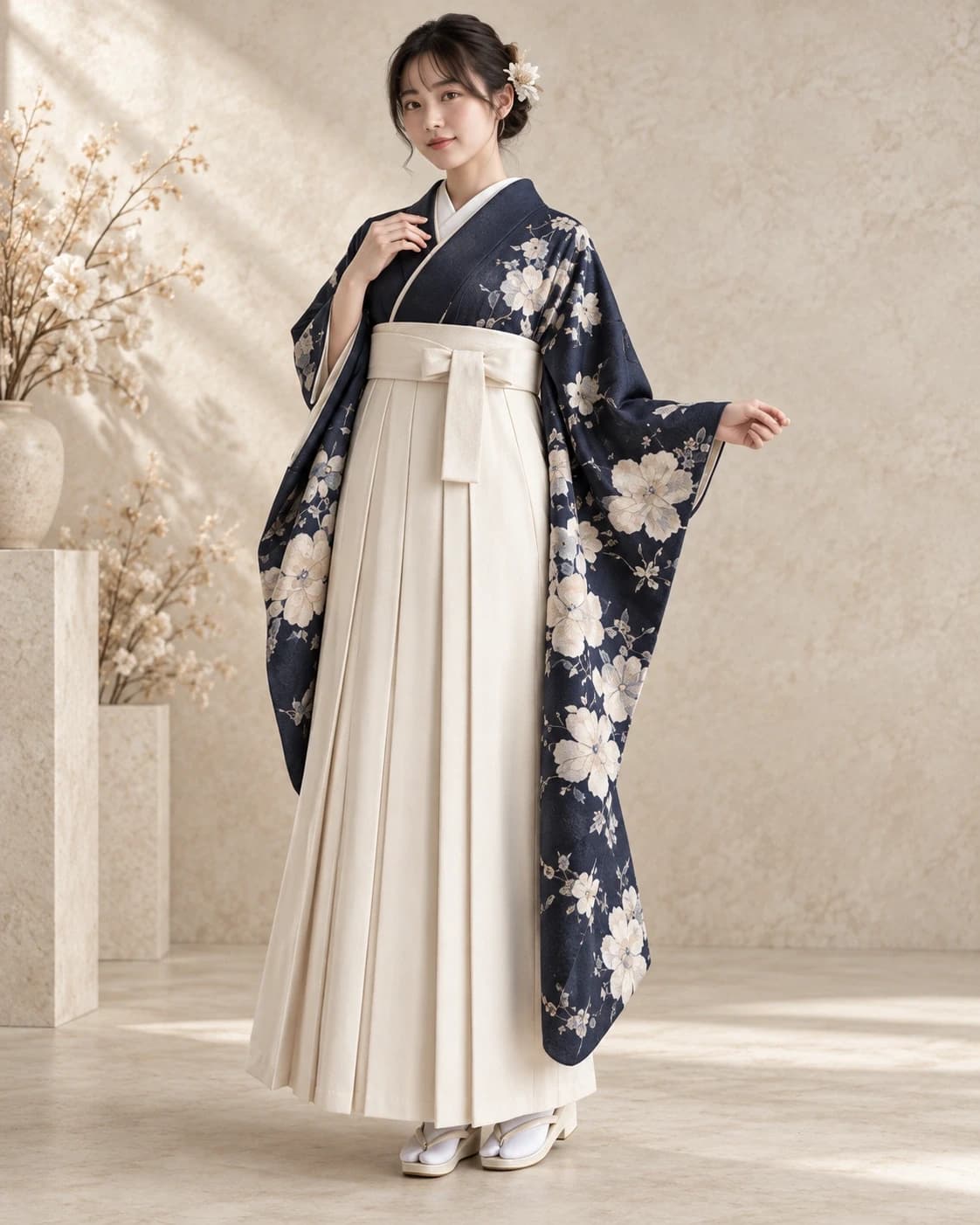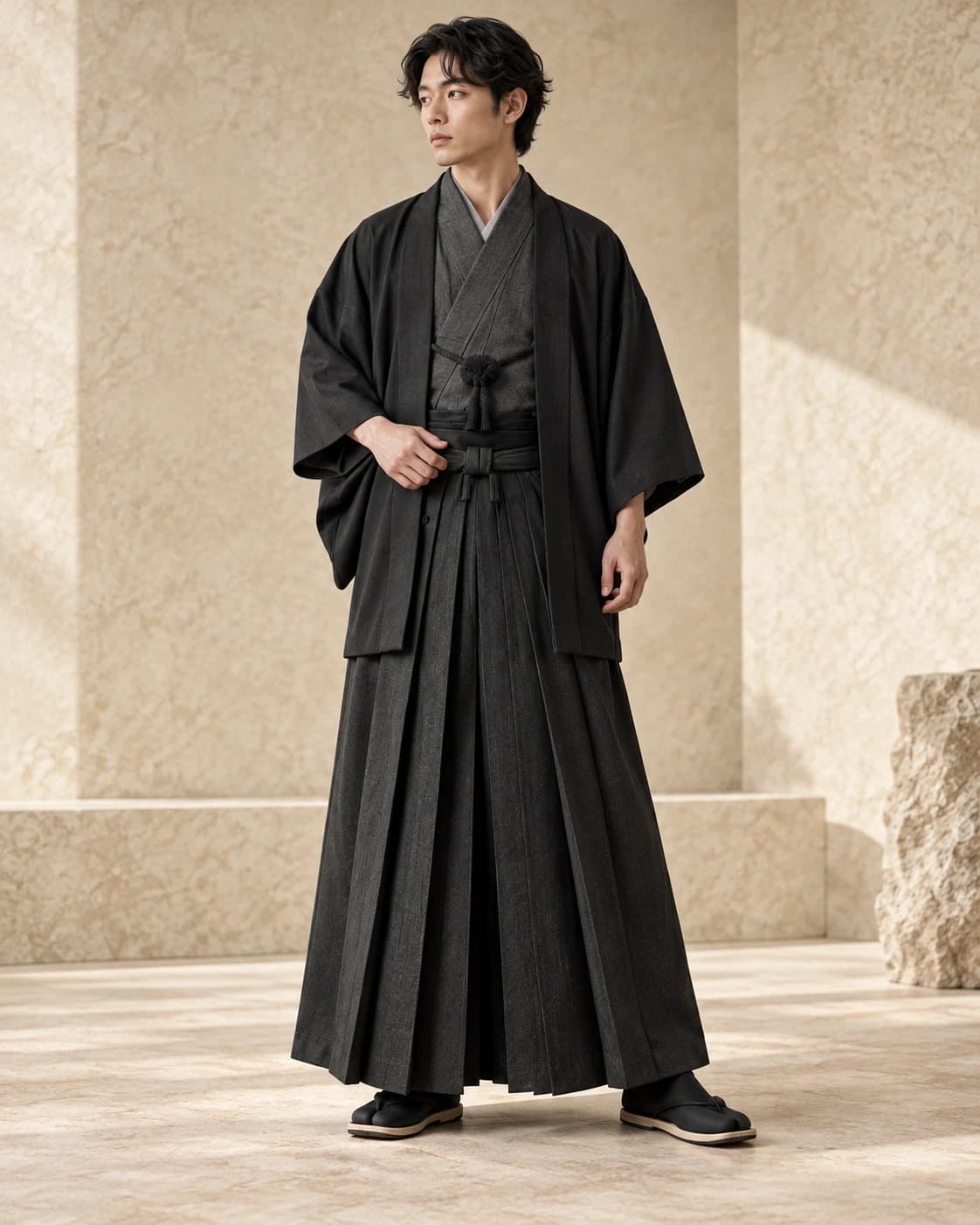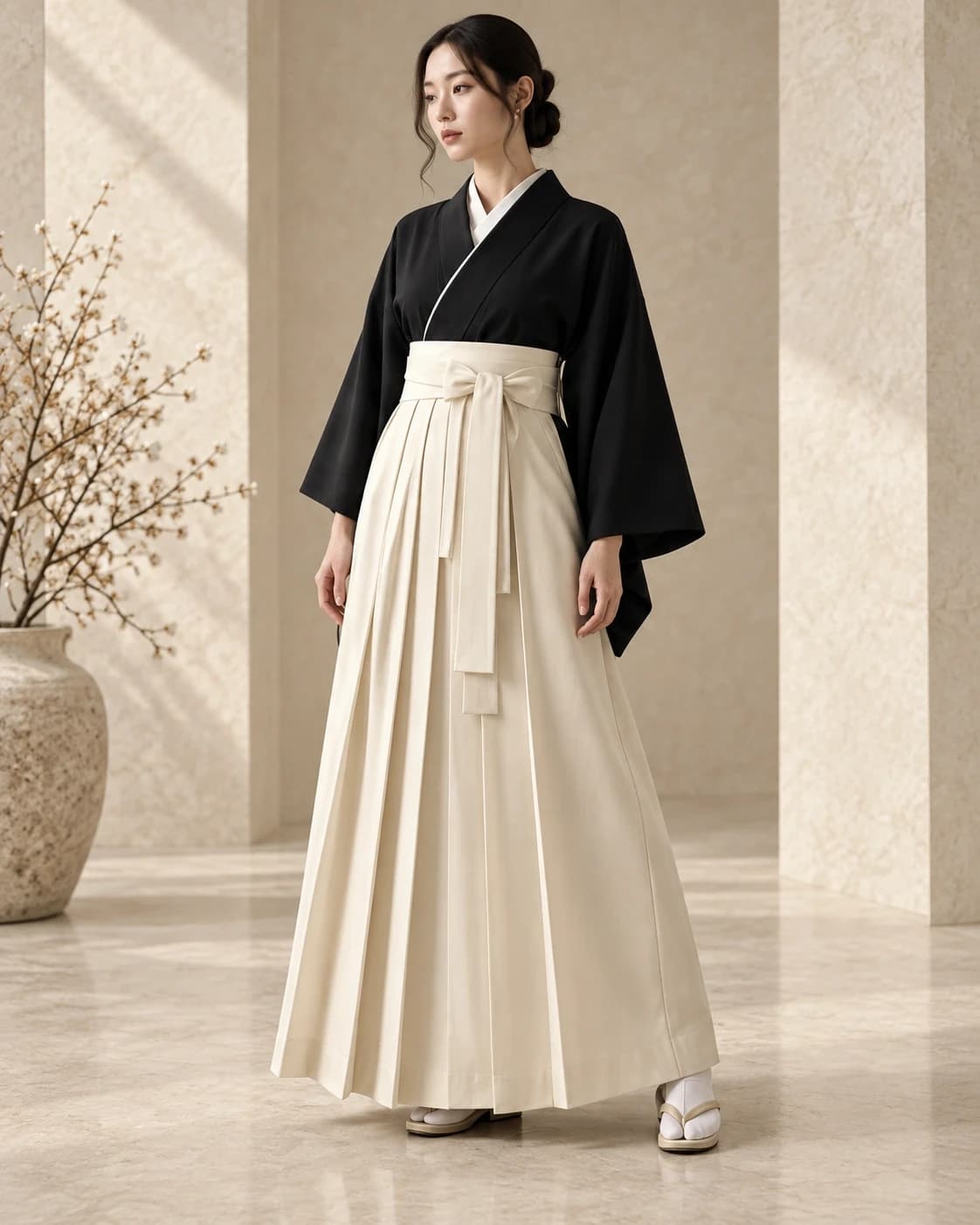

The best-known Japanese graduation outfit is a kimono worn with a hakama, chosen mostly by women at university graduations. The kimono is often a long-sleeved furisode or a shorter-sleeved style, the hakama is tied over it, and boots or zori finish the look. Many men wear suits or a montsuki and hakama.
Key Takeaways
- Formality: The graduation look is formal dress, chosen to match the weight of the ceremony.
- History: The custom is commonly traced to Meiji and Taisho era schoolgirls, though accounts differ.
- Outfit Components: The graduation look typically includes an under-kimono, a furisode or nishaku sode kimono, an obi, a hakama, and footwear like zori or boots.
- Respectful Wear: Foreigners can wear hakama for graduation, provided they follow the complete outfit and adhere to the school's dress code.
- Set Selection: When choosing a graduation hakama set, ensure it includes all necessary pieces and matches the desired colors and sizes.
What a Japanese graduation outfit is
The graduation look is a traditional ensemble that combines a kimono with a hakama. This attire is primarily worn by women at university graduations, though men also have their own formal options. For many graduates it marks the end of years of study, and photos in the outfit are a common keepsake.
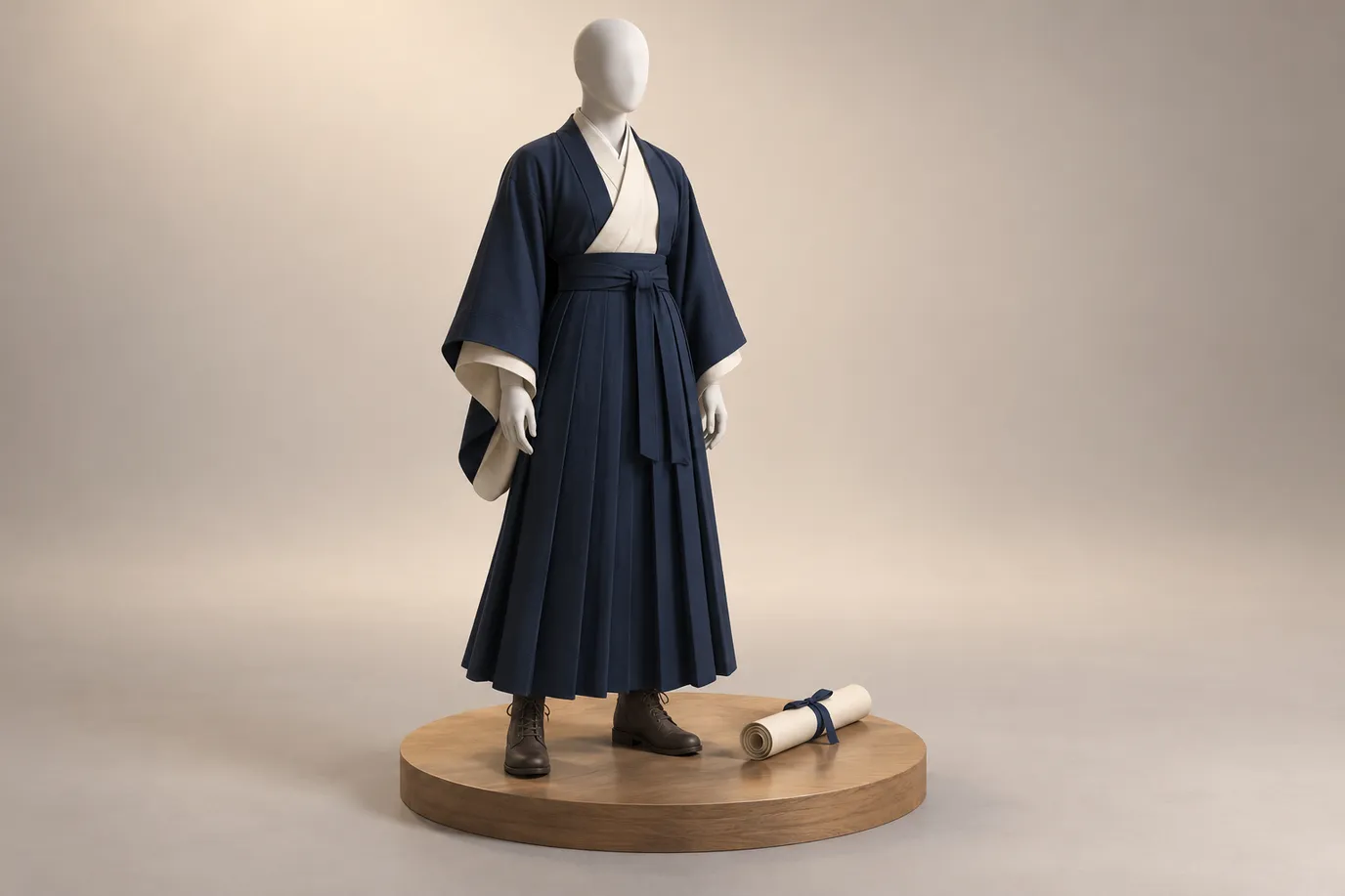
The core of the graduation look is the kimono, which can be a long-sleeved furisode or a shorter-sleeved nishaku sode. The furisode, with its long sleeves and bold designs, is commonly chosen by young women. The hakama, a pleated and wide-legged garment, is tied over the kimono, adding a layer of formality and elegance.
For men, the graduation look often consists of a montsuki, a formal kimono with family crests, and a hakama. Many men instead wear a dark suit; both are common, and the choice often follows the school or the group of friends.
Why graduates wear hakama
Graduates wear hakama as a way to honor their academic achievements and to connect with Japanese cultural traditions. The practice is commonly traced to the Meiji and Taisho eras, when women students are often described as wearing hakama over kimono to school, though accounts differ on the details. Over time the schoolgirl look became a ceremonial one, and it is now linked above all with graduation day.
For many women, the furisode and hakama combination is part of marking the move from student to graduate. For men who choose it, the montsuki and hakama set plays a similar role, and conventions vary by school and region.
Understanding how kimono and hakama are layered is explained in our wider guide, which covers the layering order in detail.
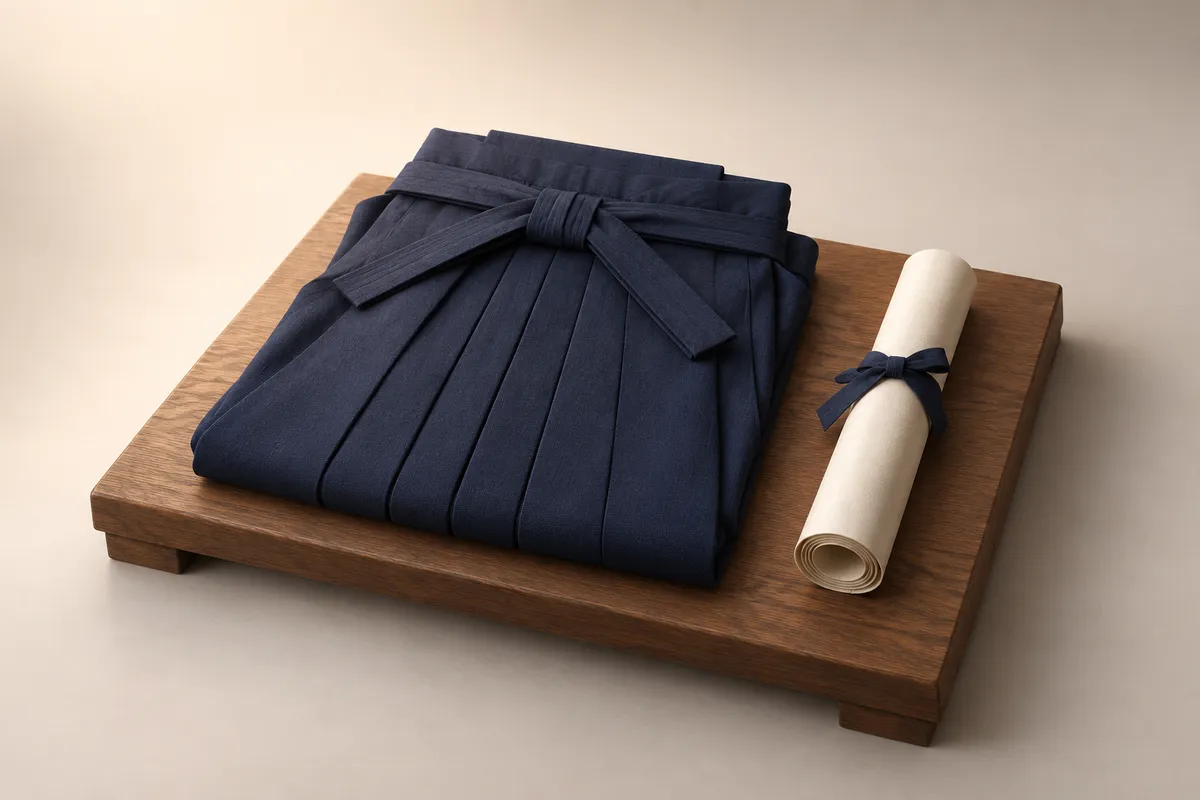
The outfit piece by piece
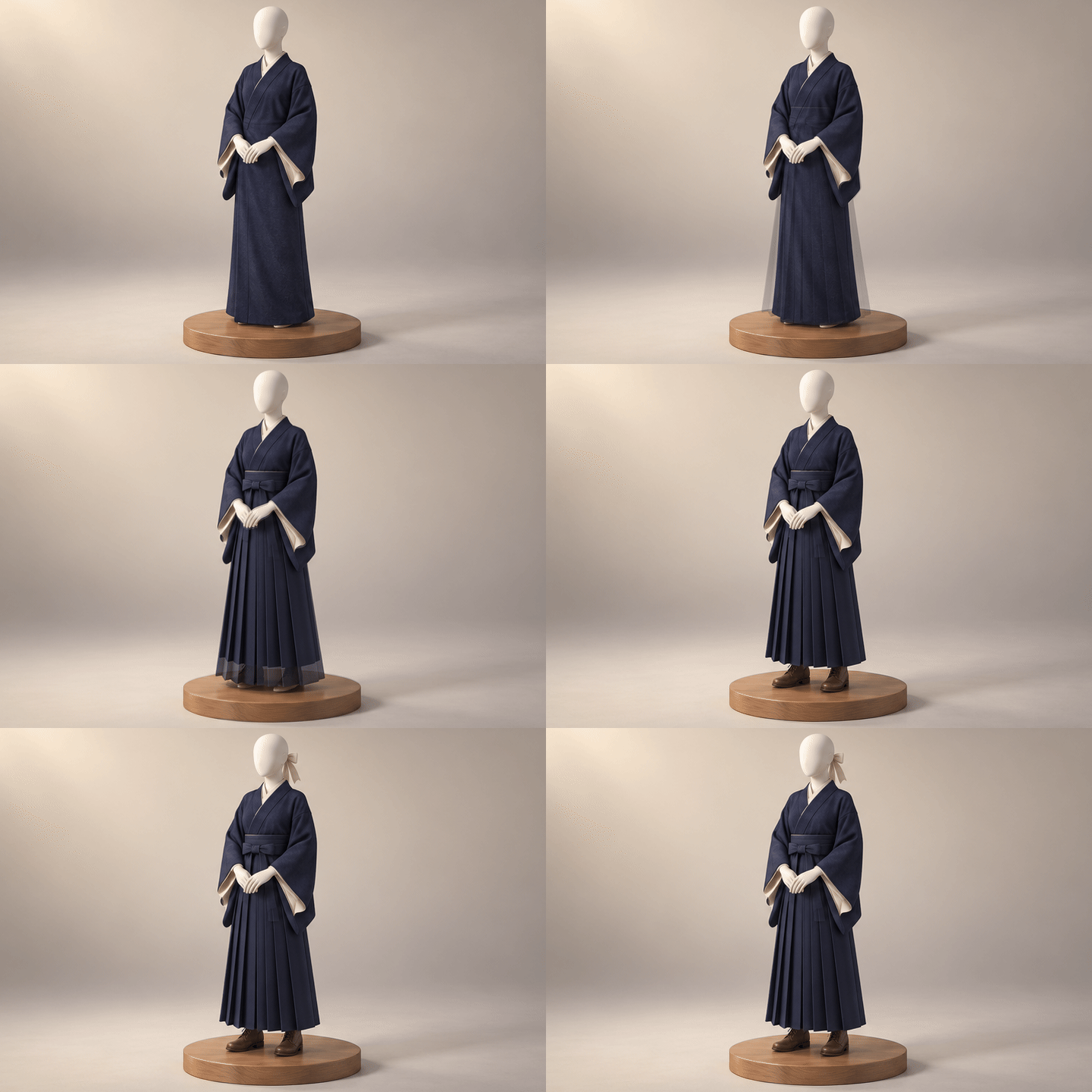
Putting the graduation look together involves a specific sequence of dressing. Here is a step-by-step guide to assembling the look:
- Under-kimono (Nagajuban): This is the first layer, worn to protect the outer kimono from sweat and skin oils. It is typically white and serves as a base for the outfit.
- Kimono (Furisode or Nishaku Sode): The next layer is the main kimono. For women, a furisode is often chosen for its long sleeves and intricate designs. A nishaku sode, with shorter sleeves, is another option.
- Obi: The obi is a wide sash that is tied around the waist over the kimono. It is an essential part of the outfit, often featuring elaborate patterns and designs.
- Hakama: The hakama is tied over the obi, covering the lower half of the body. It is a wide-legged garment that adds a layer of formality and dignity to the outfit.
- Footwear (Zori or Boots): The final touch is the choice of footwear. Traditional zori, flat formal sandals worn with tabi, or lace-up boots can be worn to complete the look.
- Hair Ornament: A hair ornament, such as a kanzashi, can be added to enhance the overall appearance and add a personal touch.
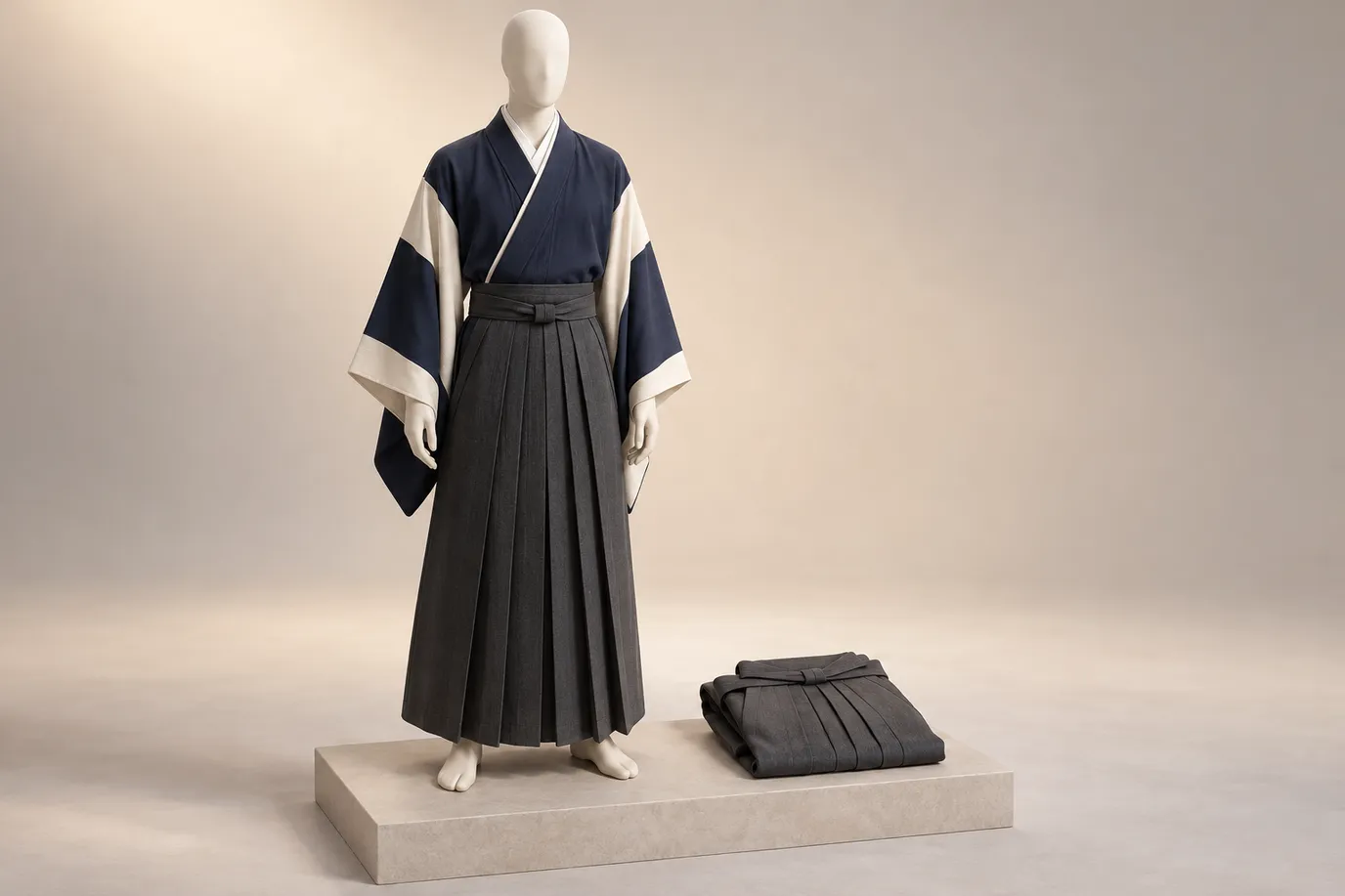
Many graduates opt to rent the outfit, and a professional dresser commonly ties it on the day. For those who prefer to own their graduation hakama, sets like the Furisode Kimono + Andon Hakama Graduation Set pair a deep navy and ivory long-sleeved kimono with subtle abstract floral art and a flowing andon-style hakama skirt, listed in sizes S to XXL.
Women's and men's graduation looks
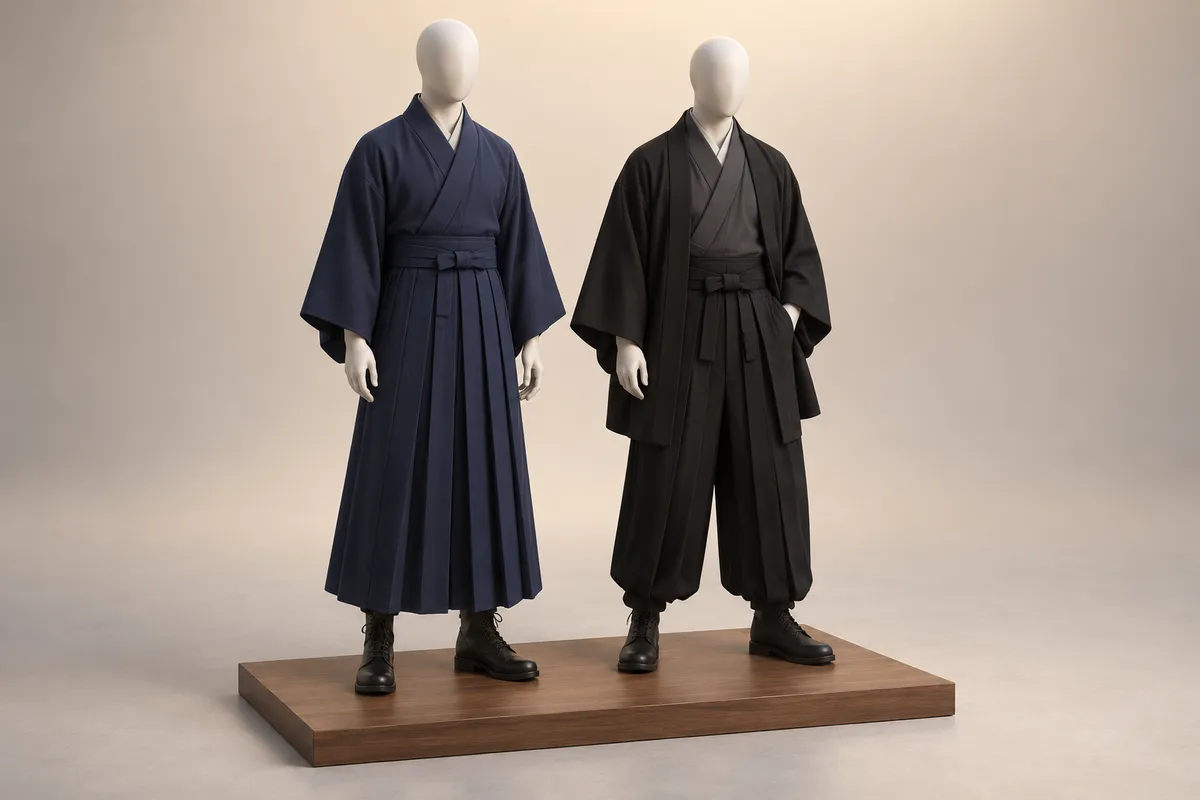
The graduation hakama look differs slightly between women and men, reflecting traditional gender roles and cultural norms.
For women, the most common choice is a furisode kimono paired with an andon-style hakama. The long sleeves of the furisode are commonly associated with youth, and the andon hakama, with its flowing skirt-like silhouette, gives the outfit its ceremonial shape. This combination is often completed with zori or lace-up boots and a hair ornament.
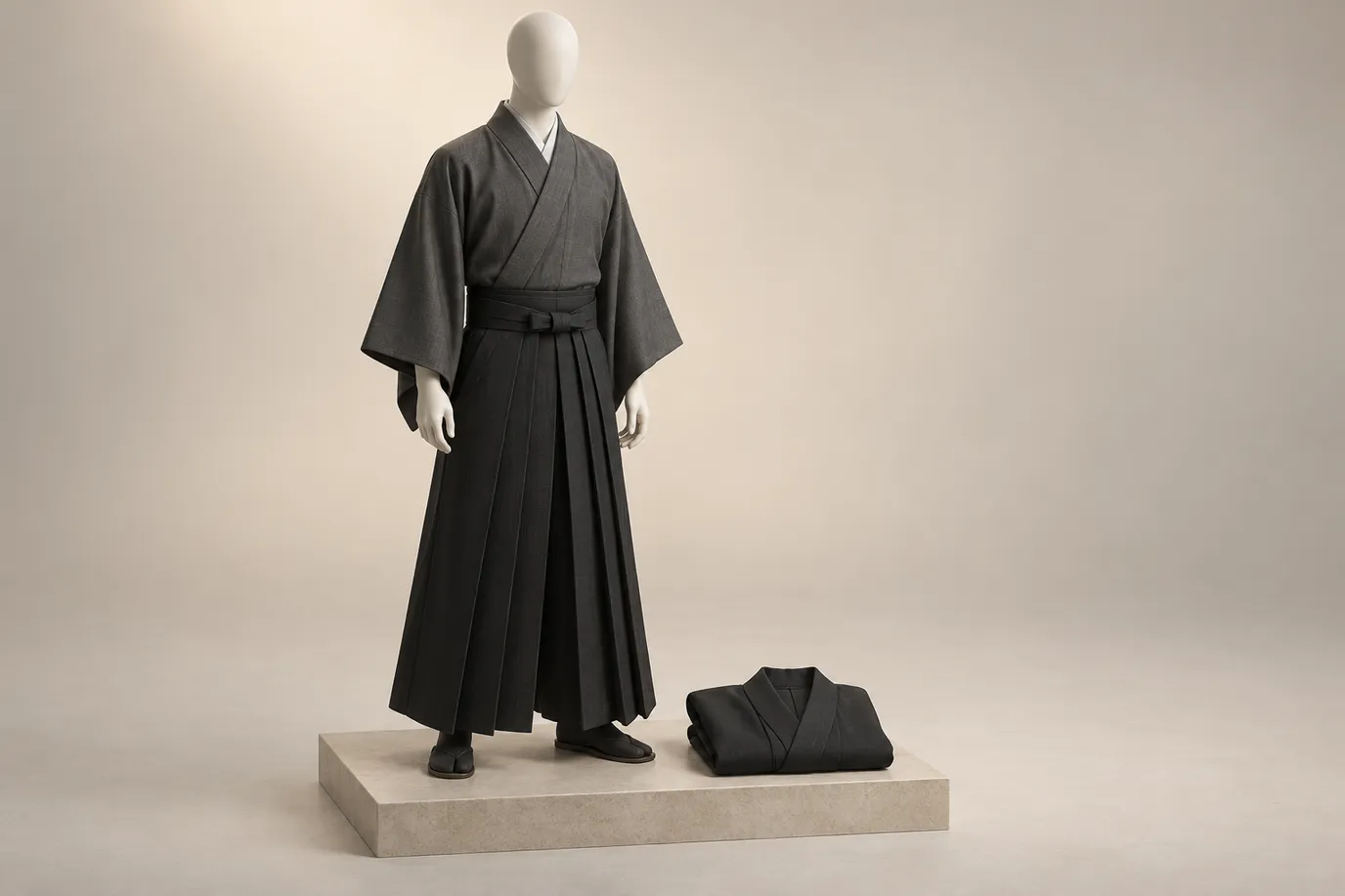
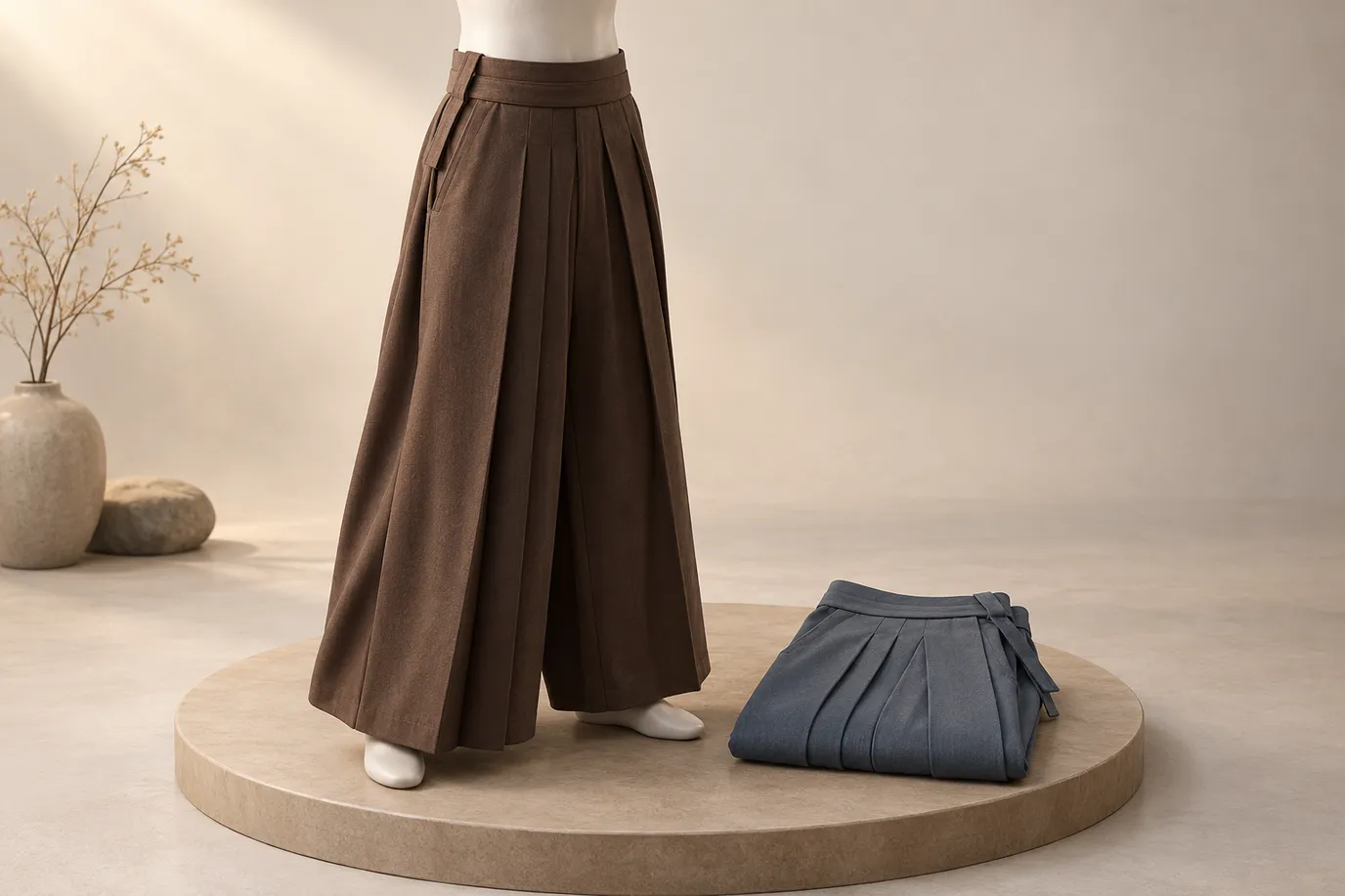
For men, the traditional choice is a montsuki kimono with an umanori-style hakama. The montsuki, which carries family crests, is the most formal men's kimono. The umanori hakama has divided legs, which makes walking and climbing stage steps easy. This look is typically finished with zori or formal shoes.
For a men's look in this style, the Men's Kimono + Umanori Hakama Formal Set is listed in graphite and black, in sizes S to XXL; its product page states which pieces the set includes.
Wearing a graduation hakama outside Japan
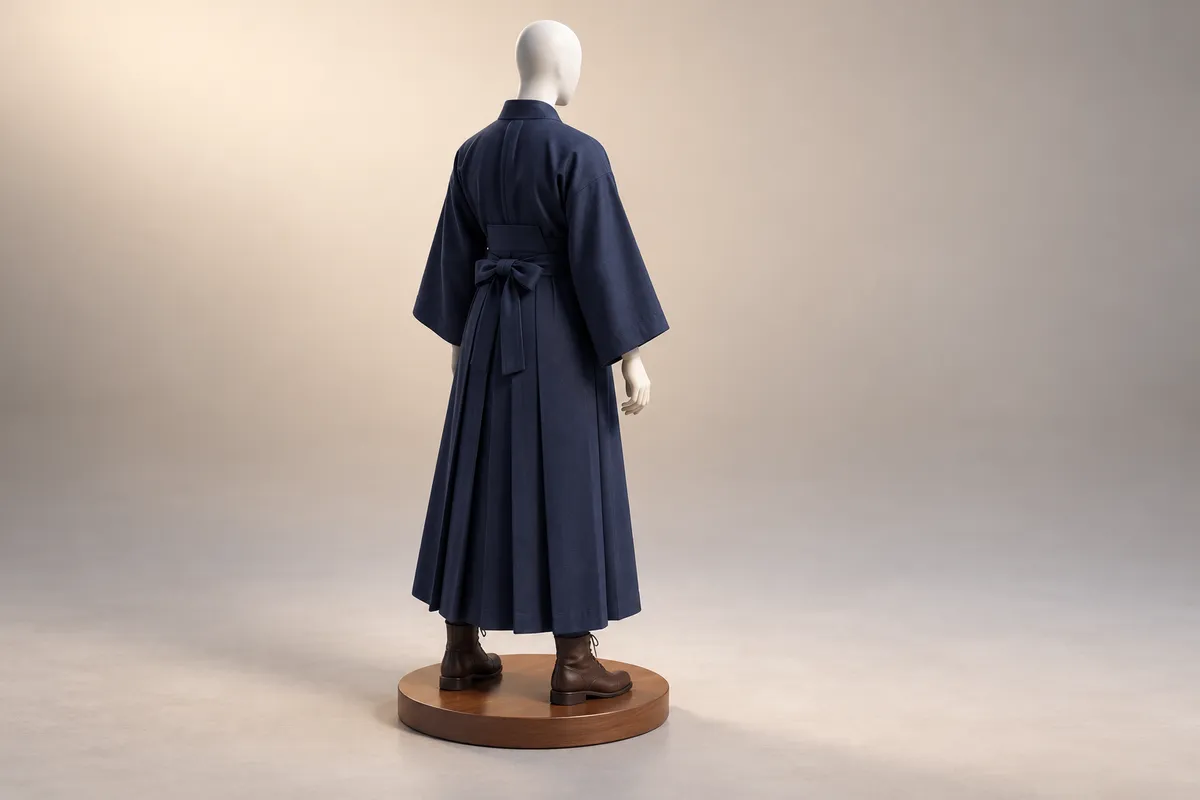
Wearing a graduation hakama outside Japan is generally acceptable and can be a respectful way to honor the cultural significance of the occasion. However, it is important to follow a few guidelines to ensure the outfit is worn correctly and respectfully.
First, always adhere to the school's dress code. If the school has specific requirements for graduation attire, it is essential to follow them. This may include guidelines on the type of kimono, hakama, and footwear that are appropriate.
Second, wear the hakama as a complete outfit. This means including all the necessary components, such as the under-kimono, the main kimono, the obi, the hakama, and the appropriate footwear. Omitting any of these elements can detract from the formality and cultural significance of the outfit.
Finally, if you are unsure about any aspect of wearing a hakama, consider consulting with a professional dresser or someone knowledgeable about Japanese attire. They can provide valuable guidance and ensure that your outfit is assembled correctly and respectfully.
Choosing a graduation hakama set
When choosing a graduation hakama set, it is important to consider several factors to ensure you find the right fit and style for your needs.
First, check which pieces the set includes. Read the set page rather than assuming: some sets cover the kimono and hakama only, and the obi, under-kimono and accessories are planned separately.
Second, pay attention to the listed sizes. On this store the sets are listed in sizes S to XXL. Measure yourself first and compare with the listed size, and judge the hakama length in the footwear you plan to wear.
Third, consider the colors and designs of the set. Deep navy, black and ivory are common choices, and many graduates match the hakama colour to the kimono pattern. Choose a color and design that resonate with your personal style and the formality of the occasion.
Lastly, plan the obi, footwear, and hair ornament yourself. While many sets include the essential garments, you may want to add your own personal touches to complete the look. The kimono and hakama sets collection groups the store's sets in one place. Hakama Pant does not rent outfits, does not sell children's sizes, and does not sell standalone kimono, footwear or hair ornaments.
Frequently Asked Questions
What is a Japanese outfit called?
A traditional Japanese outfit is called wafuku. The kimono is its main garment, often paired with a hakama for formal occasions like graduation. Everyday clothing in Japan is mostly Western in cut, so wafuku is worn mainly for weddings, festivals, the tea ceremony and graduations. At a graduation, the kimono with a hakama tied over it is the outfit most visitors recognise.
Is it okay to wear hakama?
Yes, it is okay to wear hakama, especially for formal occasions like graduation. Wear it as a complete outfit and follow the school's dress code. If unsure, ask the school or a professional dresser for guidance. Avoid treating it as a costume to show respect for the culture.
Can foreigners wear hakama?
Yes, foreigners can wear hakama, provided they follow the complete outfit and adhere to the school's dress code. Wearing a hakama respectfully can be a meaningful way to honor the cultural traditions of the occasion. Wear every layer, keep the hakama tied properly, and ask the school or a dresser if you are unsure about any piece.
What is an appropriate outfit for a graduation?
In Japan, many women wear a kimono and hakama, and many men wear a suit or a montsuki and hakama. For those outside Japan, a suit or a similar formal outfit is also acceptable. Always follow the school's dress code to ensure appropriateness for the occasion.
How do you congratulate on graduating in Japanese?
To congratulate someone on graduating in Japanese, you can say "sotsugyo omedeto gozaimasu" for a polite and formal greeting, typically used for teachers or seniors. For a more casual and friendly tone, use "sotsugyo omedeto." A short card or a small gift is also common to show your appreciation.
Conclusion
The Japanese graduation outfit pairs a kimono with a hakama, and it is a meaningful way to mark the end of study. Whether you are a woman in a furisode and andon hakama or a man in a montsuki and umanori hakama, the graduation look is a symbol of tradition and respect. For those outside Japan, wearing a hakama can be a respectful and culturally significant choice, provided it is done with care and attention to detail.
Sources and buying checks
For cultural context, see The Metropolitan Museum of Art: Kimono Style. This reference does not verify any shop garment’s construction. Use the free buying tool and the shopping checklist before choosing a product.