
Samurai clothing included far more than armour. Day to day, samurai wore a kimono with hakama, often with a haori jacket. For formal duties in the Edo period, they wore kamishimo, a sleeveless shoulder garment over matching hakama. Armour such as the yoroi was worn only for battle.
Key Takeaways
- Everyday dress: Samurai typically wore a kimono and hakama, sometimes with a haori jacket, for their daily activities.
- Formal duty: During the Edo period, samurai donned kamishimo, which consists of a sleeveless kataginu over matching hakama.
- Ceremonial wear: For important ceremonies, samurai wore a crested montsuki kimono, haori, and hakama.
- Battle attire: Samurai wore full armour (yoroi) and a helmet (kabuto) for combat.
- Modern equivalents: Today, hakama pants and formal kimono sets are the closest modern equivalents to traditional samurai attire.
- Rank and period: The specifics of samurai dress varied by period, domain, and rank, reflecting the diverse cultural and social contexts.
What samurai clothing included
Samurai dress was a blend of practicality and symbolism, and it signalled the wearer's status and role. The core components of a samurai's outfit included the kimono, hakama, and various outer garments. The kimono, a T-shaped robe, was the base layer. Over this, samurai would wear a hakama, a type of pleated trousers that served both practical and aesthetic purposes.
The hakama is commonly read as a symbol of respect and discipline, and for samurai it is usually described in the divided-leg umanori form. For formal occasions, samurai would add a haori, a lightweight jacket, or a kamishimo, a more elaborate ensemble that included a sleeveless kataginu over matching hakama. This formal attire was particularly prominent during the Edo period, when the samurai class became more ceremonial and less focused on warfare.
The specific styles varied by period, domain, and rank, with accounts differing and museum collections providing the best examples of real samurai attire.
Everyday samurai dress: kimono and hakama
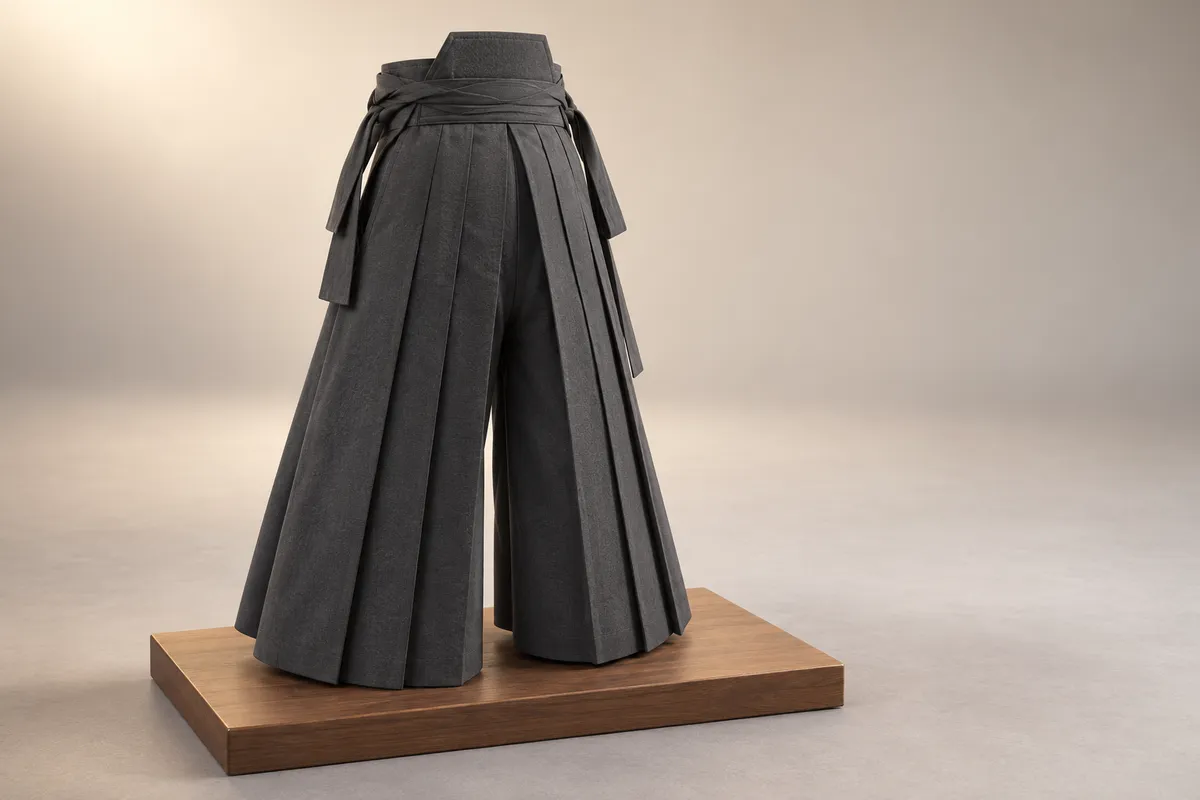
In their daily lives, samurai favored a practical and comfortable yet dignified dress. The core of everyday samurai attire was the kimono and hakama. The kimono, a long-sleeved robe, was worn as the base layer. Over the kimono, samurai would wear a hakama, which provided both protection and a sense of formality. The hakama, a versatile garment, varied in style and design. Umanori hakama, with their divided legs, are commonly described as the form that allowed easy movement and riding. They featured sharp pleats and a broad waistband, adding to the overall aesthetic and practicality of the garment.
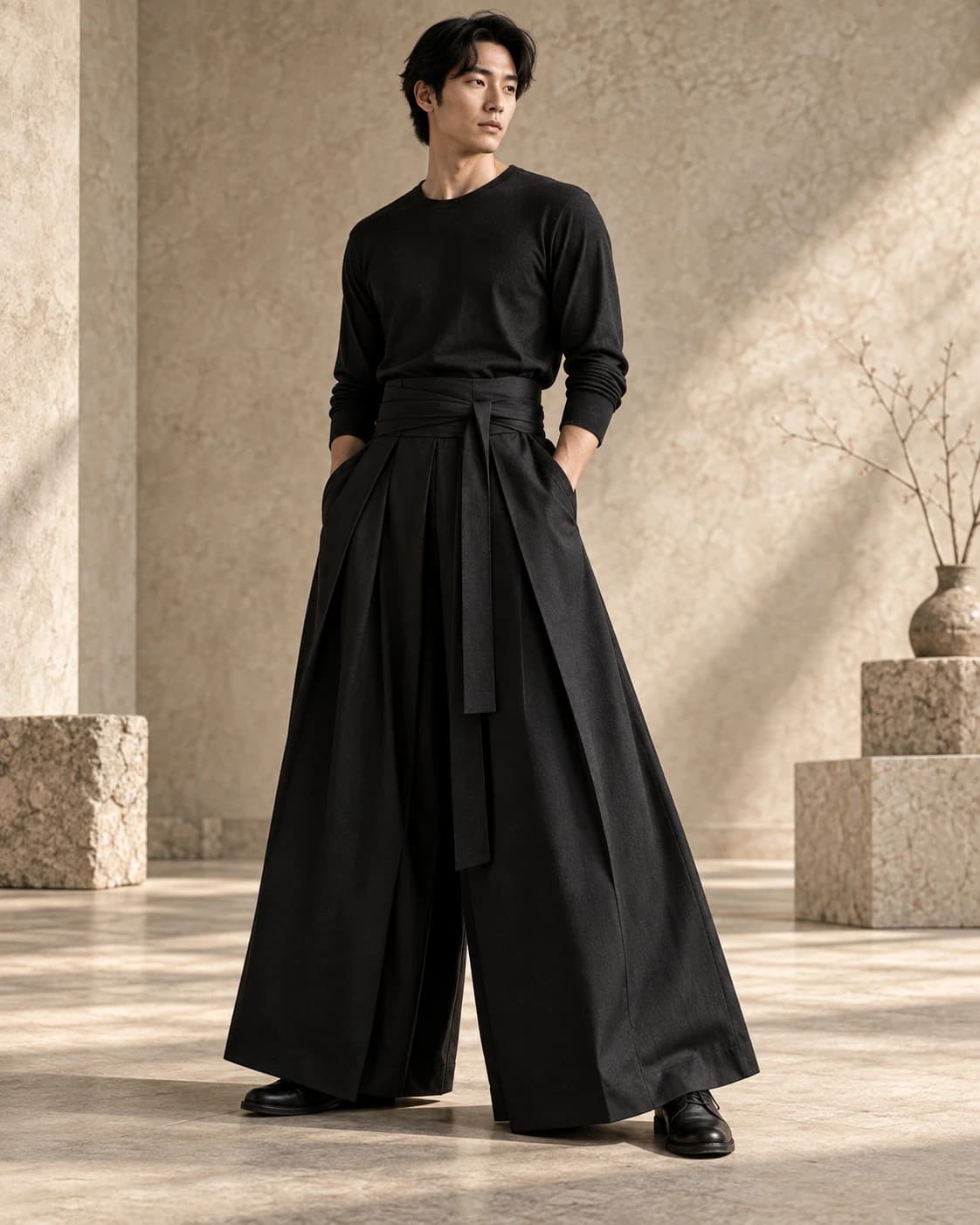
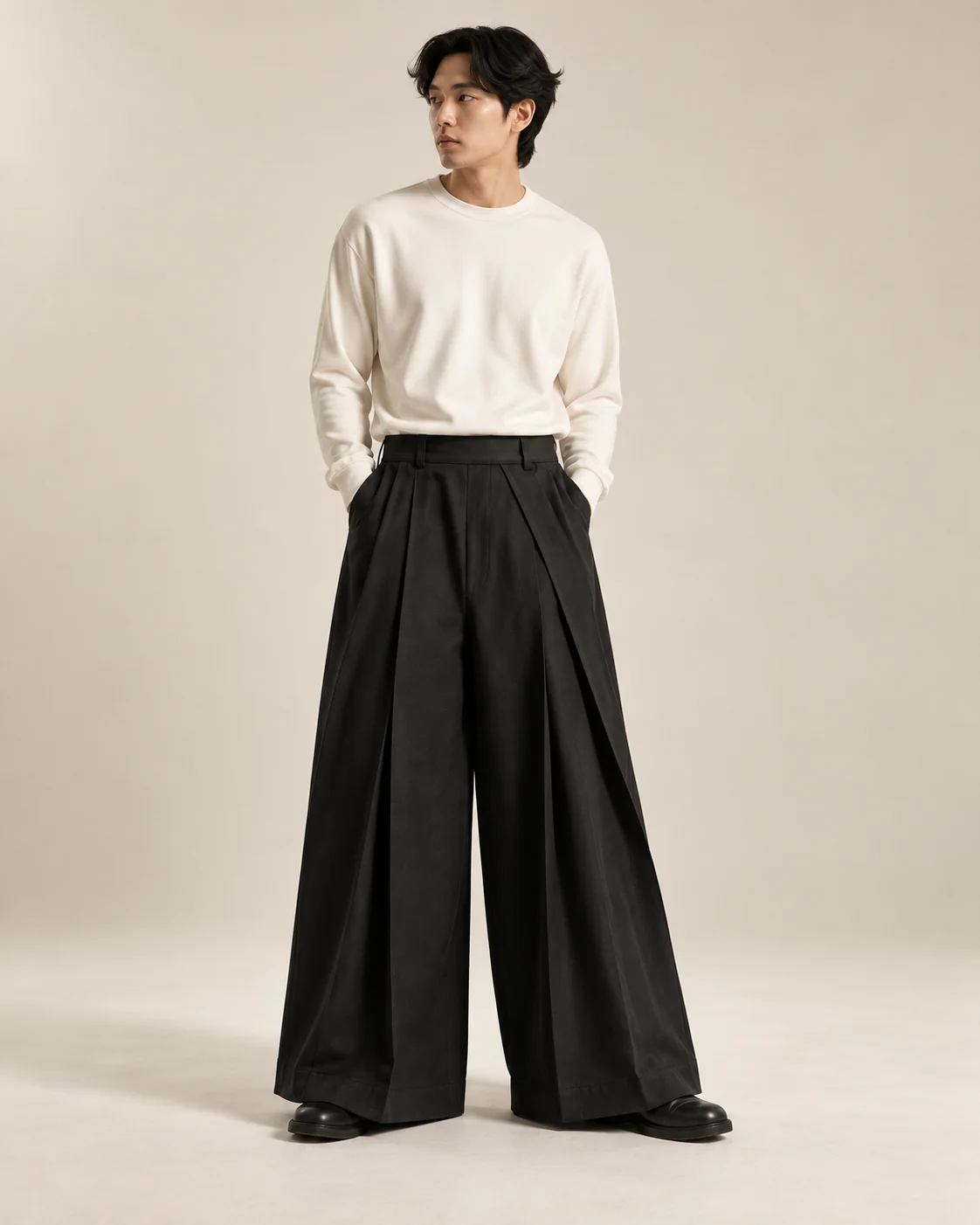
The hakama is also the garment behind the modern trousers people call samurai pants, which borrow its pleats and wide legs.
Formal dress: kamishimo and montsuki
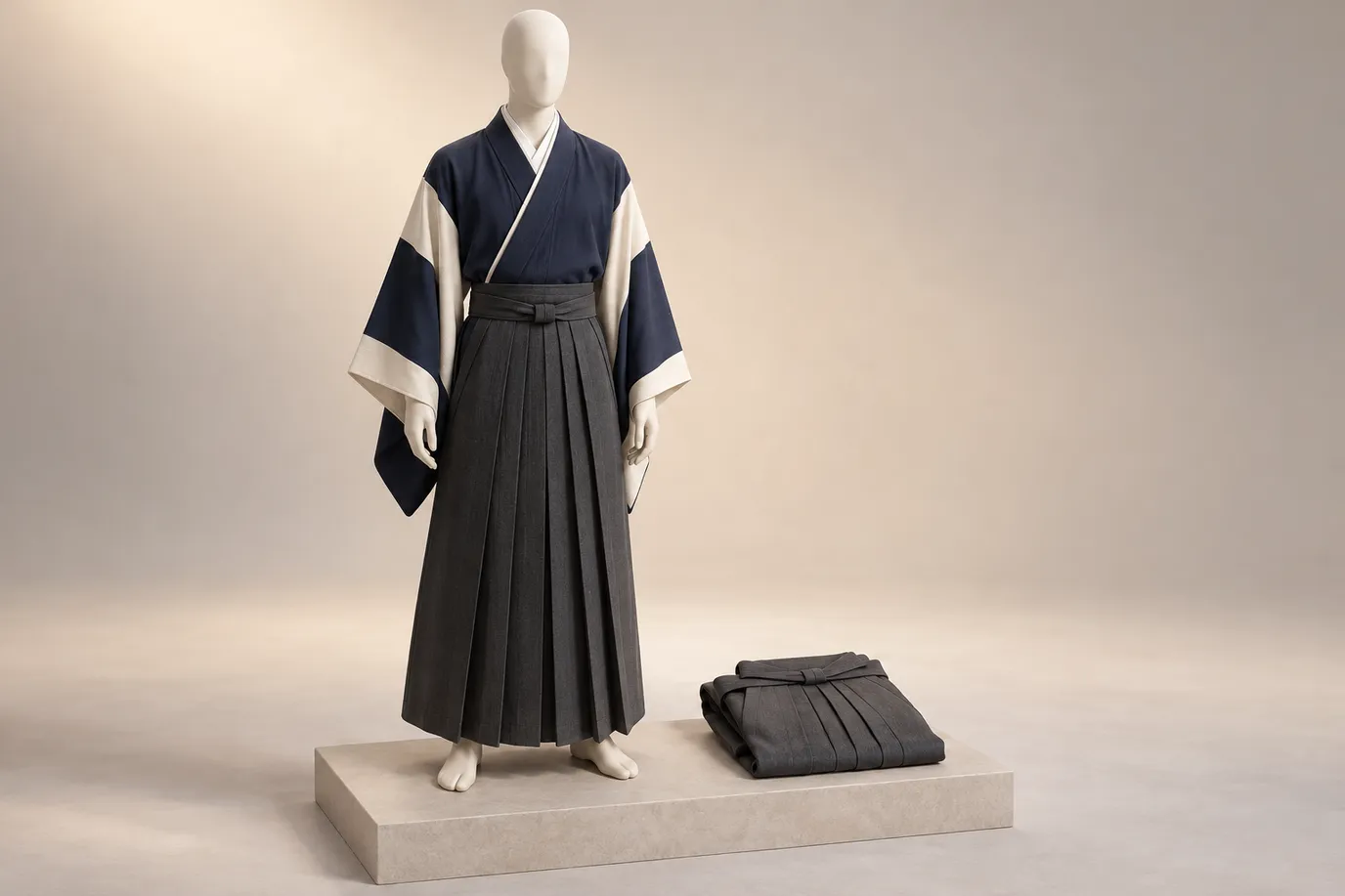
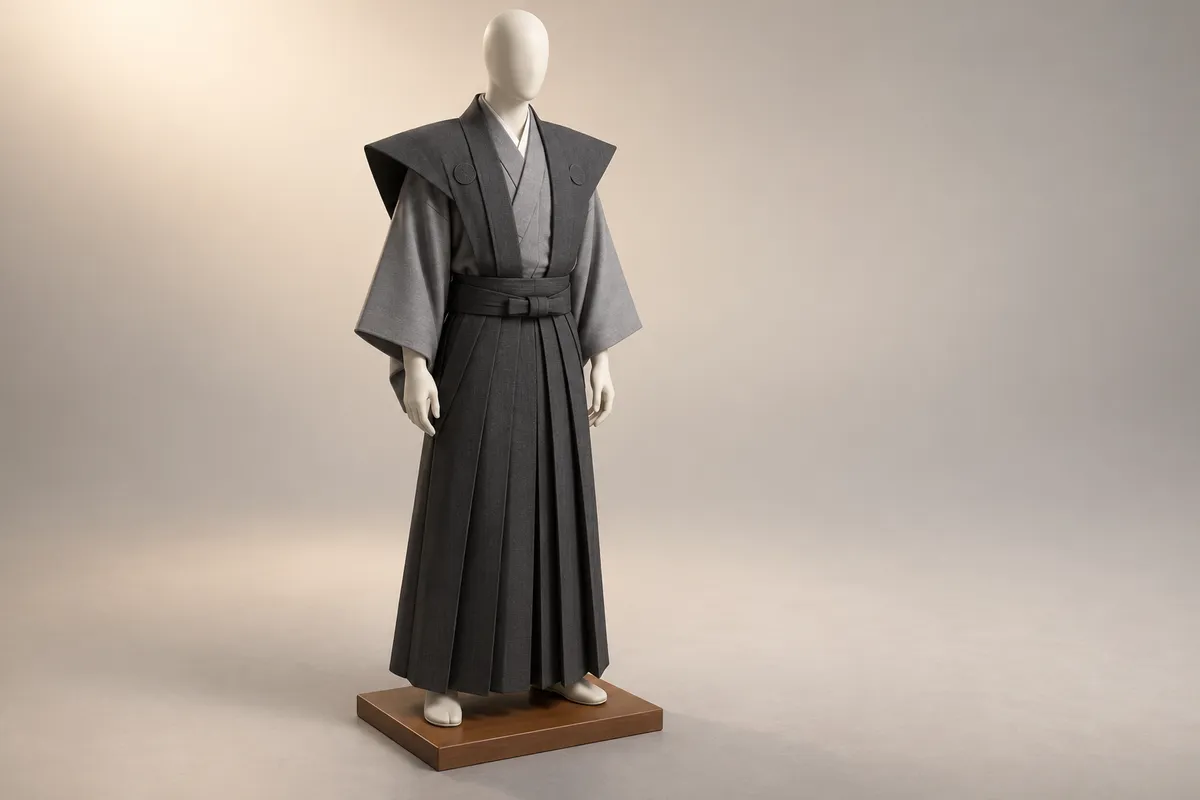
For formal duties and official functions, samurai dressed in more elaborate and symbolic attire. The kamishimo, a key component of formal samurai dress, consisted of a sleeveless kataginu worn over a matching hakama. This ensemble was commonly described as a symbol of the samurai's status and duty, particularly during the Edo period.
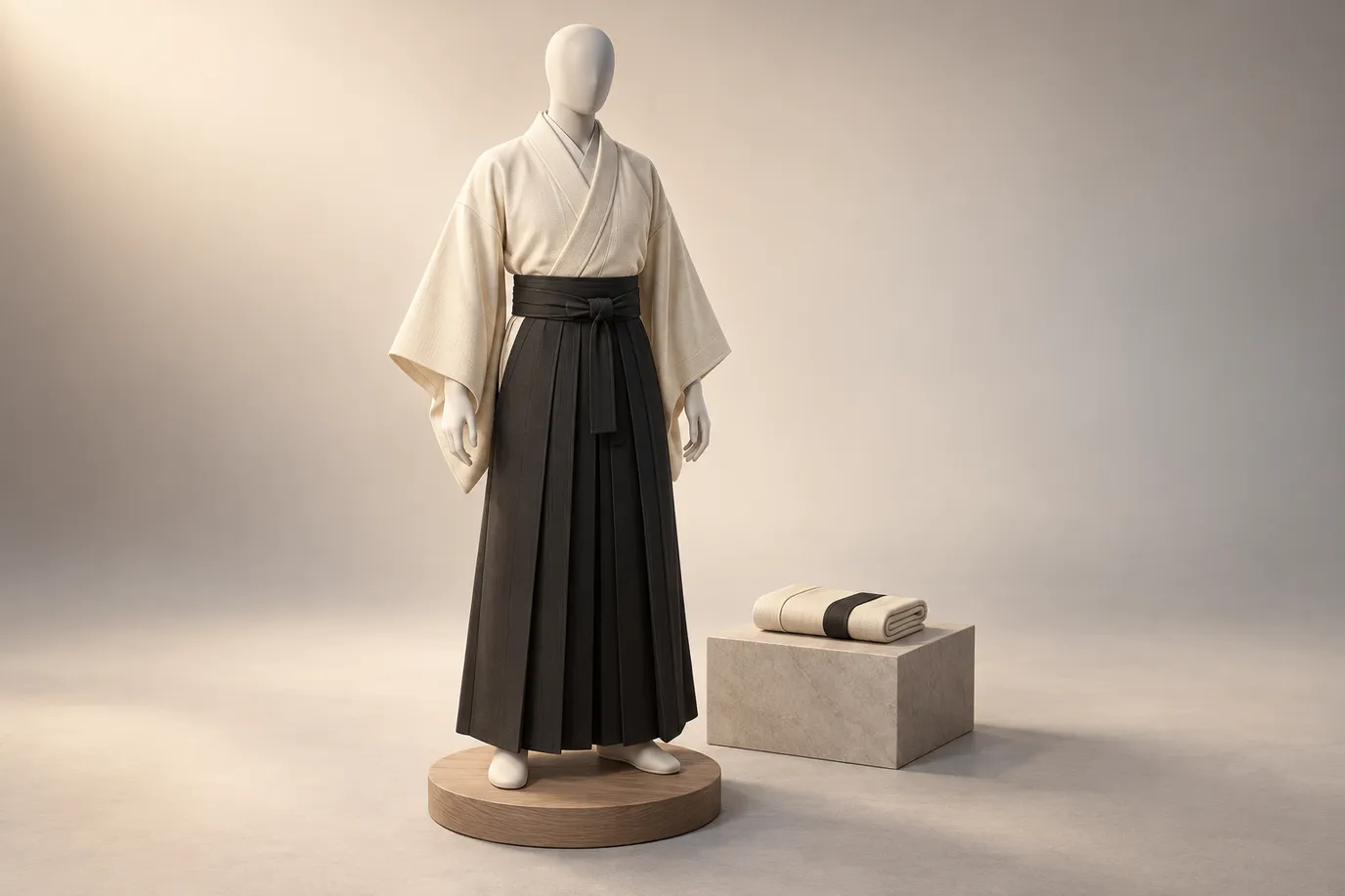
The kataginu, a sleeveless shoulder garment, could be adorned with family crests or other symbols of rank. The matching hakama, with its sharp pleats and structured design, completed the formal look. For even more formal occasions, samurai would wear a montsuki kimono, a crested kimono, along with a haori and hakama.
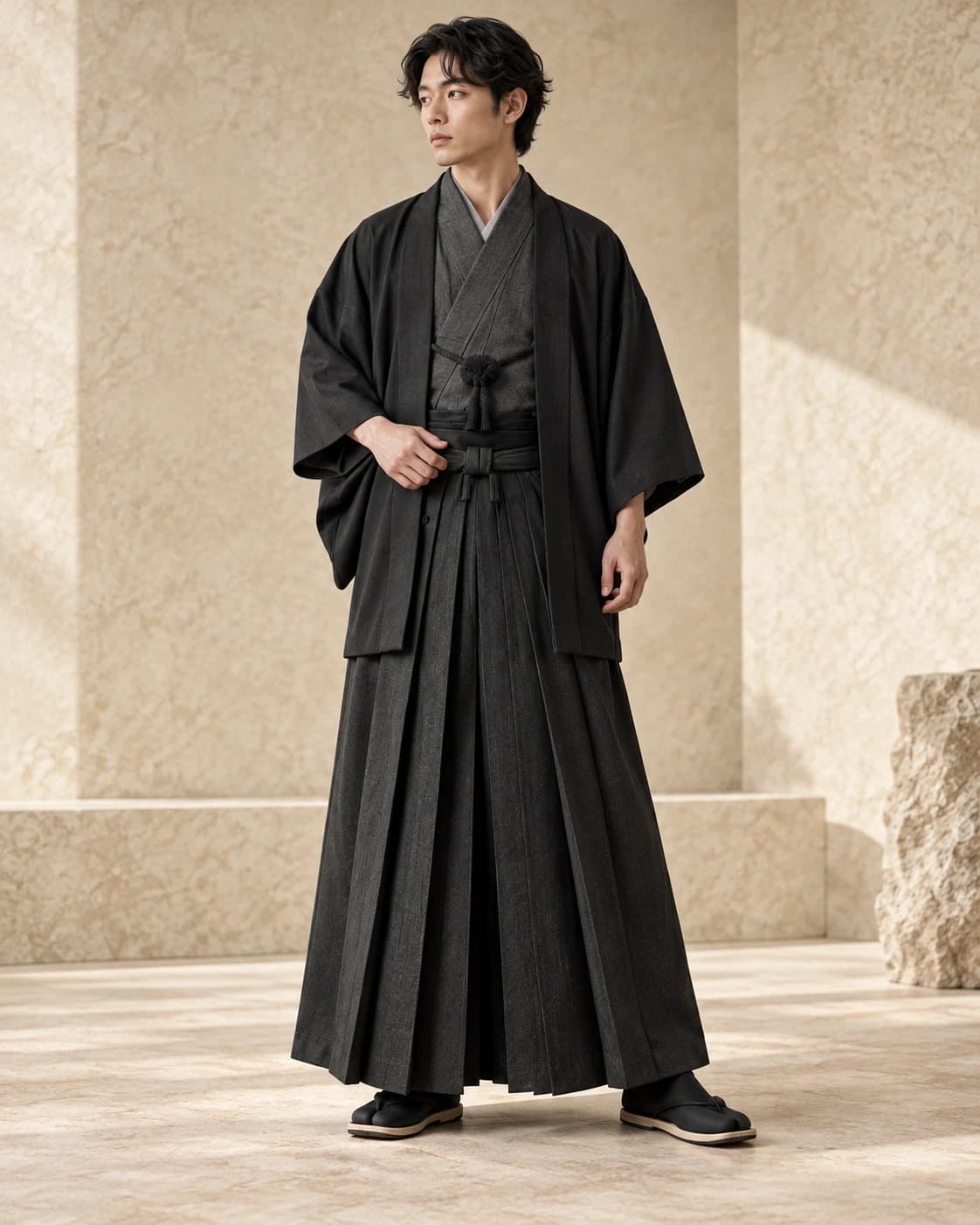
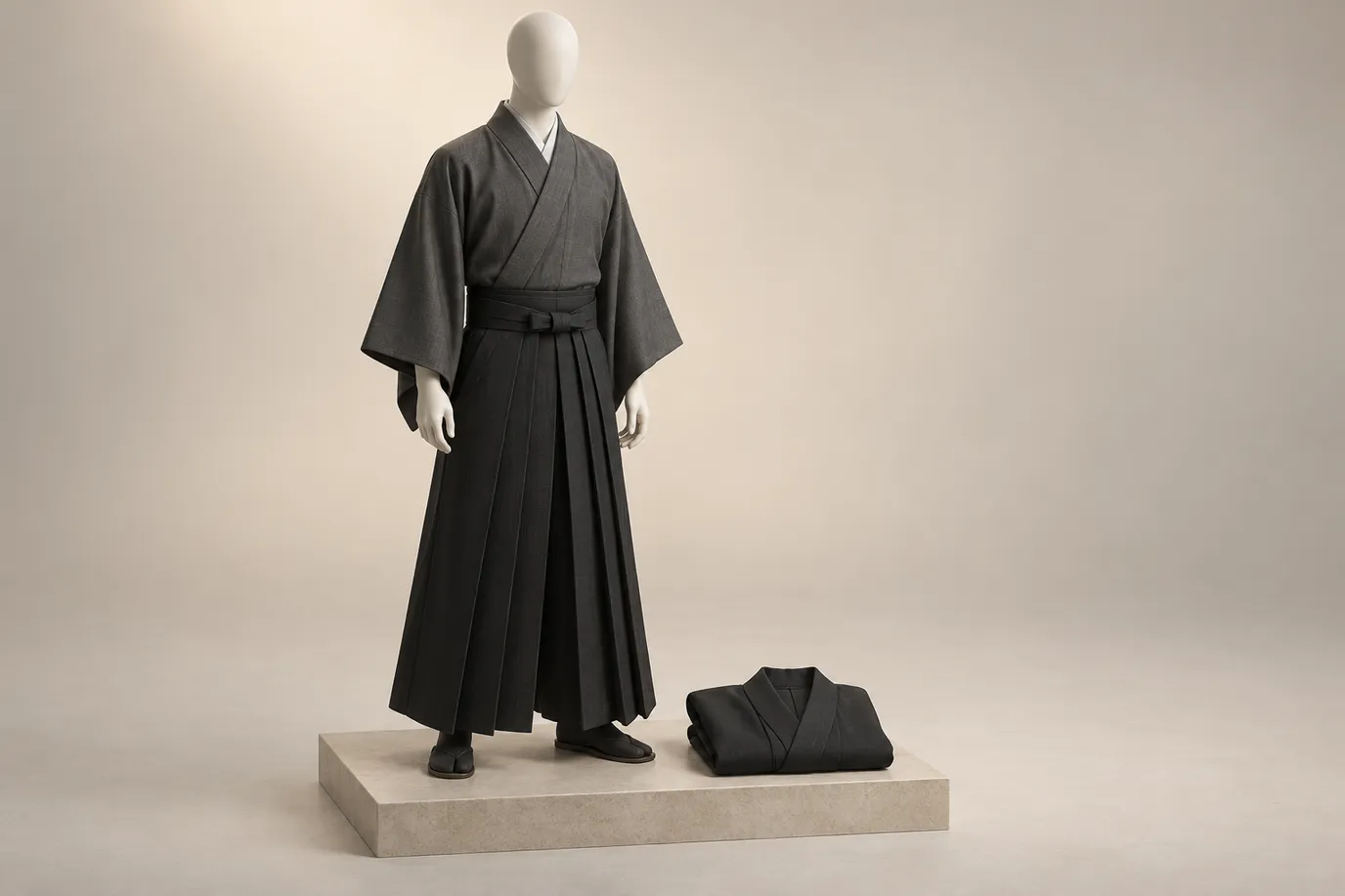
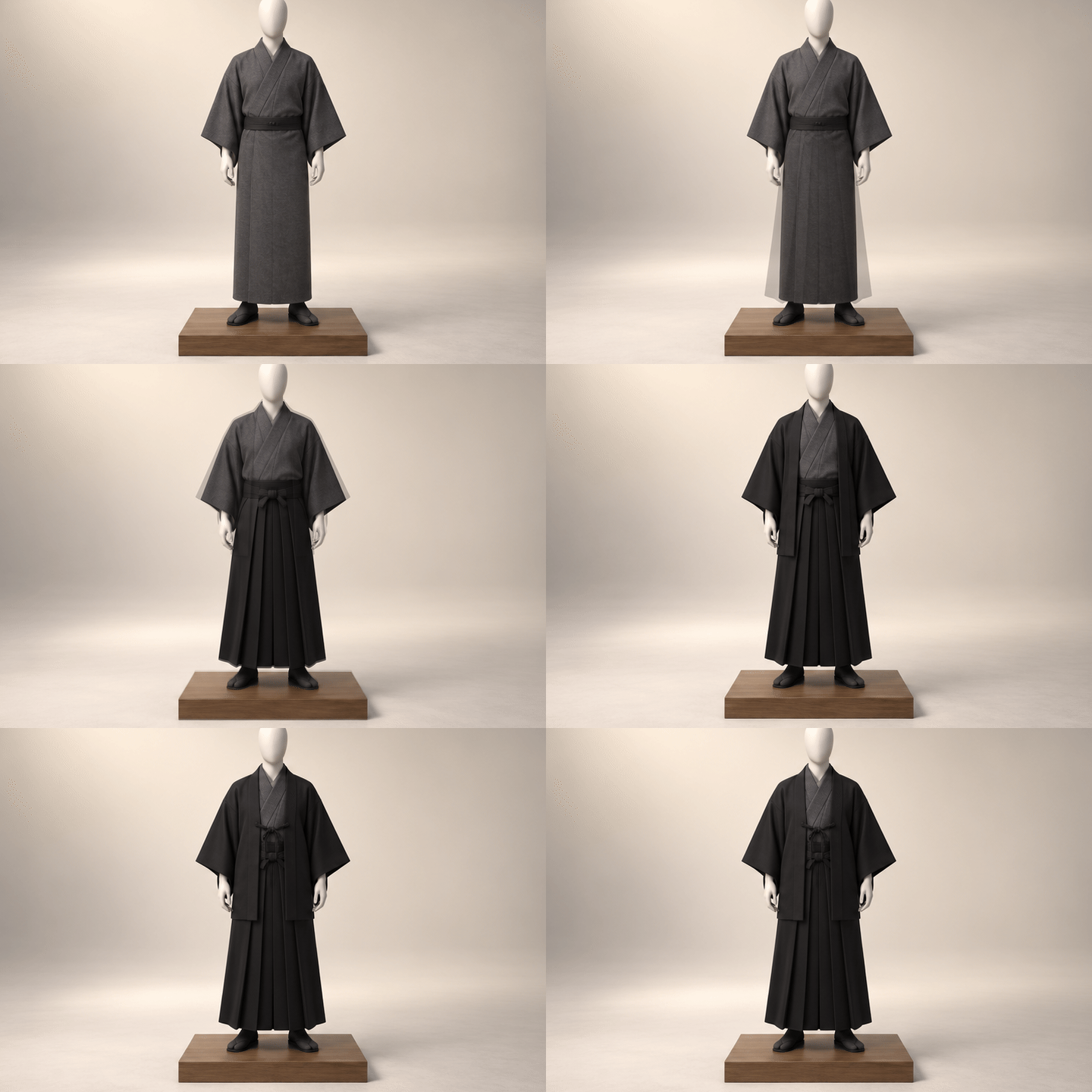
For a modern formal outfit in this spirit, Hakama Pant lists the Men's Kimono + Umanori Hakama Formal Set in graphite and black, with a plain kimono layer, a restrained haori, and a formal wide pleated umanori-style hakama.
Battle dress: armour and helmet
When it came to battle, samurai donned full armour (yoroi) and a helmet (kabuto). The yoroi was a complex and heavily protective ensemble designed to withstand the rigors of combat. It included a cuirass to protect the torso, shoulder guards, and thigh guards, all connected by intricate lacing. The helmet, or kabuto, was often adorned with elaborate designs and could feature a variety of decorative elements, such as crests and other decorations.
The armour, while heavy and cumbersome, was essential for the samurai's survival on the battlefield. It was typically worn over a lightweight undergarment and could be supplemented with additional protective pieces as needed. Despite the weight and complexity, the samurai's armour was a crucial part of their combat readiness.
How dress changed by period and rank
The specifics of samurai dress varied significantly by period, domain, and rank. During the early feudal era, samurai attire was more focused on practicality and functionality, reflecting the frequent need for combat. As the Edo period brought a period of relative peace, samurai dress became more ceremonial and ornate, with a greater emphasis on symbolism and status.
Museum collections provide the best place to see real examples of samurai attire, as accounts differ and historical records can vary. Treat any single rule about who wore what as a generalisation.
The four kinds of dress compared
| Occasion | Typical garments | Modern equivalent |
|---|---|---|
| Everyday | Kimono and hakama, sometimes a haori | Hakama pants with a simple top |
| Formal duty (Edo period) | Kamishimo: kataginu over matching hakama | Formal kimono and hakama set |
| Ceremony | Crested montsuki kimono, haori and hakama | Men's formal kimono and hakama |
| Battle | Armour (yoroi) and helmet (kabuto) | Museum and reenactment pieces |
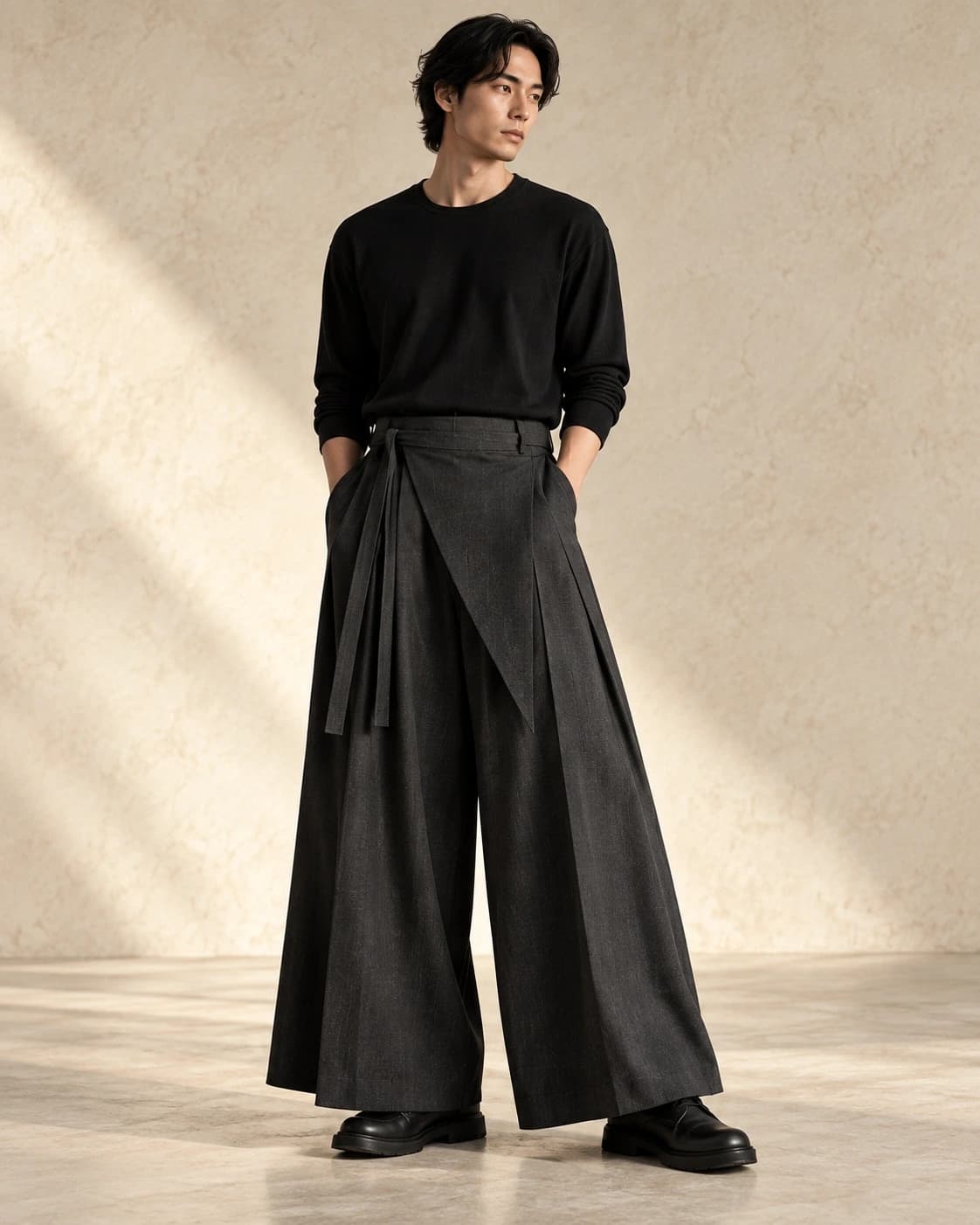
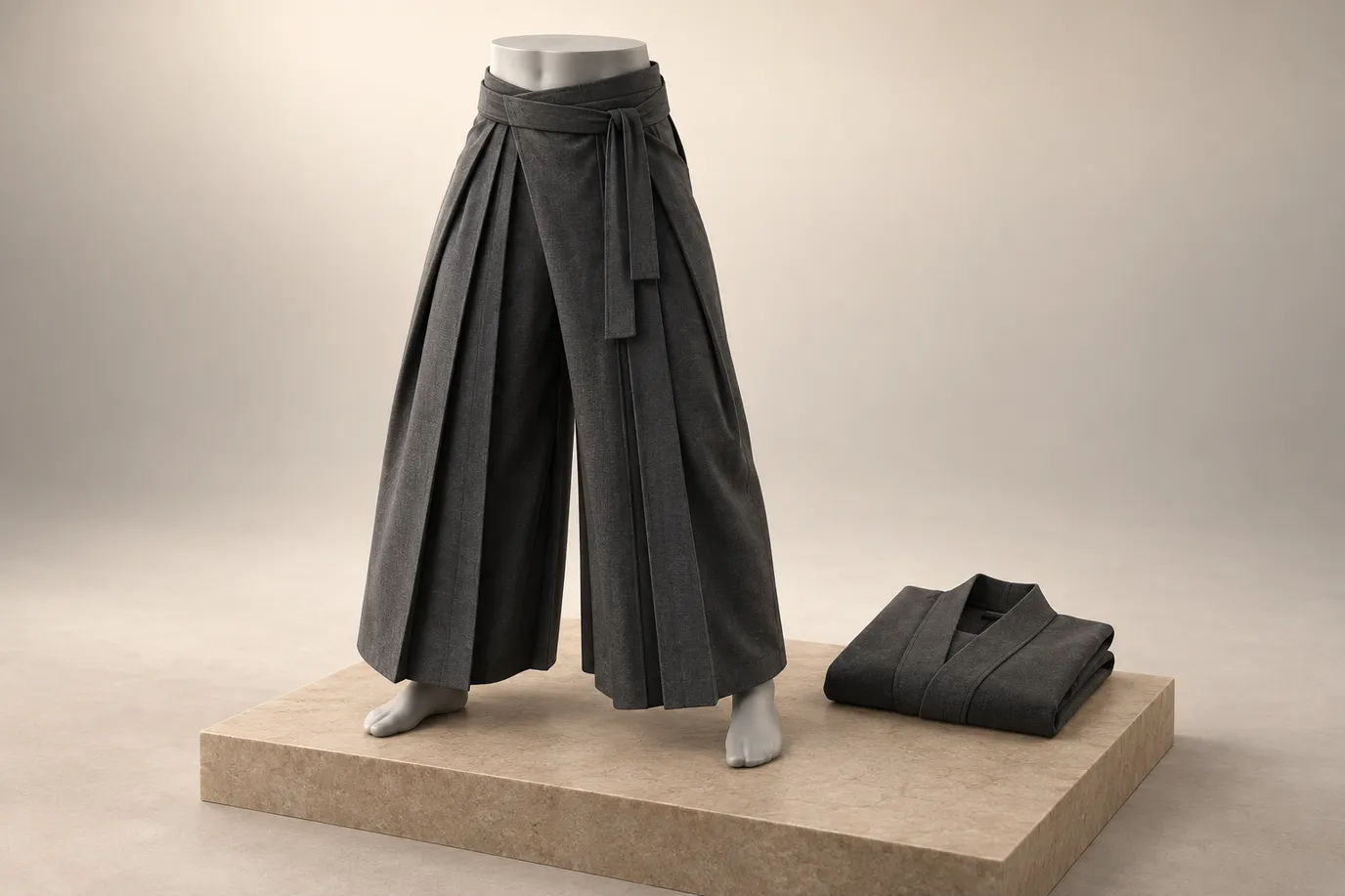
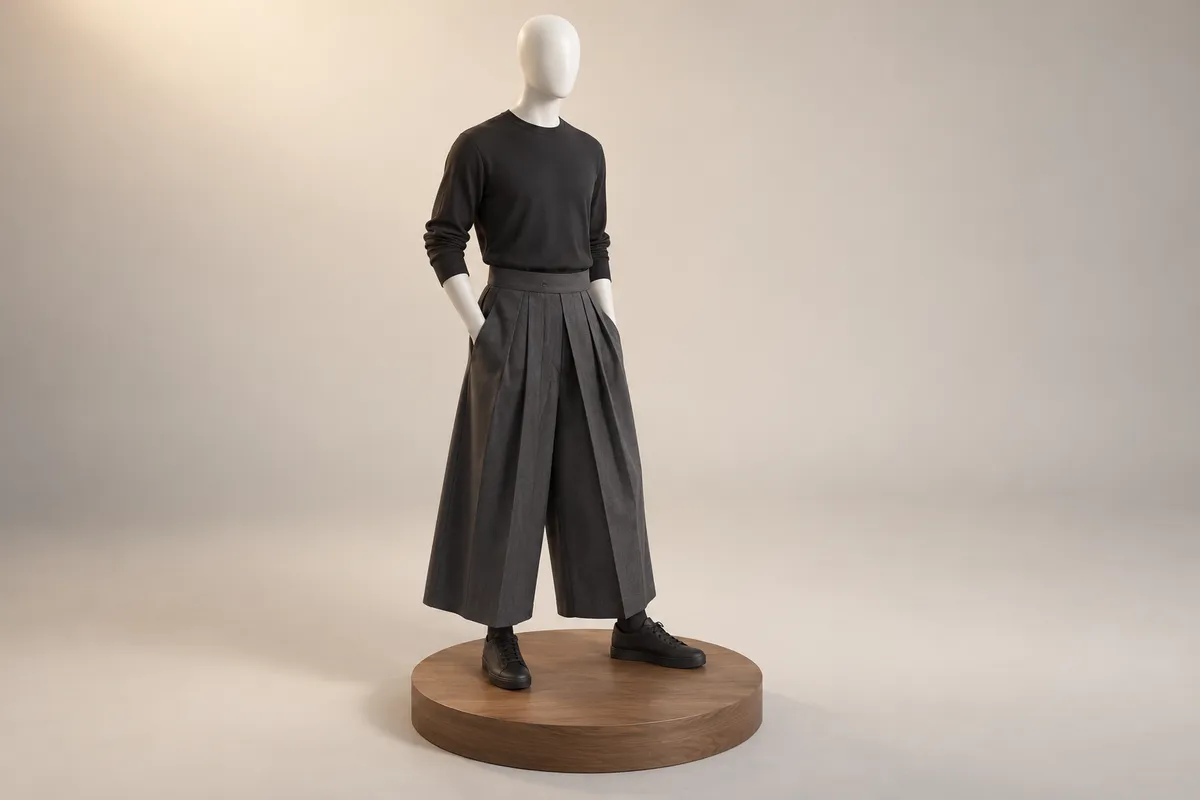
For the everyday row, the Samurai-Inspired Hakama Pants in charcoal show the angled wrap look and sharp pleats over wide divided legs. The table is a general summary: dress varied by period, domain and rank.
Wearing a samurai-style hakama today
For those interested in dressing as a samurai for a costume or event, the hakama is the essential piece to start with. A hakama can be paired with a simple top or a plain kimono layer to build a coherent look. Keeping the outfit simple and avoiding overly ornate accessories can help maintain the traditional aesthetic.
The samurai pants collection groups the store's samurai-style designs in one place, offering a range of styles including samurai-inspired and Japanese streetwear options. While the store does not sell armour, helmets, swords, footwear, or standalone kimono, the hakama is a respectful way into the look on its own.
For an event outfit, think in layers. Start with the hakama and check its waist type and the listed size on the product page, then add a plain top or a simple kimono-style layer that tucks into the waist. A haori-style layer on top makes the outfit read as formal rather than casual. Keep colours to two or three quiet tones, such as black, charcoal and graphite, so the pleats stay the focus. Judge the length while standing in the shoes you plan to wear, and keep the hem clear of the floor so it does not catch when you walk or kneel.
Frequently Asked Questions
What is a samurai's clothing called?
There is no single name: what samurai wore is usually described garment by garment. It typically included a kimono, hakama and outer garments such as the haori and, for formal duty, the kamishimo, a sleeveless kataginu worn over matching hakama. For ceremonies, a crested montsuki kimono with haori and hakama is commonly described. Battle dress was a separate set of armour, the yoroi, with a kabuto helmet.
What did samurai wear when not fighting?
When not engaged in combat, samurai typically wore a kimono and hakama for everyday activities. They might also add a haori jacket for additional formality. This attire allowed them to keep a dignified appearance in daily life, and the details varied by period, domain and rank. Armour was reserved for battle and was not everyday wear.
How to dress as a samurai?
To dress as a samurai for a costume or event, start with a hakama, which is the key element of the outfit. Pair it with a simple top or a plain kimono layer, and keep footwear simple. Avoid overly ornate accessories so the look stays coherent. Hakama Pant sells hakama and hakama sets, but not armour, swords or footwear, so plan those pieces separately or leave them out.
What is Japanese clothing called?
Traditional Japanese clothing is generally referred to as wafuku, and the kimono is its best-known garment. Other common pieces include the yukata, hakama and haori. These garments are still worn for weddings, graduations, festivals and other special occasions, while everyday clothing in Japan is mostly Western in cut.
What are samurai clothes called?
Samurai clothes are usually named piece by piece: kimono, hakama, haori, kamishimo and montsuki for daily and formal wear, and yoroi and kabuto for battle. These items reflect the practical and symbolic sides of samurai life, with each piece tied to a type of occasion. Of all of them, the hakama is the garment that carries most clearly into modern outfits.
Conclusion
Samurai clothing covered a range of garments, each with its own purpose. From the everyday kimono and hakama to the elaborate kamishimo and ceremonial montsuki, the samurai's attire reflected their status, role, and the cultural context of their time. Today, the hakama remains a key piece in modern interpretations of samurai dress, offering a way to honor the historical tradition. The specifics of samurai dress varied by period, domain, and rank, and museum collections provide the best examples of real samurai attire.
Sources and buying checks
For cultural context, see The Metropolitan Museum of Art: Kimono Style. This reference does not verify any shop garment’s construction. Use the free buying tool and the shopping checklist before choosing a product.