
Samurai pants are usually called hakama: wide, pleated Japanese trousers tied at the waist with long straps. The divided-leg form is the umanori hakama, and the undivided, skirt-like form is the andon hakama. Modern versions borrow that pleated, wide-leg shape for everyday and streetwear outfits. This guide covers the real name, the two forms, the modern styles compared side by side, and what to check before you choose a pair.
Key Takeaways
- The name: The nickname is a search term, and the garment itself is called a hakama.
- Umanori vs andon: An umanori hakama is divided into two wide legs, while an andon hakama is undivided like a long pleated skirt.
- History is hedged: Hakama are commonly described as worn over a kimono in formal outfits, and accounts of who wore what differ.
- Four modern styles: Traditional-style divided hakama, samurai-inspired streetwear pants, tailored hakama trousers and costume pants are sold under the same nickname.
- Length check: Judge the length while standing in the shoes you plan to wear, with the hem clear of the ground.
- Concept images: A concept image shows the design intent and does not confirm fabric or construction details.
What samurai pants are called
The phrase is a search term rather than a formal garment category. The actual name for these wide, pleated trousers is hakama. Knowing that one word helps anyone who wants to read further about the garment, because shops, museums and martial arts clubs all file it under hakama and not under the nickname.
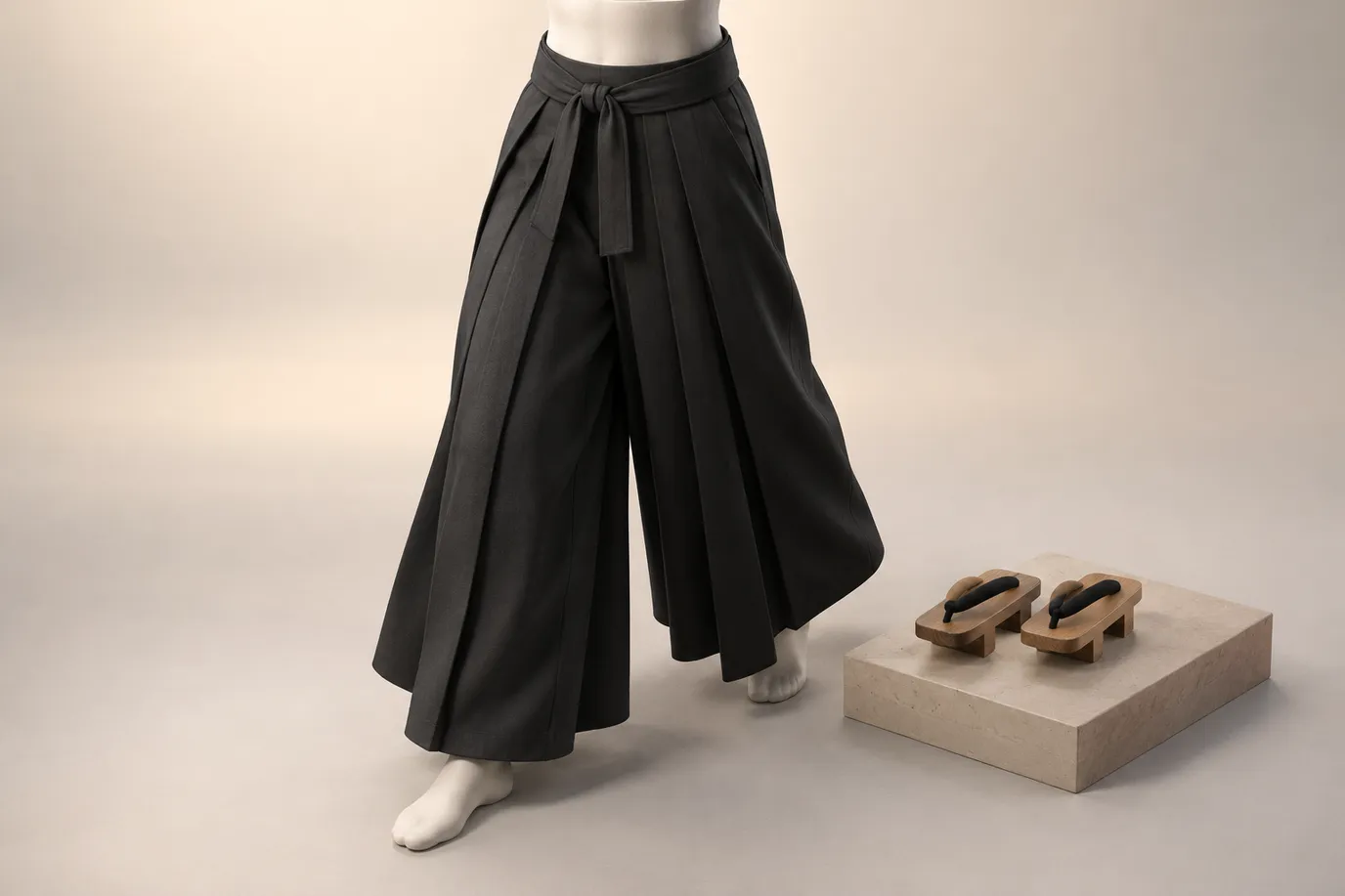
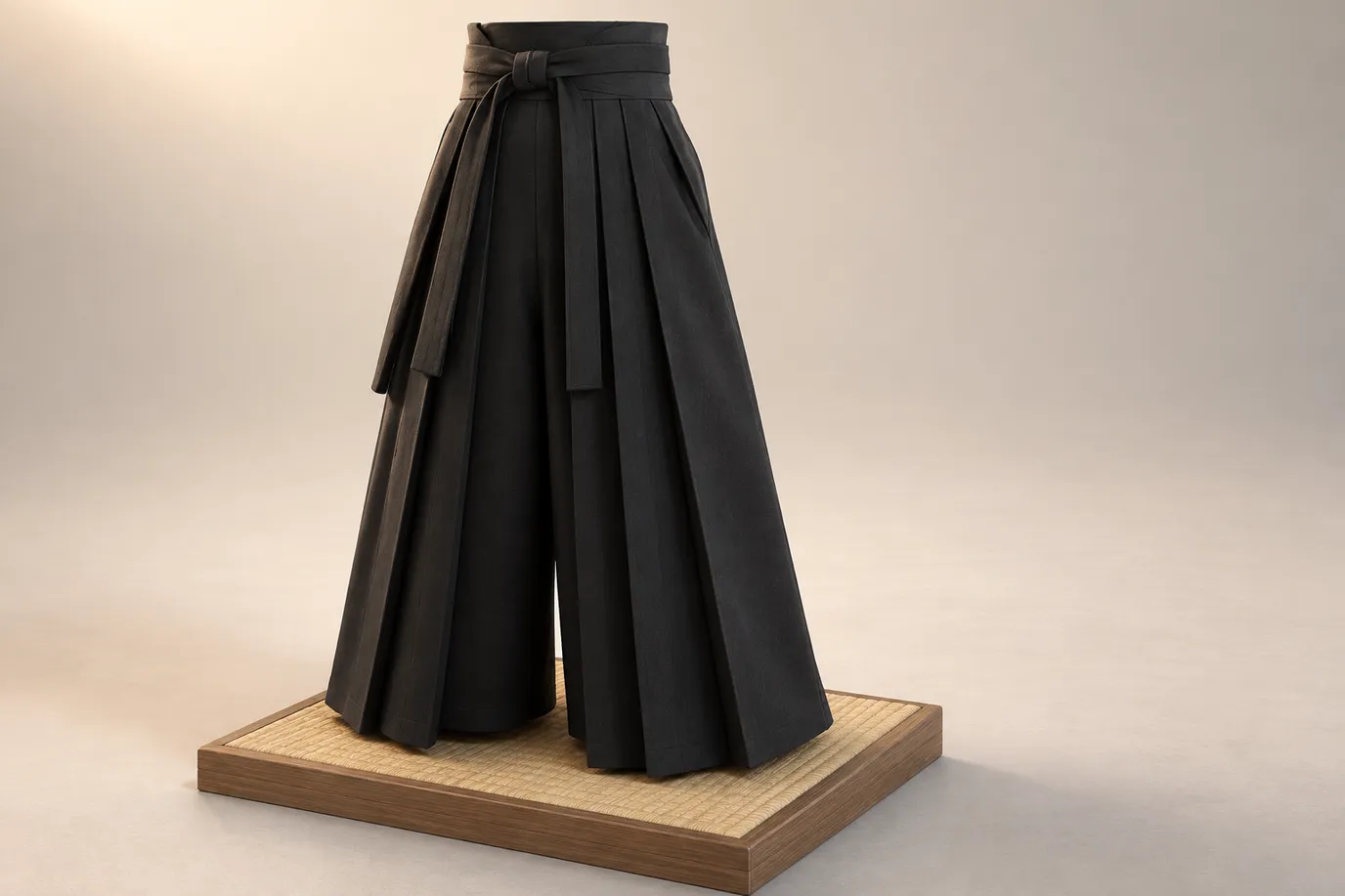
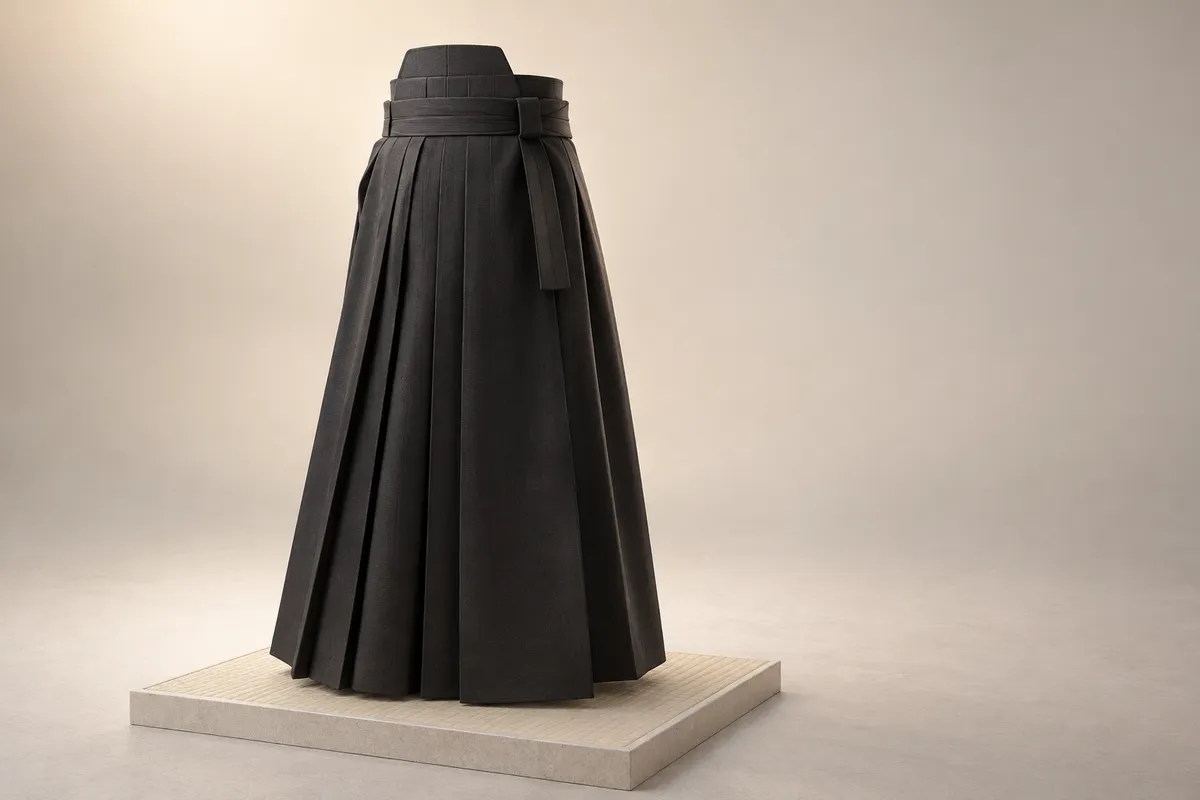
A hakama is easy to recognise by its parts. The front pleats give it a neat, structured look. The himo, long waist ties, are wrapped around the body and knotted at the waist. The koshiita, a rigid panel at the back of the waist, sits against the small of the back. Side openings below the waist let the layer underneath show at the hips.
The nickname is commonly explained by films, martial arts and video games, where the garment is tied to the image of the samurai class. Using the correct term matters when you shop or search: it brings up the right forms and guides. Hakama Pant groups its designs in this look in a collection of samurai-style designs, which is the shopping page for the same idea.
Umanori and andon: the two hakama forms
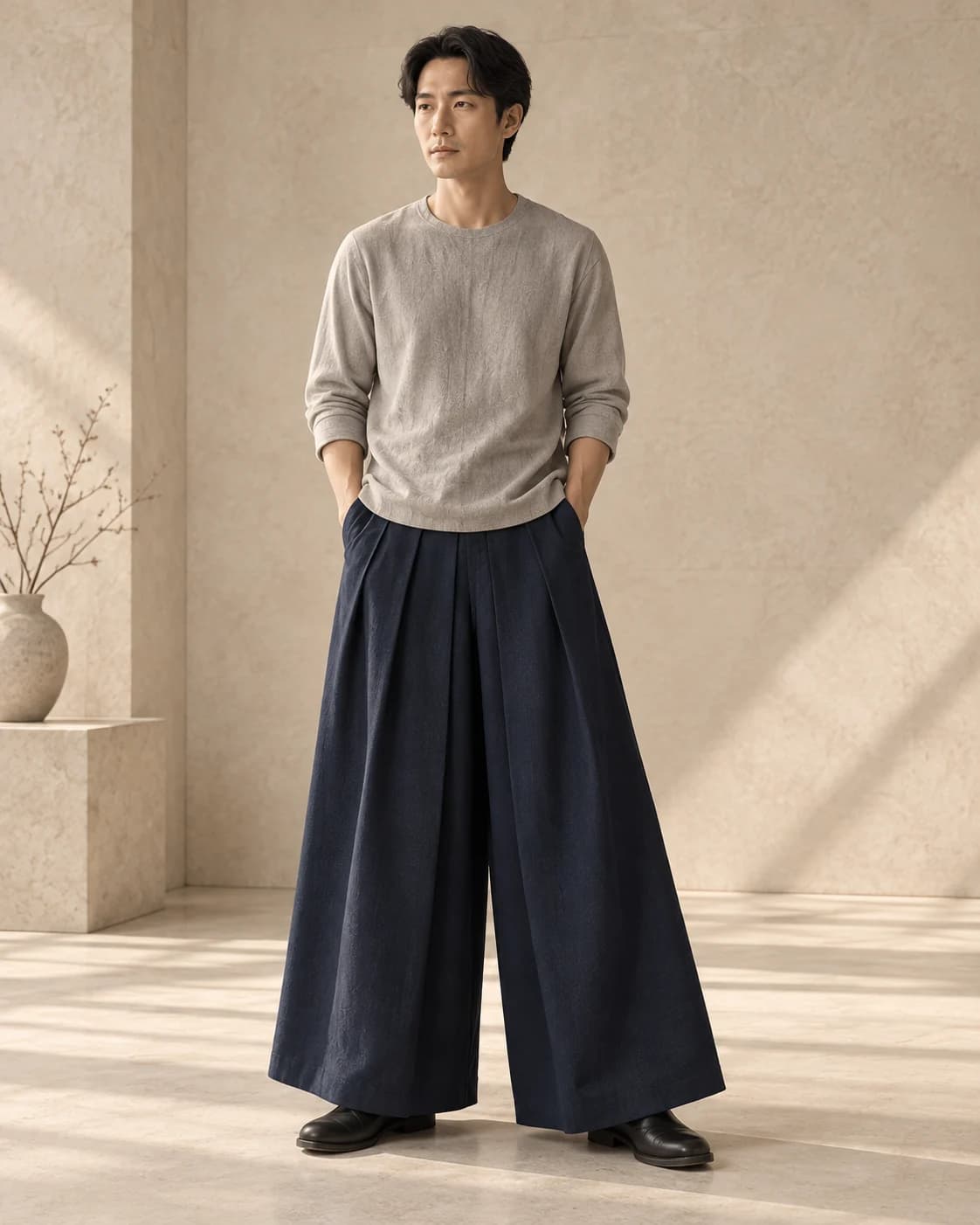
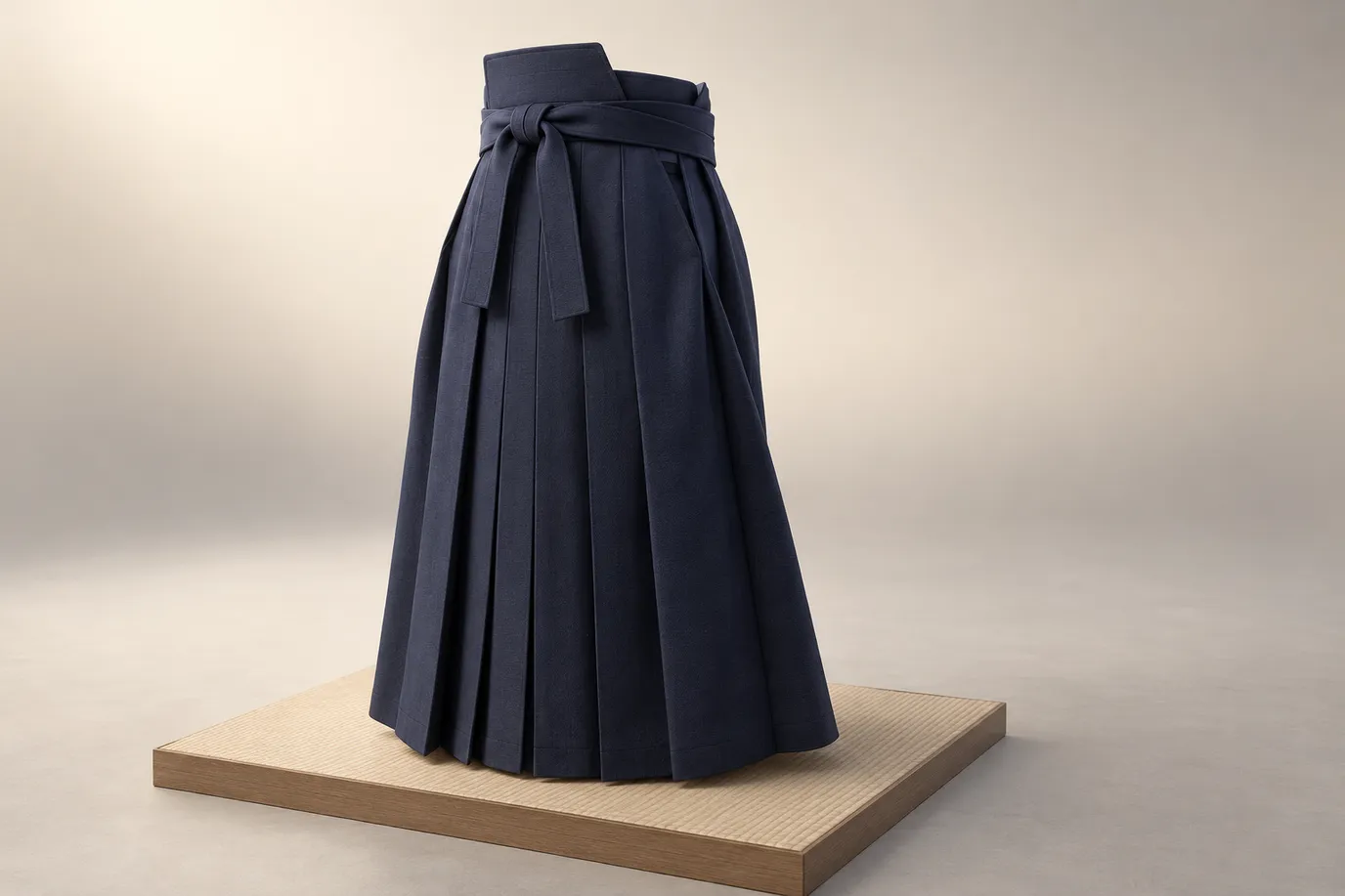
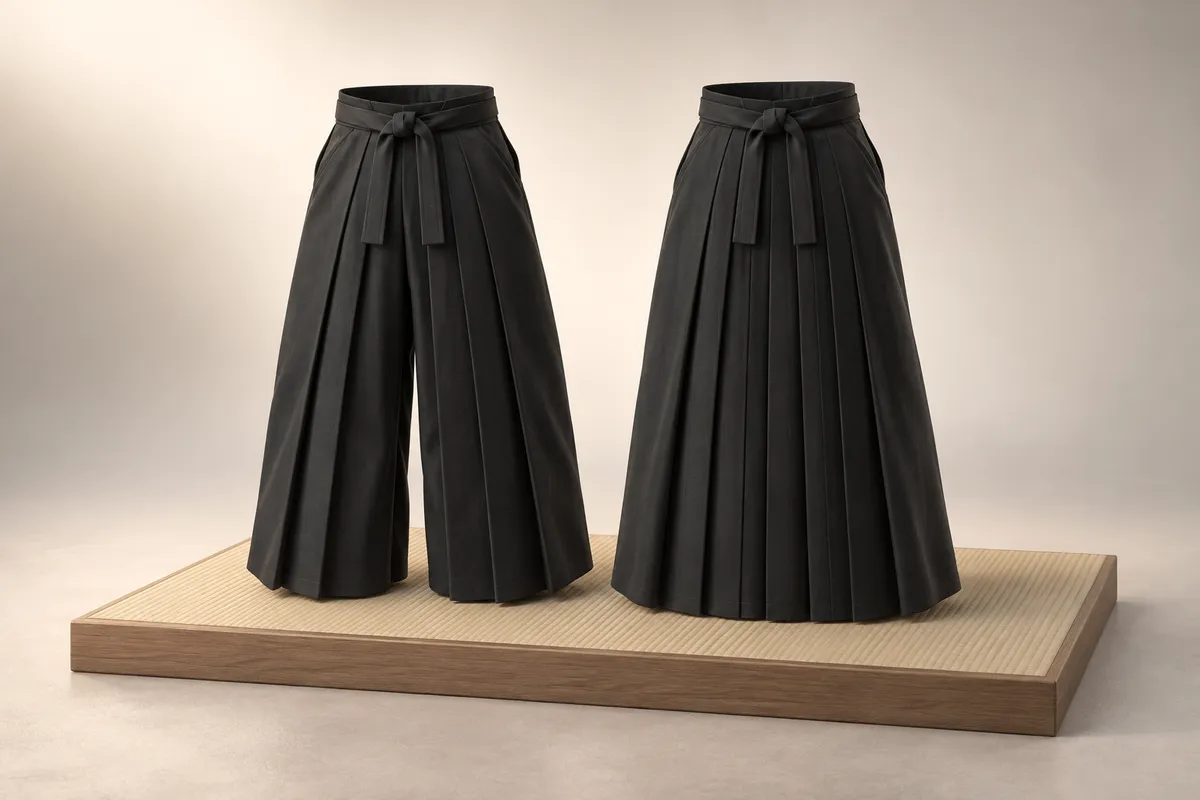
The umanori hakama has divided legs, a design commonly traced to horse riding. The name is usually translated as "horse riding" hakama. Two separate wide legs allow a long stride, a deep stance and kneeling. The store lists an Umanori Divided-Leg Hakama in deep navy as a traditional-style design in this form.
The andon hakama is undivided and resembles a long pleated skirt. Its name is often linked to the shape of a paper lantern. With no division between the legs, it hangs as one continuous tube from waist to hem. It is commonly seen with a kimono at graduations and in other formal outfits.
Both forms display the same pleated front when the wearer stands still, but a wide step reveals the split in the umanori. Umanori is commonly worn in martial arts and formal men's dress, while andon is typically seen in graduation and formal outfits. Conventions vary by school and event, so check before you buy for a specific occasion. The site's guide explains the two hakama forms in more depth.
What samurai wore and what the modern pants borrow
Hakama are commonly described as being worn over a kimono, forming part of formal outfits. The hitatare, an earlier formal two-piece outfit, is described as a wide-sleeved top with matching hakama. The kamishimo, a later formal outfit, is described as pairing a sleeveless, broad-shouldered vest (kataginu) with hakama.
On campaign, armour covered the legs, so wide hakama are mostly described as everyday and formal dress and not as battlefield wear. The pleats are commonly read as standing for the virtues of bushido, the samurai code, though this interpretation varies with the source and the school that teaches it.
Modern hakama pants borrow three elements from the traditional design: the pleated front, the wide leg and the high waist. They do not recreate the historical outfit. Tobi pants, baggy Japanese workwear trousers gathered at the calf, are a different garment from hakama, even though both are sometimes described as baggy Japanese trousers.
Modern styles compared side by side
Four different styles are sold under the same nickname. The table shows what each looks like, what it is usually worn for and what to check before buying.
| Style | What it looks like | Usually worn for | What to check before buying |
|---|---|---|---|
| Traditional-style divided hakama (umanori) | Full pleats, tie waist, rigid back panel | Martial arts, formal or traditional dress | Length, tie method, what your school or event expects |
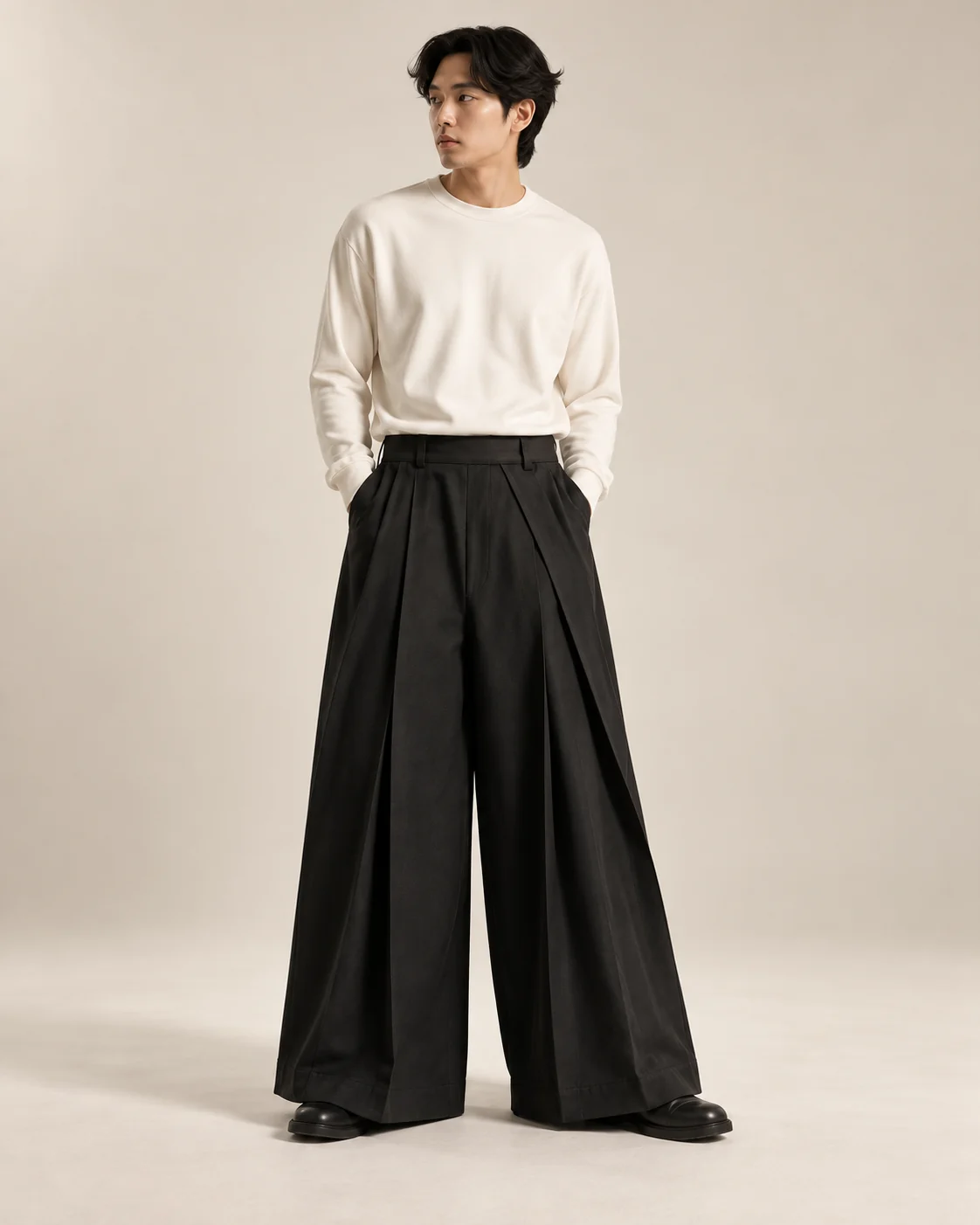
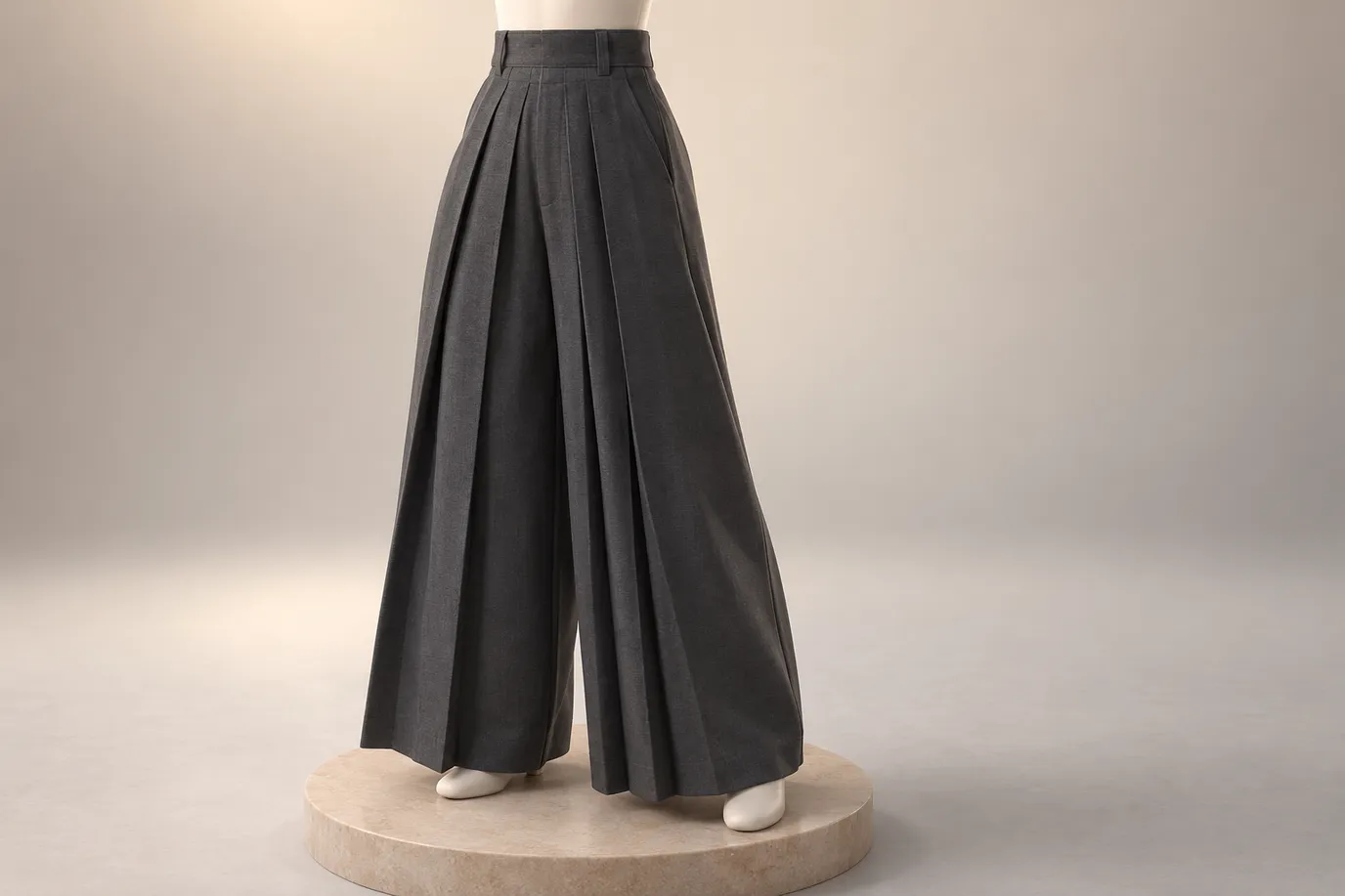
| Samurai-inspired streetwear pants | Wide divided legs with a wrap or pleated front | Everyday outfits, events | Waist type, leg length with your shoes, colour |
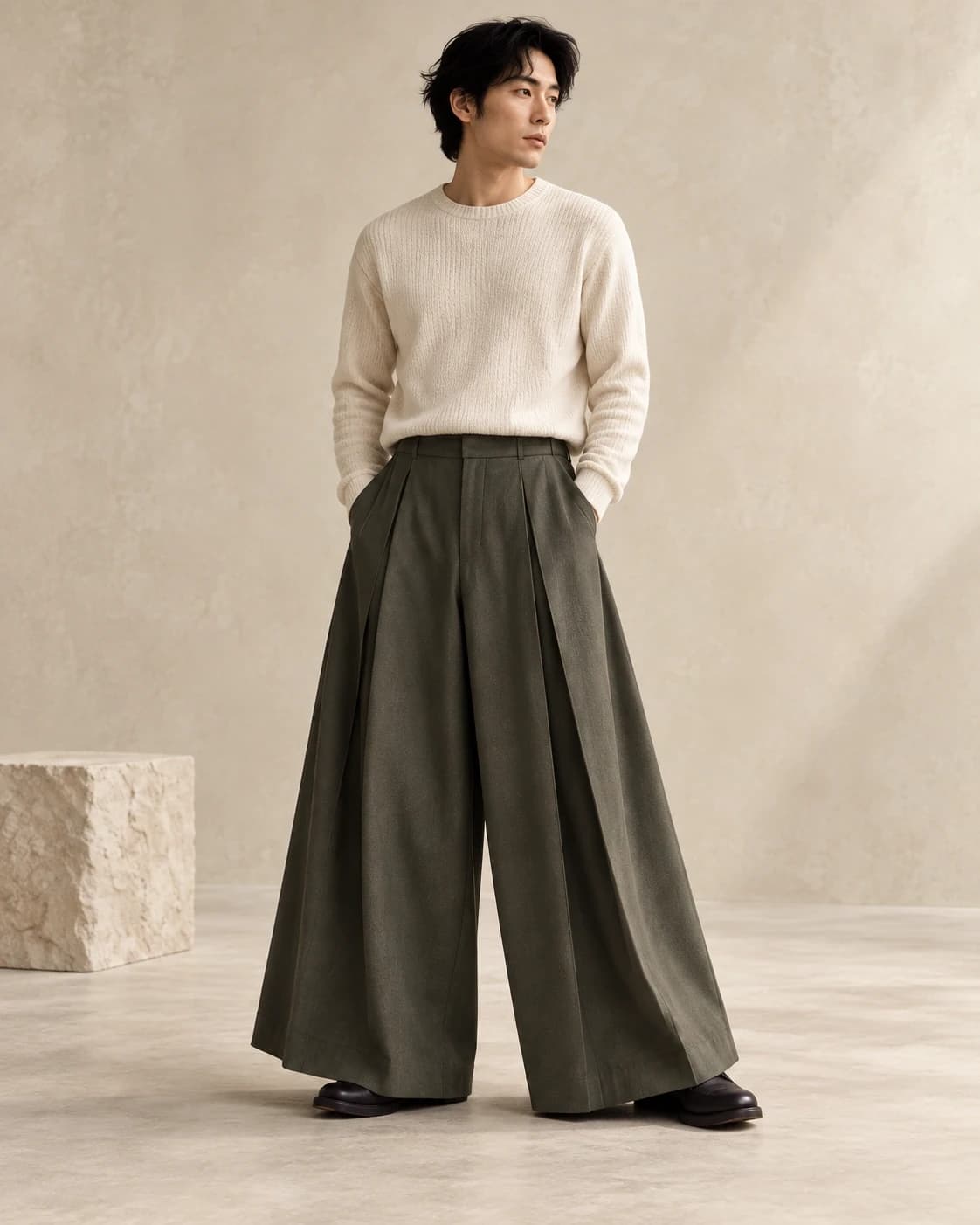
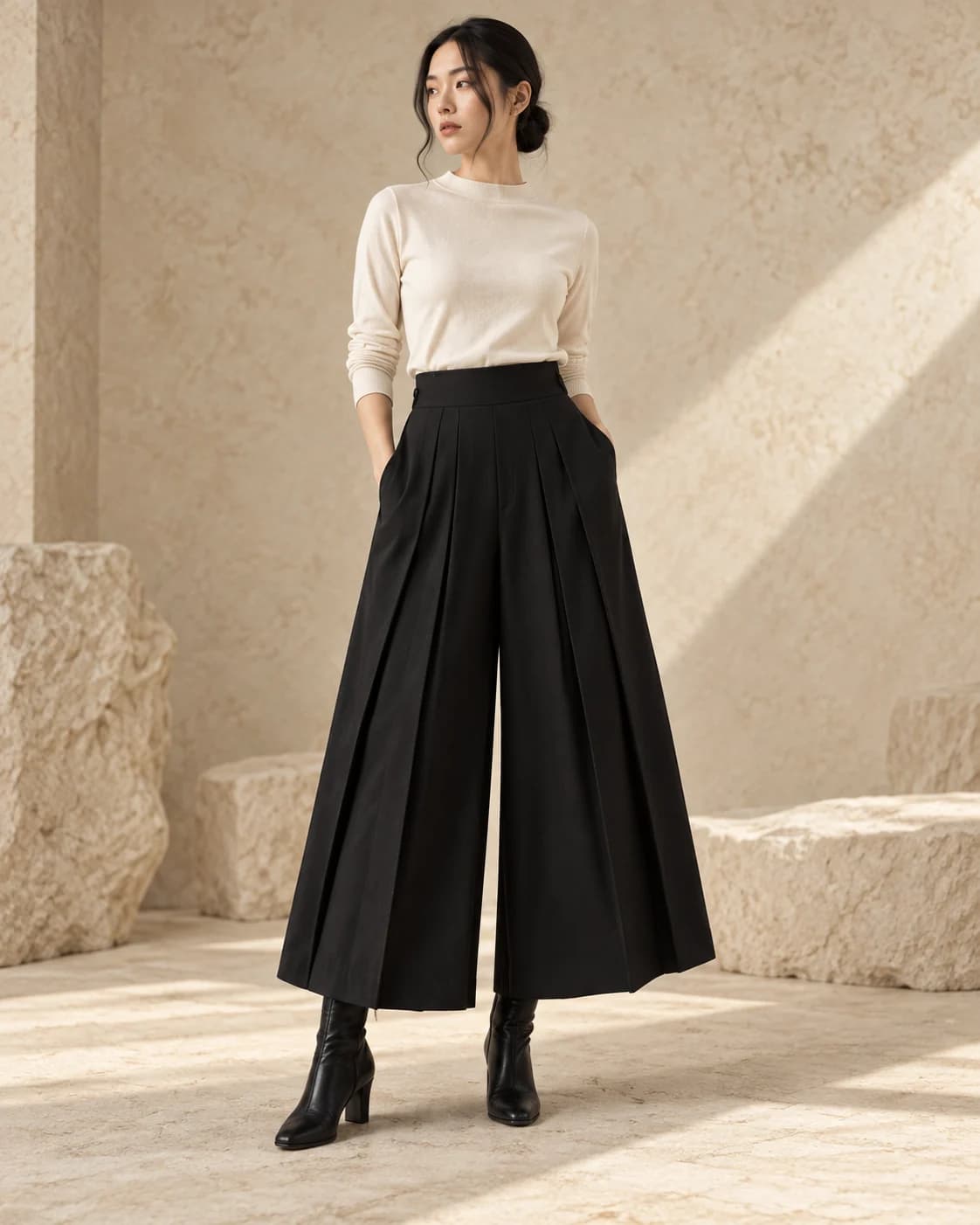
| Tailored hakama trousers | Wide-leg trouser with front pleats and a flat waistband | Smart casual wear | Rise, hem width, how the pleats are pressed |
| Costume and cosplay pants | Shape built for a character look | Conventions, stage | How closely the shape needs to match the reference |
Traditional-style divided hakama (umanori)
These trousers feature full pleats, a tie waist and a rigid back panel. They are commonly worn in martial arts such as aikido, kendo and iaido, as well as for formal or traditional events. Before buying, check the length, the tie method, and what your school or event expects in terms of style and colour.
Samurai-inspired streetwear pants
With wide, divided legs and a wrap or pleated front, these pants are made for everyday outfits and events. They take the outline of a hakama and simplify the way it is worn. When selecting a pair, consider the waist type, how the leg length works with your shoes, and the colour. The store's Samurai-Inspired Hakama Pants in charcoal are one design concept in this group.
Tailored hakama trousers
These wide-leg trousers feature front pleats and a flat waistband, which places them in smart casual wear. They keep the volume of a hakama and drop the ties and the back panel. Before purchasing, check the rise, the hem width, and how the pleats are pressed.
Costume and cosplay pants
Designed to match a character's look, these pants are worn at conventions and on stage. They often have a specific shape and detailing taken from the character. When choosing a pair, check how closely the shape needs to match your reference.
How to choose a pair: waist, length and colour
A tie waist with himo adjusts to the body but takes practice to knot correctly. A flat or elastic waistband goes on like ordinary trousers. Decide which you are willing to wear every time, because the waist is the part you handle most.
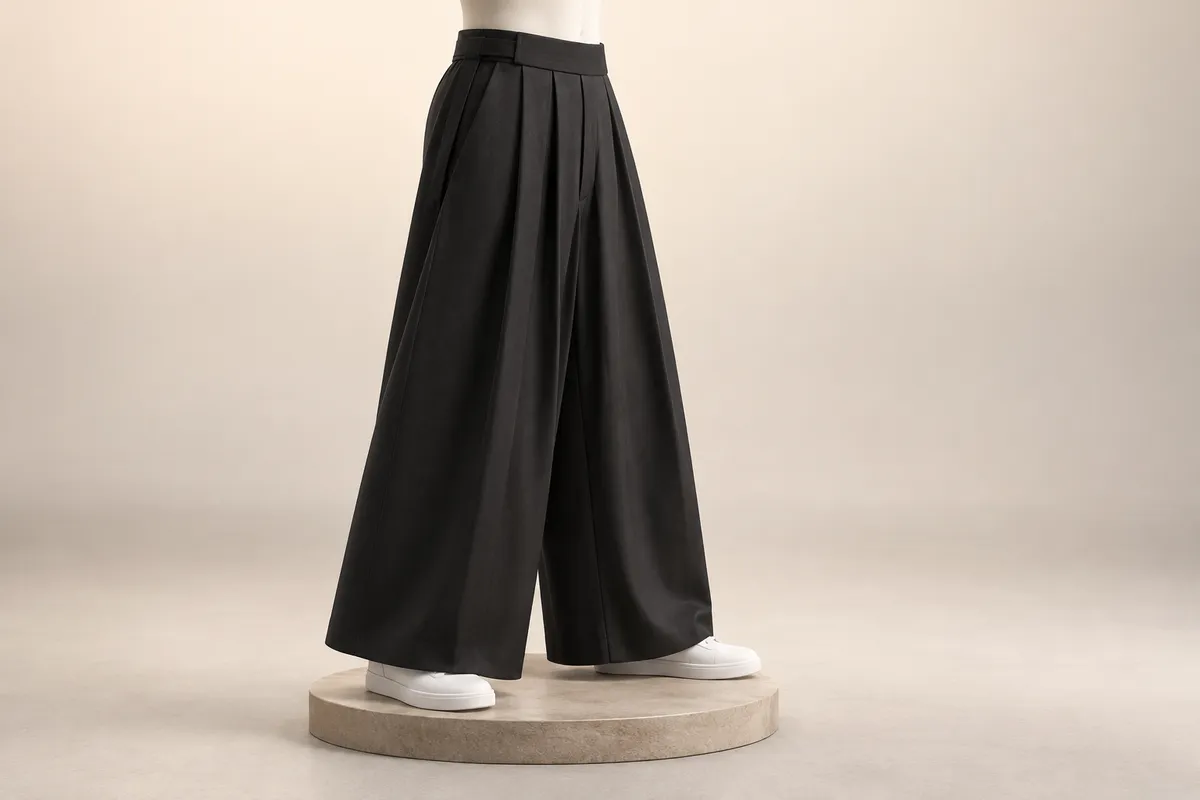
Judge the length standing in the shoes you will wear, and make sure the hem clears the ground. Measure as the store's size guide shows and compare with the listed sizes. Never rely on a photo alone, because a photo does not show how the hem will sit on your own height.
For colour, dark neutrals tend to pair with most tops. Always read the listed waist type, colour and sizes carefully. A concept image gives you the design intent, but it does not confirm fabric or construction details, so read the written details on the product page before placing an order.
How to wear them day to day
Balance the volume of a hakama with a plain, fitted or cropped top. Let the waistband show, because the high waist is what gives the outline its shape. Keep accessories minimal and choose simple footwear. If you are new to the tied form, the step-by-step guide on putting on a hakama and tying the himo walks through the order.
Keep the hem clear of the ground so the legs move freely and the cloth stays clean. Avoid props such as toy swords or headbands, which turn an outfit into a costume. Cosplay is the place for a full character look, while an everyday outfit works best when the trousers are the only statement piece.
Hakama Pant designs in this style
Hakama Pant lists three designs that fit this guide. The Samurai Hakama Pants in ink black have a structured broad wrap waistband and dramatic full-width divided legs, in listed sizes S to XXL. The Samurai-Inspired Hakama Pants are charcoal, with an angled wrap visual over wide divided legs and disciplined sharp pleats, also in listed sizes S to XXL.
The Umanori Divided-Leg Hakama is a deep navy, traditional-style divided-leg silhouette with a tie waistband and measured pleats, in listed sizes S to XXL. These are design concepts, so compare the waist type, colour and listed sizes on each product page before you decide.
Frequently Asked Questions
What were samurai pants called?
They are called hakama. The divided form, with two separate wide legs, is known as umanori, and the undivided form, which hangs like a long pleated skirt, is called andon. You can tell them apart when the wearer takes a wide step: a split shows on the umanori and not on the andon. The nickname itself is modern and is commonly explained by films, games and martial arts.
What are the baggy Japanese trousers called?
The pleated, tied garment is called a hakama. Hakama have pleats, long ties and a straight wide hem, while tobi pants, a workwear style, balloon at the thigh and close at the calf. The two are different garments with different uses, so check which outline you actually saw before you search. Hakama Pant lists hakama and hakama-style trousers, not tobi pants.
How do you wear samurai pants?
To wear a tie-waist hakama, step into it, hold the front panel at your waist, wrap the front ties around and knot them, seat the back panel, then bring the back ties forward and knot them. A flat-waistband pair simply goes on like regular trousers. Make sure the hem clears the ground. Clubs teach their own knots, so follow the method your club uses if you train.
What pants did samurai wear?
Samurai are commonly described as wearing hakama over a kimono. Formal outfits are said to have included the hitatare, a wide-sleeved top with matching hakama, and later the kamishimo, a sleeveless broad-shouldered vest with hakama. In armour, the legs were covered by the armour itself. Accounts differ on the details, so treat any single description as one reading and not a fixed rule.
Can foreigners wear hakama?
Yes, in general foreigners can wear hakama. Hakama are worn around the world in martial arts and in fashion. In fashion, a hakama is styled like any wide-leg trouser, while a dojo or a ceremony has its own conventions. Wear them respectfully, and when the setting is a club, a graduation or another formal event, ask the instructor or host what is expected.
Conclusion
Samurai pants are hakama, and they come in two forms and several modern styles. Learn the name first, then pick the form and the style that match how you will wear them. Check the waist type, the length and the colour on the product page before placing an order. To compare everyday designs, start with the hakama streetwear collection and measure before you choose a size.