Look after the form
How to care for hakama.
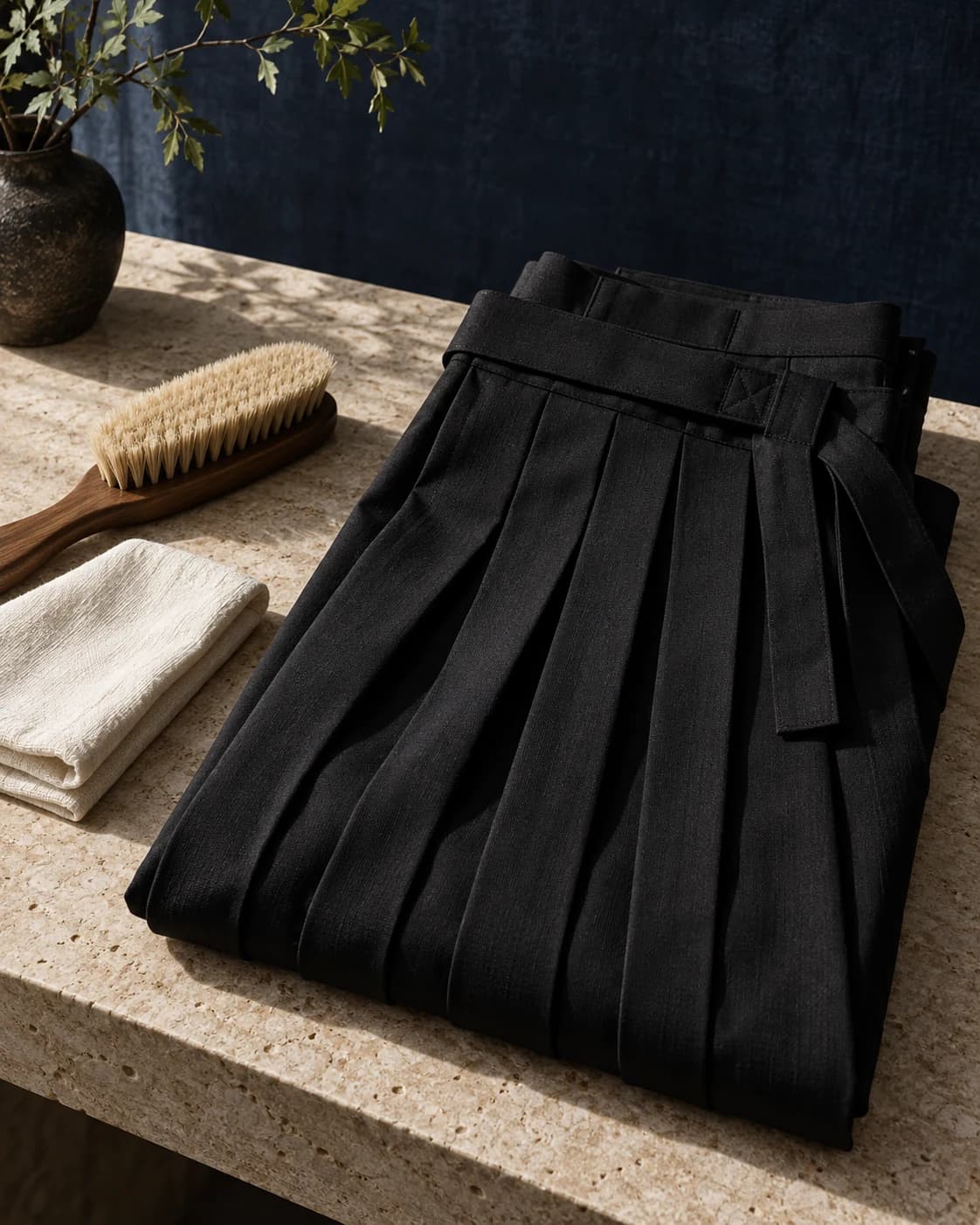
A pleated garment asks for a little more than most, and rewards it for longer. Six habits keep the folds where they were made to sit.
Always follow the care label. Fabric composition and construction vary between pieces, and the label on your garment takes precedence over every general note on this page.
The whole guide, in six lines
- Cool water
- Where the label permits machine washing
- Inside out
- Protects the face of the fabric and any surface detail
- Line dry
- In shape, pleats aligned, while still damp
- Press along
- With the fold, with a cloth, never across
- Fold on its lines
- Or hang from the waistband
- Out of sun
- Limit direct sunlight to help reduce fading
In detail
Six habits.
In the order you will need them, from the first wash to the back of the wardrobe.
Read the label first
The symbols on the garment are the instruction; everything on this page is context. Composition decides wash temperature, drying method and whether the piece can be pressed at all — and two trousers of the same cut in different fabrics can want opposite treatment.
If a symbol is unclear, ask before you wash. A wrong first wash is not reversible.
Wash cool, wash gently
Where the label permits machine washing, cool water and a gentle cycle are kinder to a pleated garment than anything else you can change. Turn it inside out, fasten any ties or closures so they cannot wrap, and wash it with similar weights rather than with towels or denim.
Less detergent, not more. Residue stiffens folds and dulls a dark dye faster than washing does.
Dry in shape, not in heat
Hang or lay the garment out with the pleats aligned while it is still damp, and let it finish drying that way. The folds set as the fabric dries — which means damp is the moment you have the most control, and a tumble dryer is the moment you have the least.
Straighten each fold with your fingers before you leave it. Two minutes now saves an iron later.
Press along the fold, never across it
If pressing is permitted, work with the fold that is already there, from the waist downward, with a pressing cloth between the iron and the face of the fabric. Use steam only if the garment care instructions permit it; heat and moisture can alter some pleats.
Unwanted creases can be difficult to remove. Avoid pressing across the existing folds, and check the permitted iron temperature.
Fold on its own lines
Bring the legs together so the existing pleats stack on each other, then fold once or twice at most. A pleated garment stored folded on its own lines keeps its structure; one folded against them arrives with a map of where it was folded.
Hanging from the waistband with the pleats hanging free is better still, where you have the space.
Store with room
Completely dry before it goes away, somewhere it is not compressed, and out of direct sun — both sunlight and washing can affect dark dyes. Give it space either side rather than packing a rail tight.
Long-term storage: a breathable cotton bag, never sealed plastic.
The longer view
Wear it more, wash it less.
Most wear on a trouser comes from laundering, not from being worn. A pleated wide leg barely touches the body, which means airing it overnight and spot-cleaning a mark will usually do what a full wash would — and the pleats keep their edge for years longer.
Between wears: hang it out for a few hours somewhere with moving air before it goes back in the wardrobe.
A single mark: cold water, a clean cloth, blot from the outside of the mark inward. Do not rub a pleat edge.
A fold gone soft: steam from a short distance with the fold pinched, then let it cool in shape before you move it.
Anything structural: a seam, a tie, a waistband — an hour with a tailor is almost always cheaper than a replacement, and far less wasteful.
Common care questions
Washing & pleat care FAQ.
- How do I wash pleated hakama trousers without losing the creases?
- Always check the sewn care label first. Where machine washing is permitted, turn the garment inside out, place it in a mesh laundry bag, and run a gentle cool cycle with mild liquid detergent and a low spin.
- Should I tumble dry or line dry hakama?
- Line dry in the shade while the garment is still damp. Hang from the waistband and pinch each front and back pleat into alignment with your fingers so the weight of the damp cloth helps set the fold lines.
- How should I press or steam hakama pleats?
- Use a pressing cloth between the iron and the garment, set the iron to the lowest temperature suited to the care label, and press along the length of each pleat rather than sliding across the fold.
- What is the best way to fold or store hakama between wears?
- Either fold flat along the original front and back pleats or hang from the waistband on a padded clip hanger with space on either side, completely dry and away from direct sunlight.
Need help with a specific piece? Tell us what it is and what happened — we would rather talk you through it than have you guess.